Poetry

Golden—Prompts Inspired by Anila Quayyum Agha

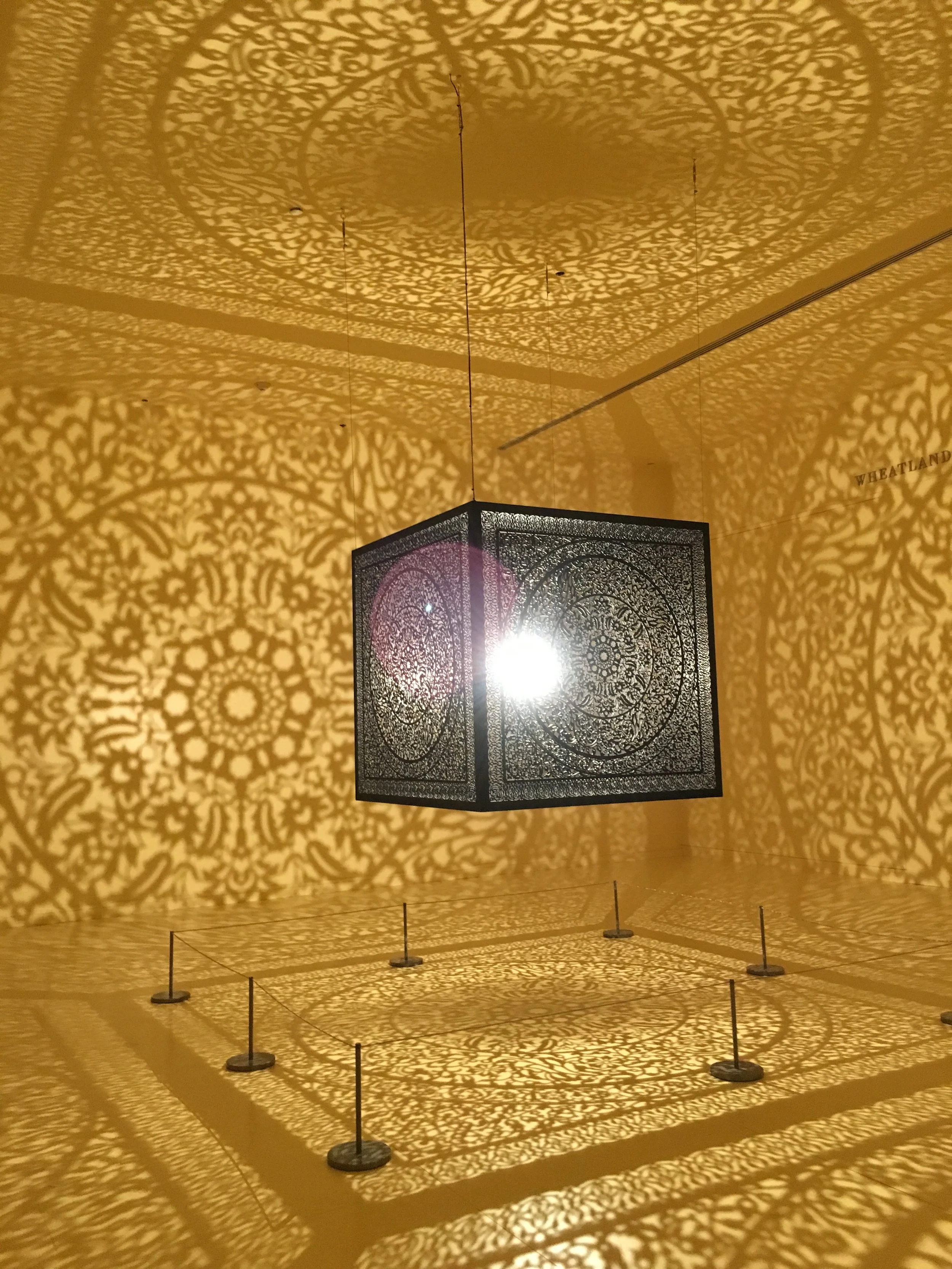
Tonight let’s do something a little different. Rather than posting a poem for inspiration, I would like to share visual art that brought me joy. Years ago, I got to see the art installation “All the Flowers Are for Me” by Anila Quayyum Agha at the Peabody Essex Museum, and I was enthralled.

Here is the link to experience a short video of the installation: https://www.pem.org/exhibitions/anila-quayyum-agha-all-the-flowers-are-for-me. If you would like to read an interview with artist about a previous installation, check out this link: https://www.pem.org/blog/seeing-the-world-in-a-new-light.

For the first prompt, write whatever the photo or video of this installation inspires.

The second prompt is to write a poem about whatever art enlivens you—a painting, photo, song, movie, whatever form.

The third prompt is to read the interview (link posted above) and write an ars poetica poem, a poem about your writing, poetry and its purpose. If you want to learn more about the form and read examples, you can learn more at the website of the Academy of American Poets: https://poets.org/glossary/ars-poetica.

Good luck writing.

“We Turn Together”—Prompts Inspired by Ellen Bass

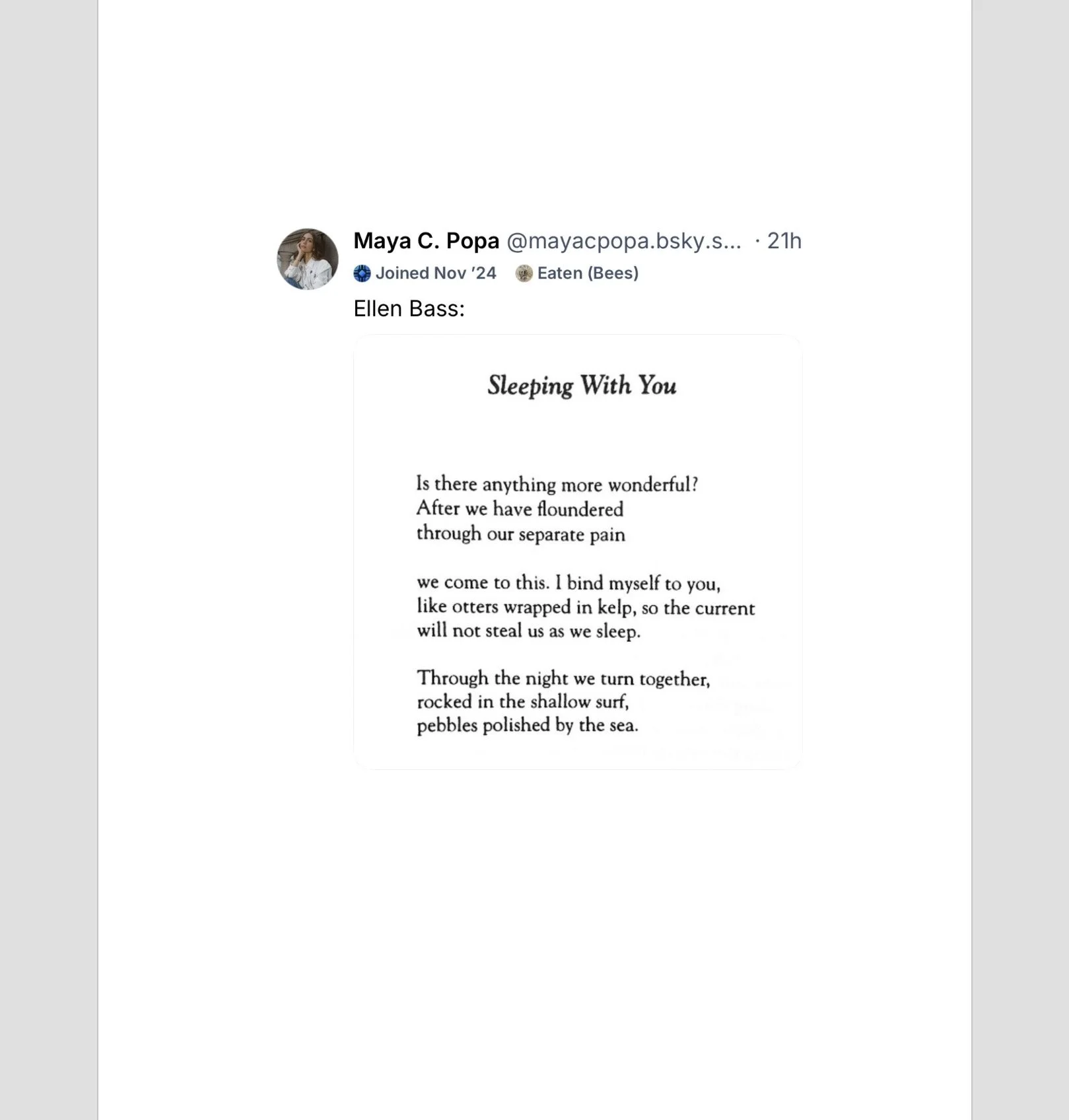
Here is another beautiful love poem. Ellen Bass is a treasure.

For the first prompt, write a love poem using the imagery of animal mates.

The second prompt is to use the line “we come to this. I bind myself to you,” as a ghostline. Remember to erase the line after you’ve drafted your poem and credit the poet in an after statement or in your title.

The third prompt is to write about the experience of sleeping with your partner or a former lover, not the sex but sleeping together in the same bed. Horror stories are equally welcome here as love poems.

The last prompt is to write a poem using the following list of words: “floundered,” “separate,” “bind,” “wrapped,” “current,” “steal,” “sleep,” “together,” “rocked,” and “pebbles.”

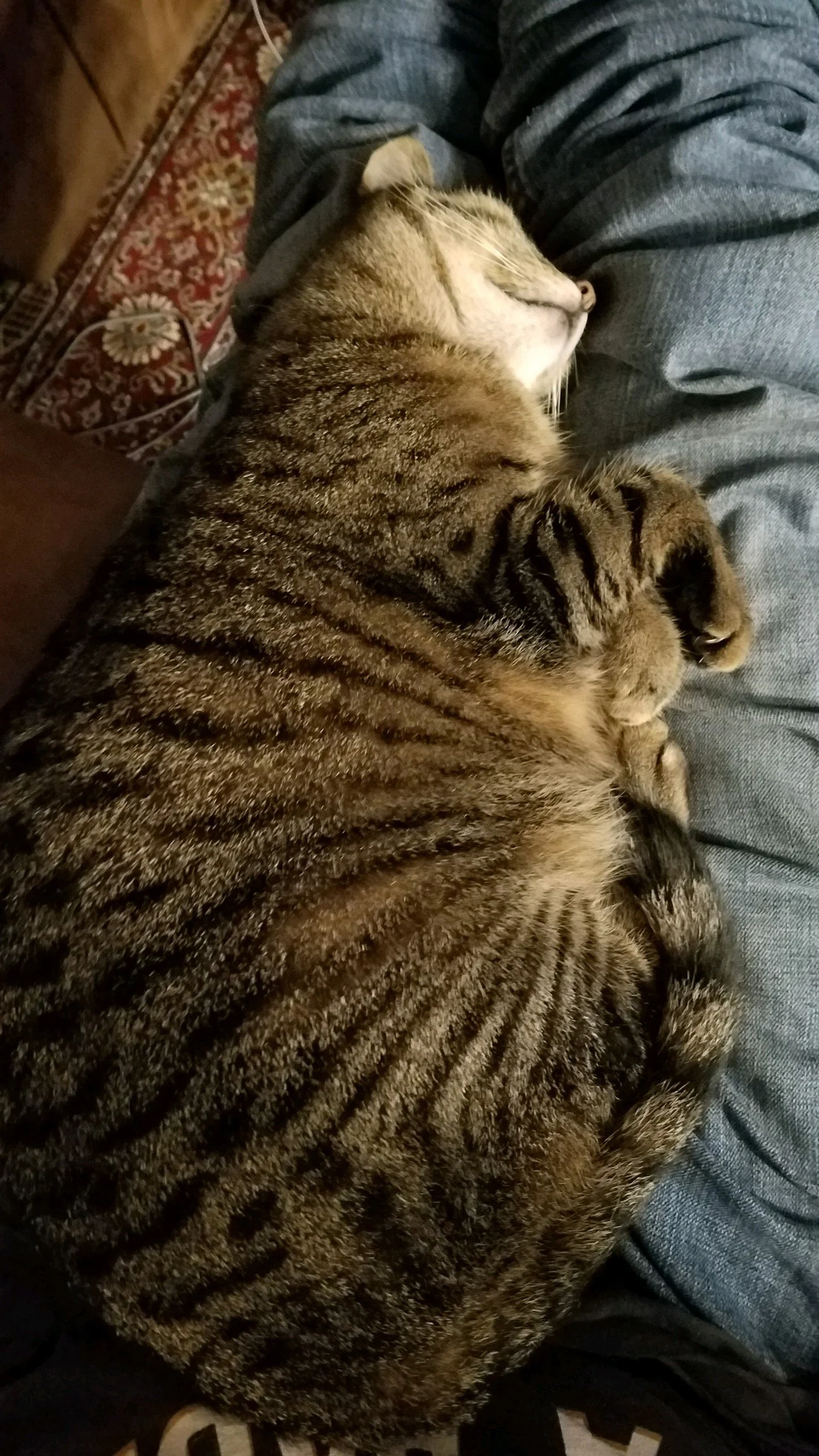
Bonus prompt: Here is Pebbles sleeping on a lap. Write a poem about cuddling with a pet.

Good luck writing!

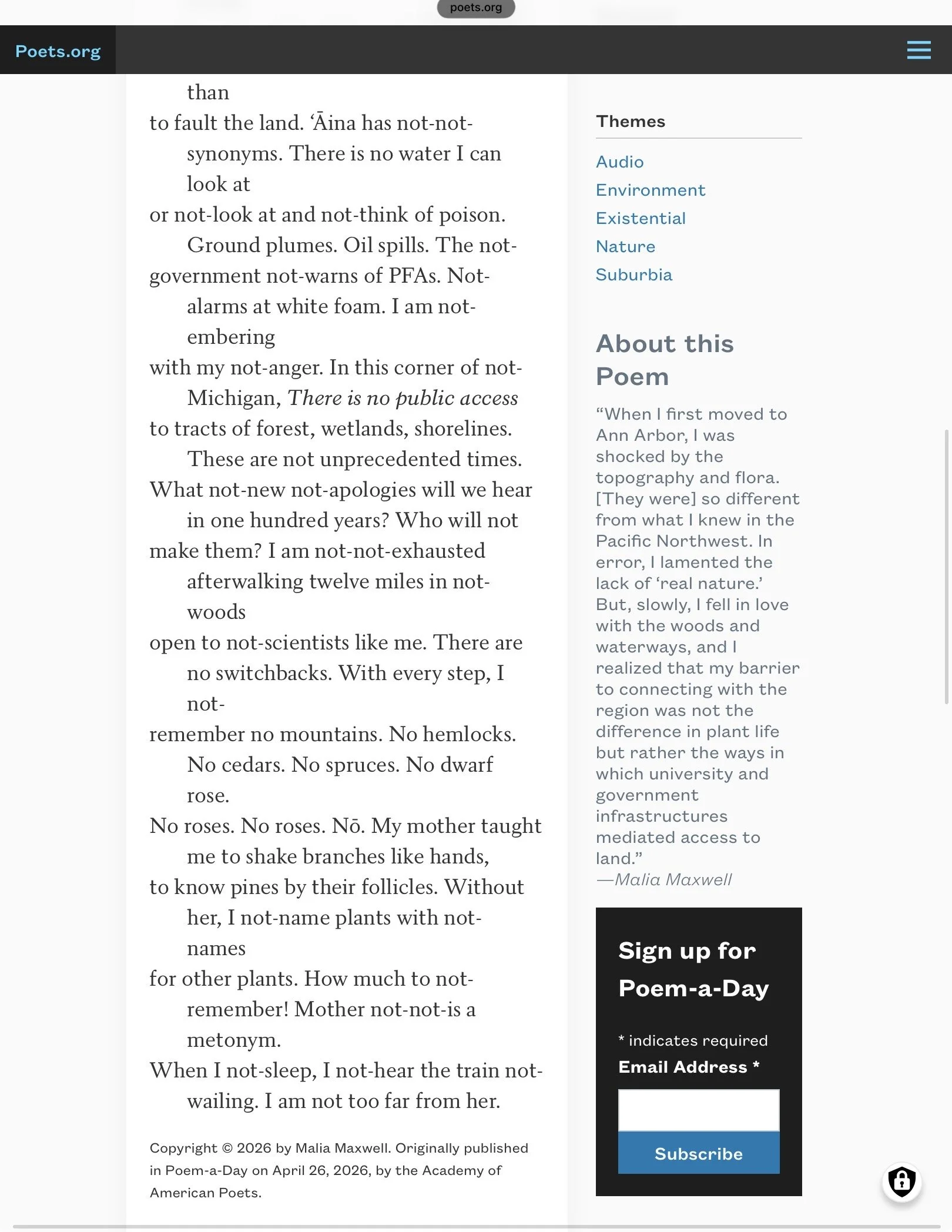
“What is Not”—Prompts Inspired by Malia Maxwell

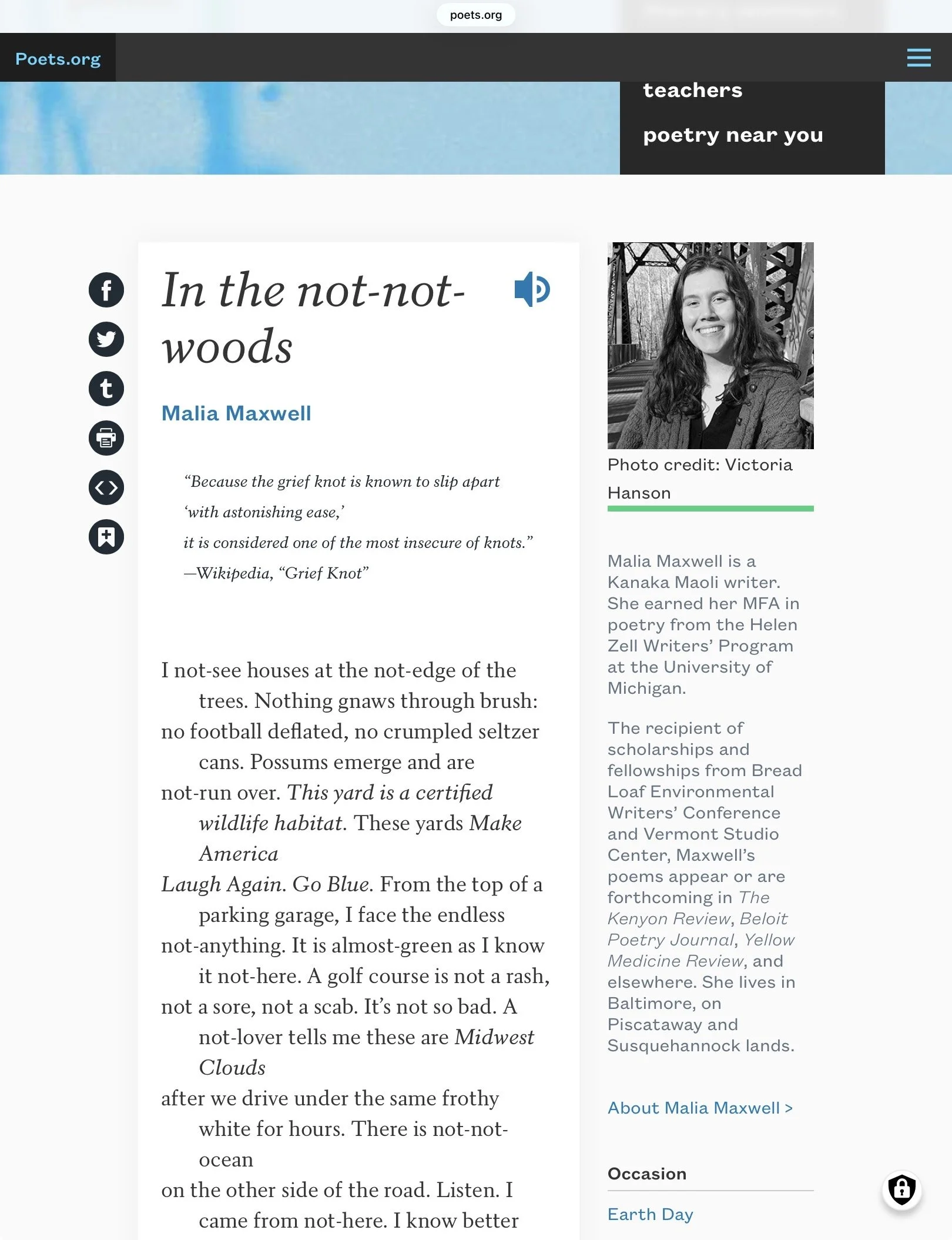
“In the not-not-woods” is a poem that rewards multiple readings. I hope you like it as much as I did. If you want to listen to the poet read it aloud, click on this link: https://poets.org/poem/not-not-woods.

For the first prompt, write about moving to a new place and missing the landscape you left, what plants or terrain would you look for and not find. I found the flat, cloudless skies in Texas hard to enjoy at first, although I fell in love with the wildlife and rugged landscape. I still miss its spring bluebonnets and the rocky ledges.

The second prompt is to describe the areas lacking public access. I was surprised by how much of the coast is closed off in areas.

The third prompt is to embed the memories of a loved one within descriptions of the land. What lessons can you remember; can you still hear their voice?

For the next prompt, write a poem using the following list of words from the poem: “gnaws,” “deflated,” “scab,” “fault,” “frothy,” “poison,” ”plumes,” “apologies,” “hemlocks,” “cedars,” “shake” and “wailing.”

The last prompt is to predict what your home will look like in a hundred years. Who and what will remain?

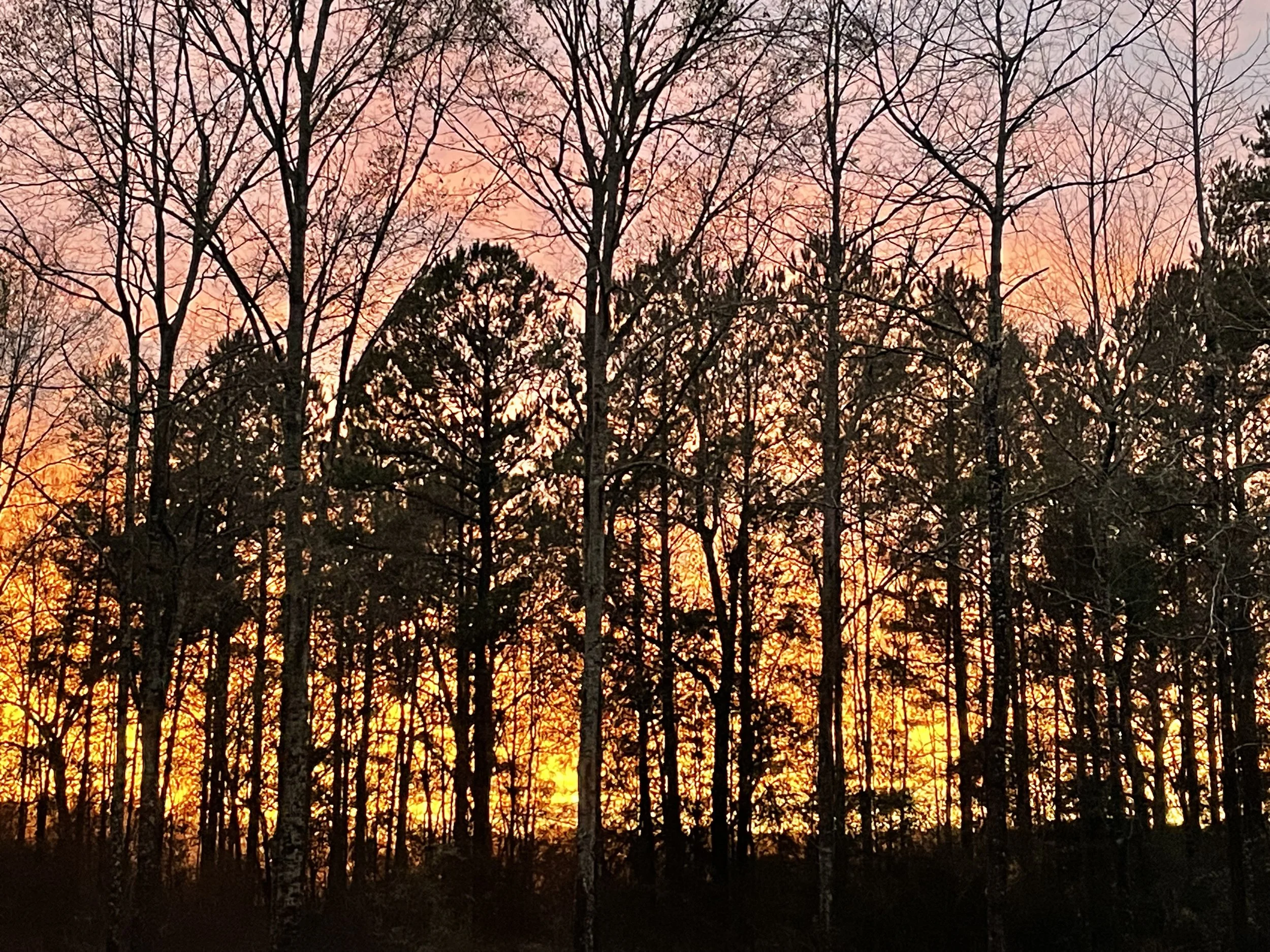
Bonus prompt: write whatever comes to mind with this autumn sunset.

Good luck!

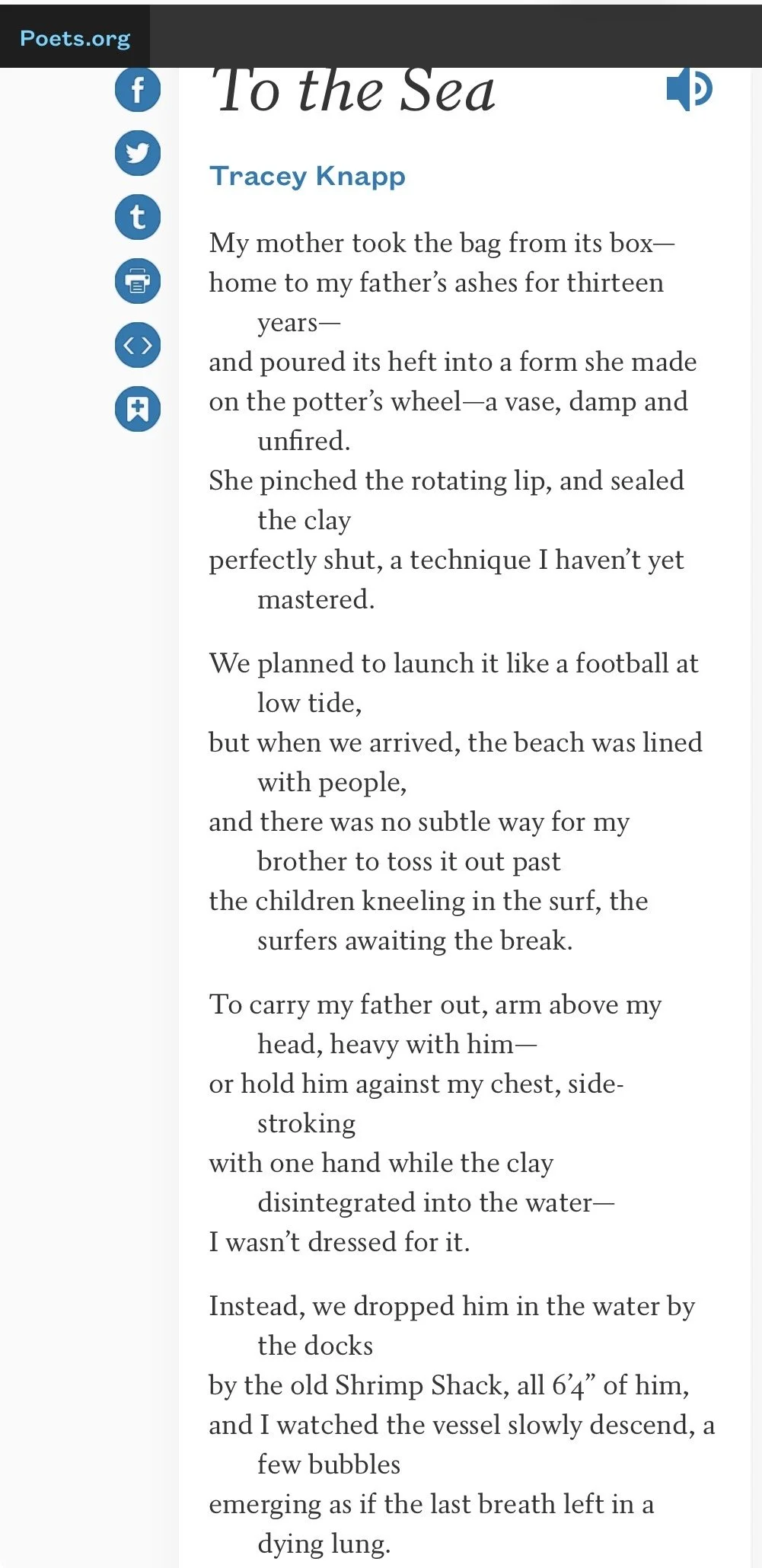
A Missed Launch—Prompts Inspired by Tracey Knapp

I appreciate the bleak humor of this poem. The “launch it like a football” made me laugh. I have a feeling the upcoming funerals and my own will also involve farce. The number of car fires, unintended crimes, unexpected consequences of hubris and sheer bad luck of my family would make a failed sitcom for its improbability.

To read about what inspired this poem and hear the poet read “To the Sea” aloud, click on the link: https://poets.org/poem/sea-3.

For the first prompt, write of a funeral or wake or your first brush with death after the initial shock and grief has subsided. Most of the funerals for my elderly family members have included laughter and storytelling, an appreciation of their long life and influence. This celebration of course is impossible for younger loved ones lost unexpectedly.

The second prompt is to write a narrative poem about a wedding or planned event that went all wrong (like my first wedding).

The third is to write a poem for all the tasks you aren’t (or weren’t) dressed for.

For the last prompt, write a poem using the following wordlist: “heft,” “wheel,” “launch,” “tide,” “kneeling,” “chest,” “docks,” “descend,” “bubbles” and “emerging.”

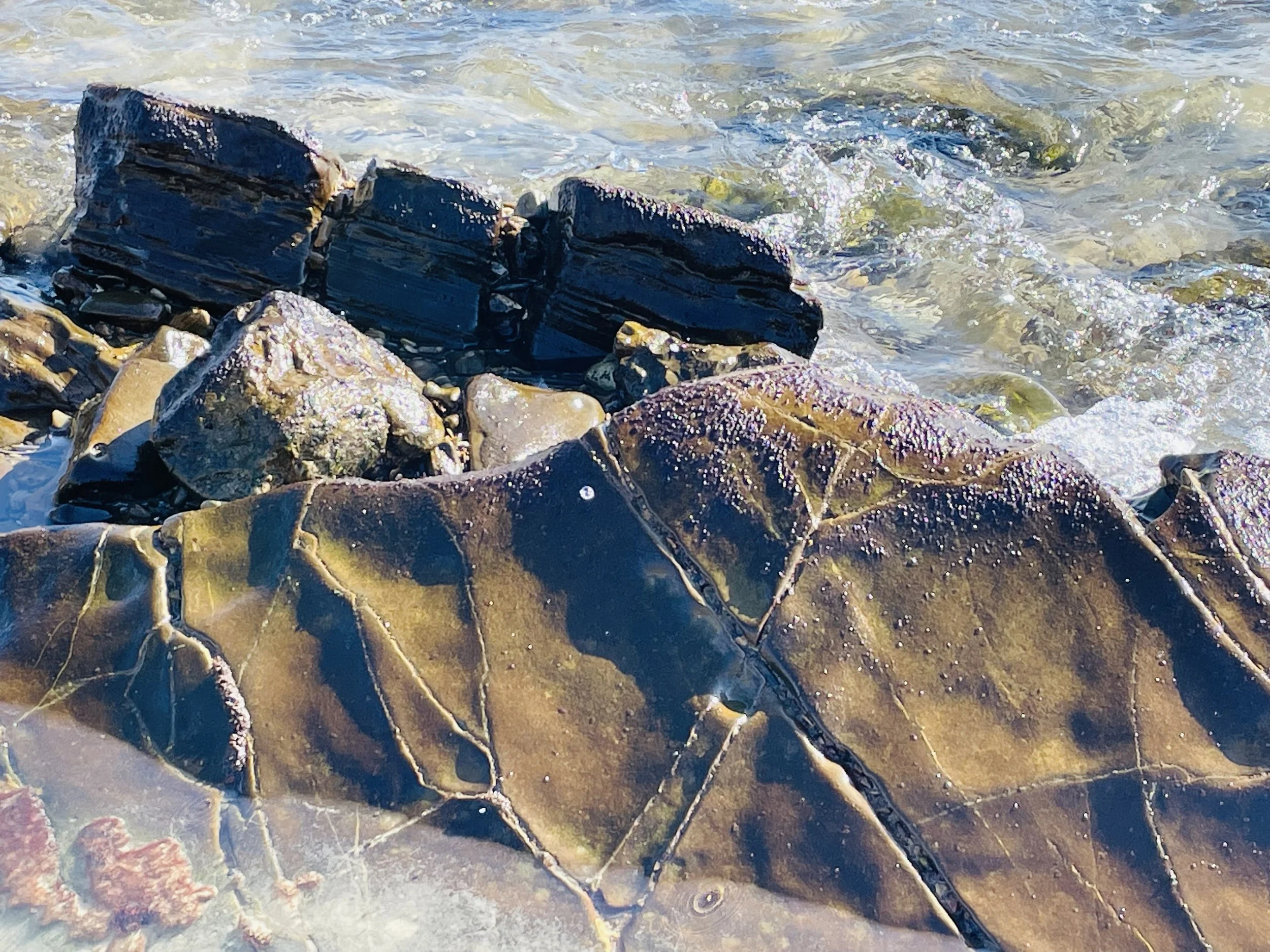
Bonus prompt: write about the endless crashing of waves, enduring and coming home.

Good luck!

Multiplying Gravities—Prompts Inspired by Maya C. Popa

Five more days to go! I hope you are keeping up (better than I am)!

I thoroughly enjoy the imagery and craft here. If you like the poem too, check out Maya C. Popa’s books and classes: https://www.mayacpopa.com. So many books to add to the towering stacks.

For the first prompt, define what a love poem is within your poem, relying on metaphor (or multiple) to explain.

For the second, build the poem around the extended metaphor of the poem as a room, inviting the reader in.

The third is to use the line “Look how we’ve made” a ghostline, erasing the line after you’ve drafted the poem and crediting the poet.

The last is to write a poem using the following list of words: “window,” “remainder,” “whale,” “affection,” “patient,” “dissolving,” “convention,” “gravities,” “blink,” “gallery “and “likeness.”

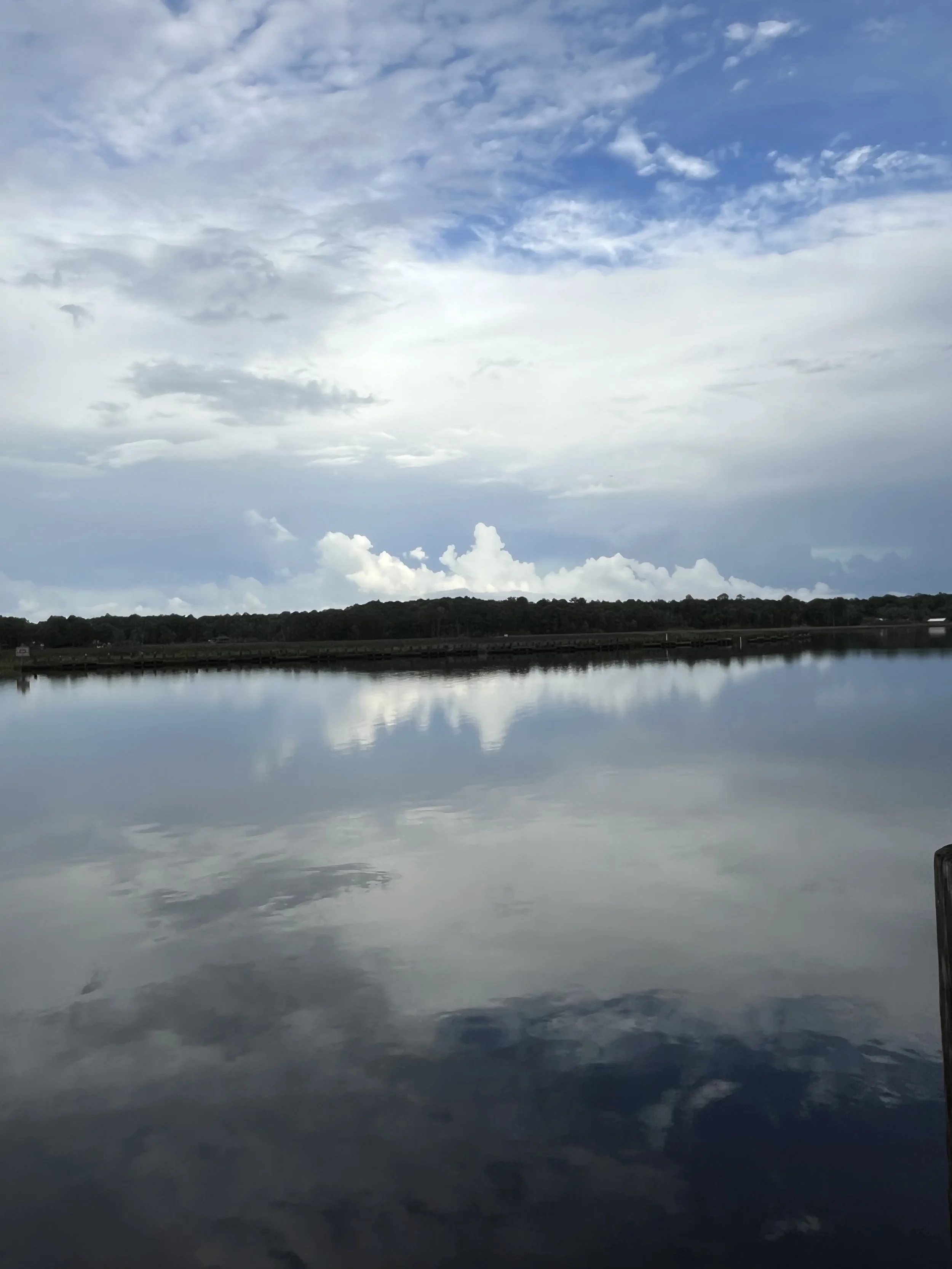
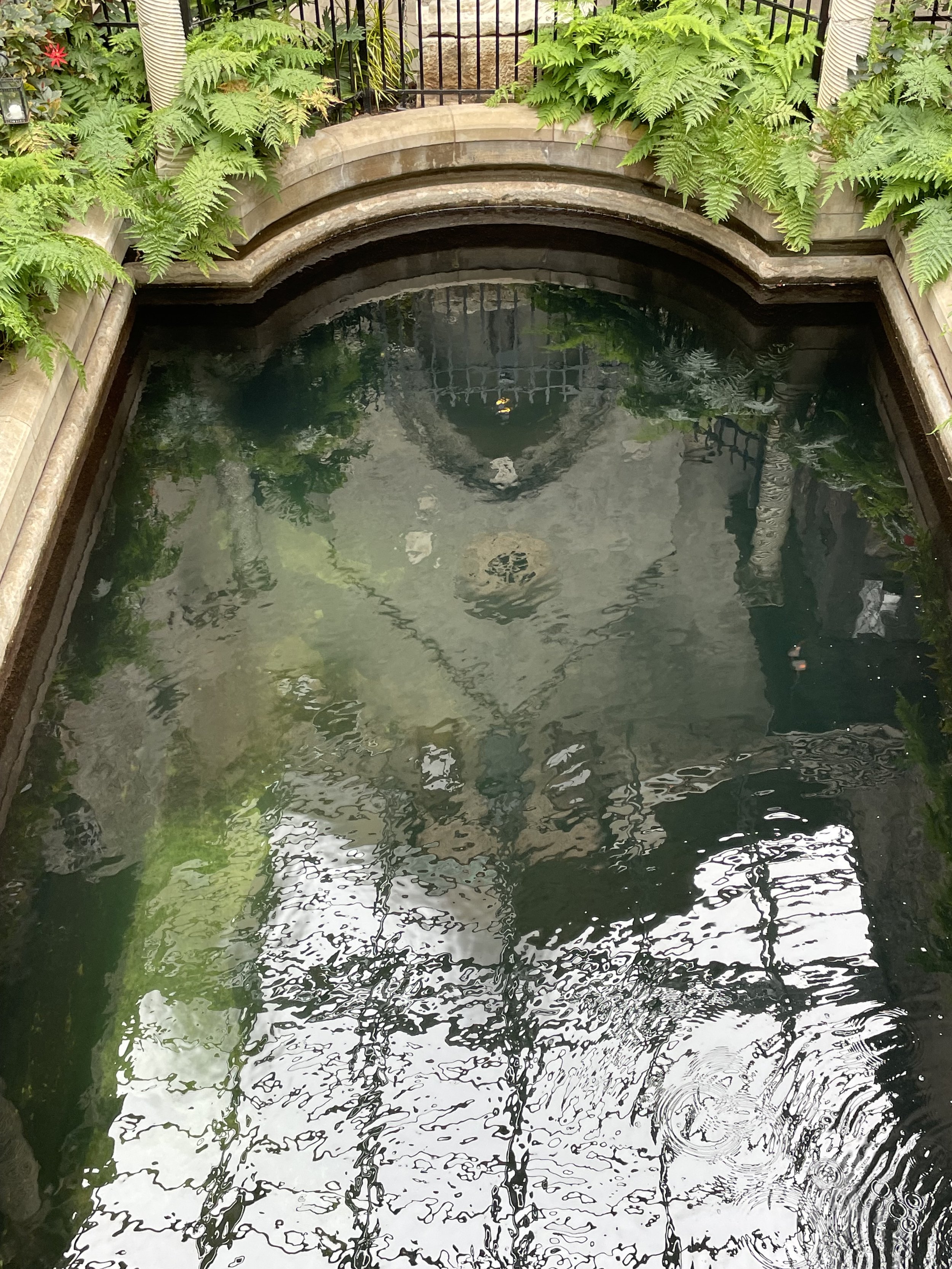
Bonus prompt: write a poem about entering this reflected world.

Good luck!
“Even when it breaks”—Prompts Inspired by Kelly Grace Thomas

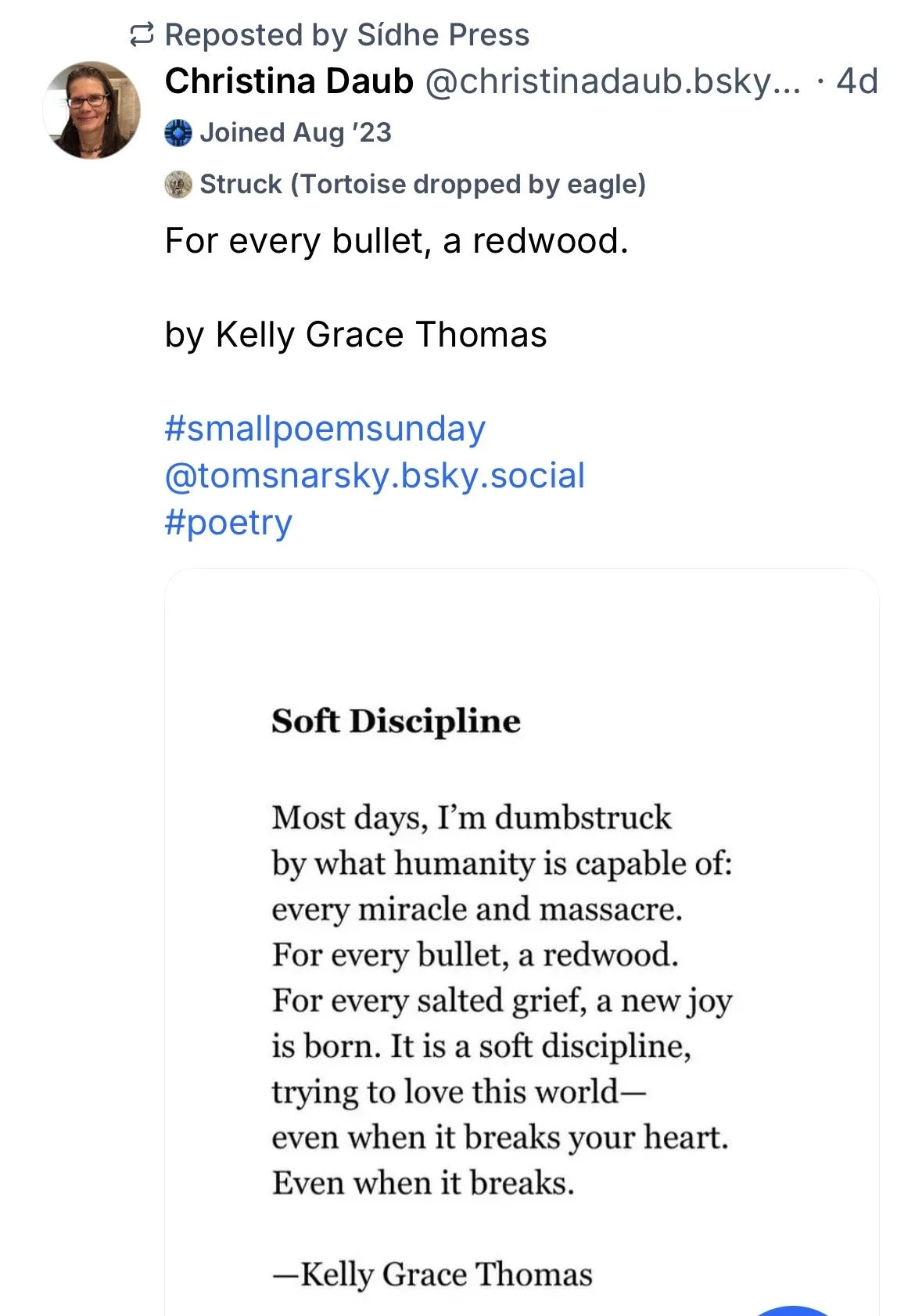
If you ever have a chance to join a workshop led by Kelly Grace Thomas or hear her read, I recommend you do. She is inspiring and encouraging. I love the simplicity and poignancy of her “Soft Discipline.”

For the first prompt, make a list of achievements and kindnesses and a second one of horrors and tragedies. Look at the two lists for resonance between items and build a poem from those.

The second prompt is to the last line, “Even when it breaks” as a ghostline, remembering to erase the line after drafting the poem and crediting the poet.

The third prompt is to write a poem using the following wordlist: “days,” “miracle,” “bullet,” “salted,” “born,” discipline,” “even,” “breaks” and “heart.”

For the last, write a response to this poem, addressing the poet in the title.

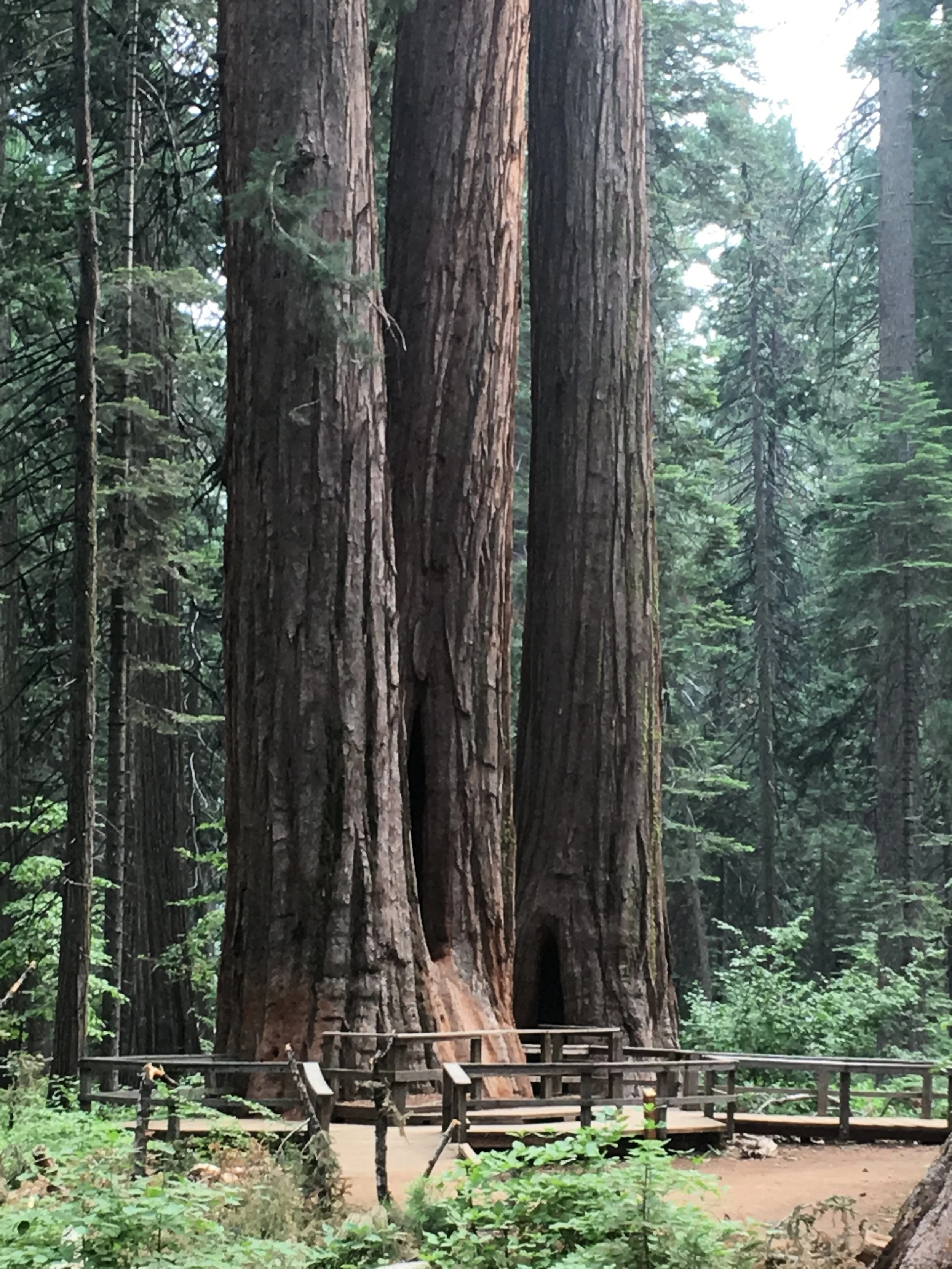
Bonus prompt: write about a redwood forest or whatever this photo inspires.

Good luck!
World Book Day—Prompts Inspired by Patricia Hooper

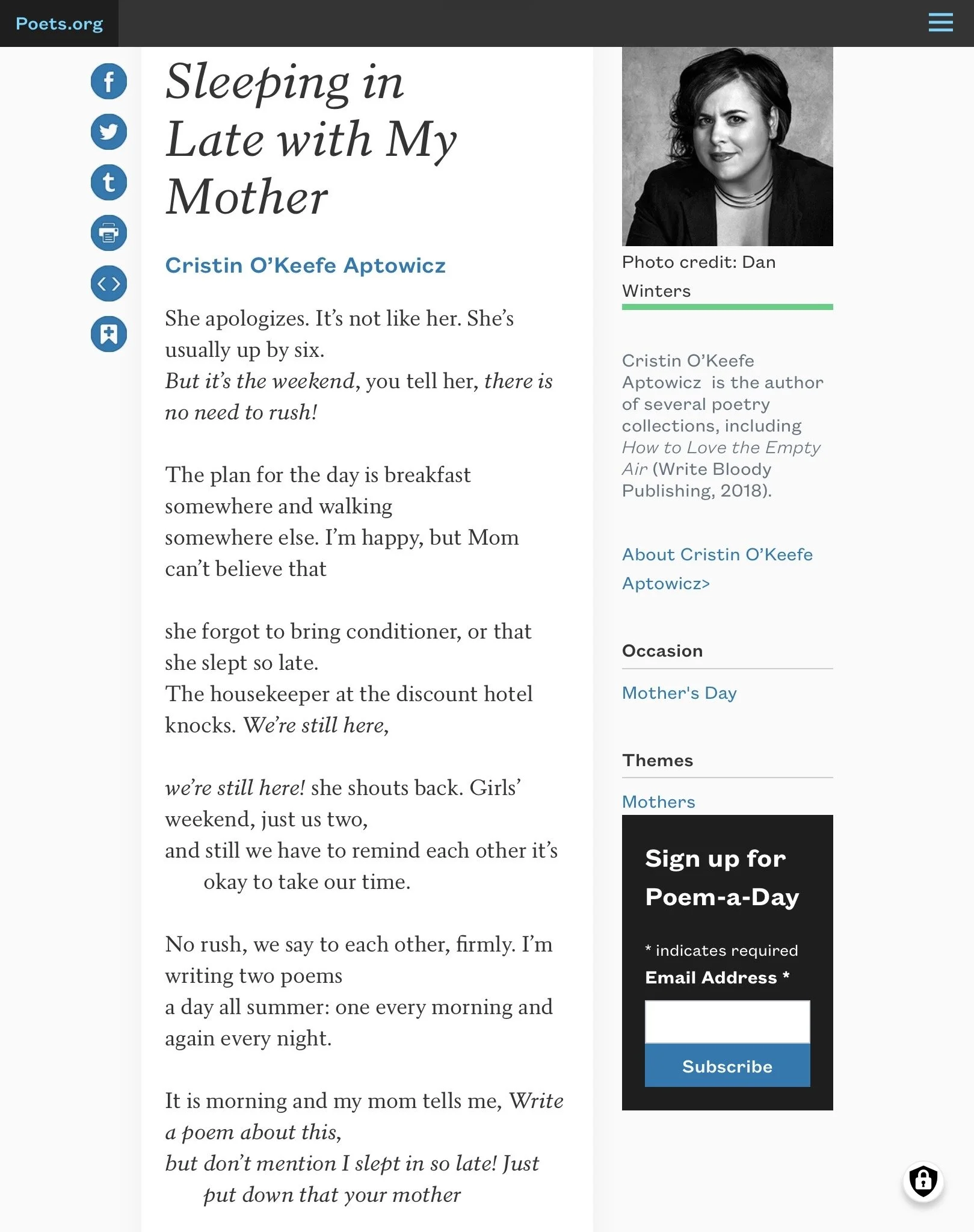
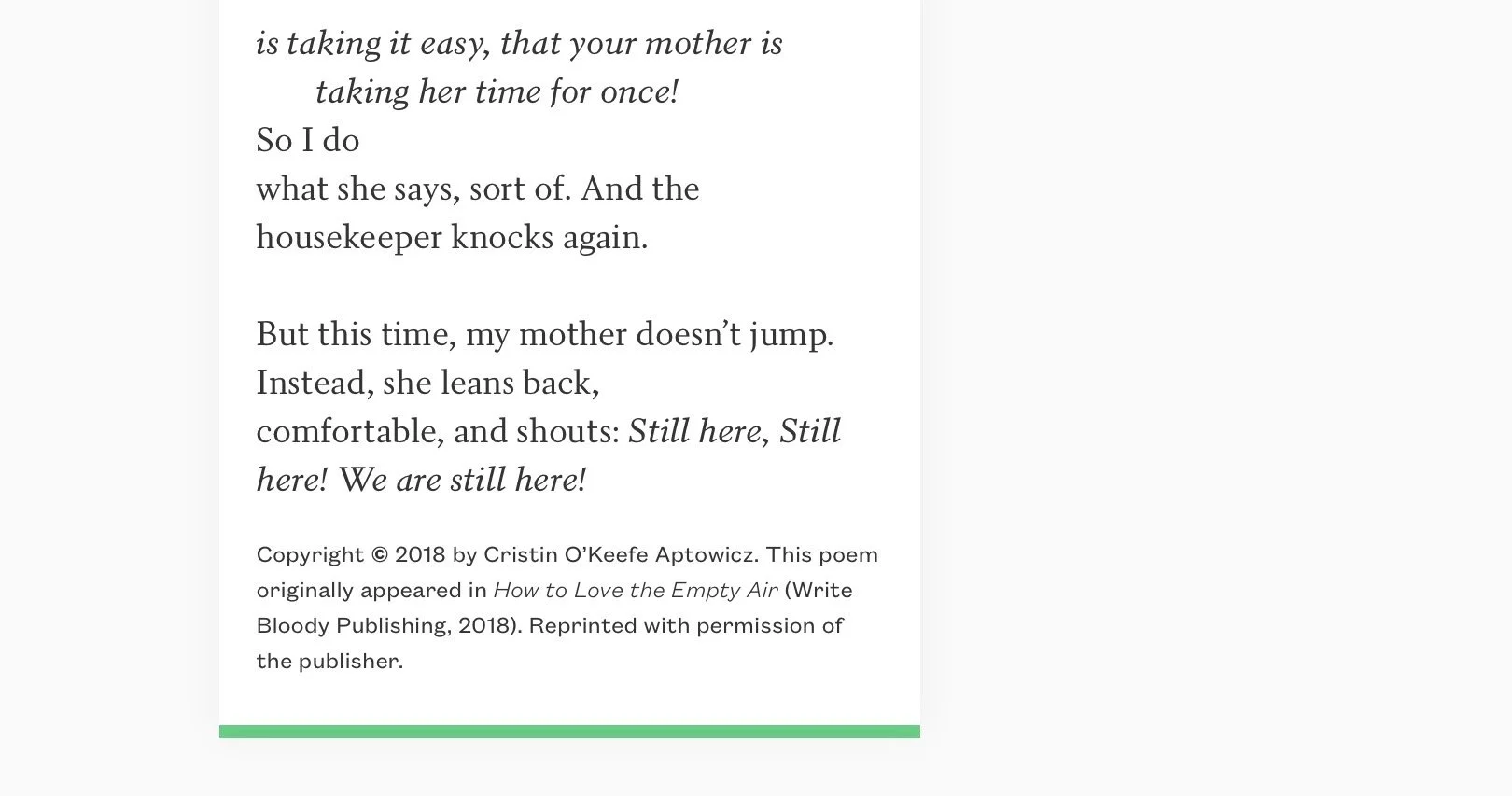
So today is another holiday, World Book Day, celebrating books and reading. I think Patricia Hooper’s poem “The World Book” is perfect for it. I love how the poem references volume “S” of the encyclopedia set (yes, the pun was intentional), expanding from the subjects inside its pages to the narrator noticing the objects around her. For me, reading opened doorways into new worlds, ones far from my small town, but also led me back to better understand that place and people.

If you want to hear Patricia Hooper read “The World Book” aloud, click on the link: https://poets.org/poem/world-book.

For the first prompt, choose a letter and build a poem around words beginning with that letter. For a really difficult challenge, write a poem about losing a letter and gradually omit the letter and additional ones.

The second prompt is to take a volume from the encyclopedia and flip to a random page. The first word you notice will be your subject. See what happens.

For the third prompt, use the lines “the woman get owned them skipped / to the solar system and said” as your first lines. You can choose to erase them after finishing your poem or keep them in, italicized or within quotation marks. Either way, remember to credit the poet for your inspiration.

The last prompt is to build a poem using the following wordlist: “volume,” “leafing,” “ships,” “skipped,” “saucers,” “diagram,” “miles,” “leave,” “swirling,” “world” and “secrets.”

Bonus prompt: what question does the bookstore’s feline guardian ask and what answer do you give to gain admittance?

Good luck writing!

Delayed Earth Day Prompts

Sorry for the delay. I wasn’t feeling well last night.

I chose this poem not just for Earth Day but also for its collaboration. I love the connections and responses of each piece. I would like to join on more projects with other writers and artists. If you would like to hear the poets read their pieces, click on the link: https://poets.org/poem/earth-day-collaborative-poem.

The first prompt is to write your own response, perhaps repeating one of the lines from the individual sections as entry point.

For the second prompt, use the line “until we learn to doubt its existence” as a ghostline. Remember to erase the line after drafting your poem and give credit to the poet.

The third prompt is to write about the changes you’ve noticed. Perhaps you no longer see fireflies as you once did or you notice summer comes sooner and lasts longer, that droughts are more common or storms are stronger and more frequent.

The next prompt is to write a poem using the following list of words: “frenzied,” “congregation,” “confetti,” “entwined,” “tipping,” “severed,” “drifting,” “tempered,” “excess,” “spiral,” “monstrous,” “husk” and “rising.”

The last prompt is to collaborate with another poet this month.

Bonus prompt: write a poem to (or from) this dolphin.

Good luck writing!

Ekphrasis—Prompts Inspired by Desiree Rodriguez

Today’s prompts will all be ekphrastic prompts. A few weeks ago I went to an art festival and came across the painting. I loved it immediately. If you would like to see more paintings by the artist, check out her Instagram account: paintings_by_desi.

For the first prompt, write a poem inspired by this painting.

The artist told me this painting was inspired by Delia Owens’ Where the Crawdads Sing. Your second prompt is to choose a scene from a favorite book and describe it as if it were a painting.

The third prompt is similar to the previous: write a poem, describing a scene in a favorite movie.

For the last prompt, listen to a song you like. As it plays, write down the words that catch your attention. Build a poem from the wordlist you’ve made.

Good luck writing!

Whorl—Prompts Inspired by Rosalie Moffett

So much movement in Rosalie Moffett’s “Happy.” I need to read more of her writing. Today was a day in which I did not write; my head was stagnated, so I appreciate this poem’s motion even more.

For the first prompt, write a poem in which movement is predominant.

For the second, write about an interaction between two species even if one is unaware of the other, such as a cat watching birds outside the window.

The third prompt is write about technology and the natural world. How does one try to control or manage the other?

For the last, write a poem using the following list of words from the poem: “stops,” “fence,” “switch,” “crawl,” “barrier,” “foreseen,” “relief,” “whorl,” “disappear,” “prayer” and “scatters.”

Bonus prompt: write about what is happening here or whatever this photo inspires.

Good luck writing!

Abecedarian of Joys—Prompts Inspired by Arielle Hebert

I hope your Sunday is a good one. Perhaps you are trying to catch up on poems as I am. May this poem, its lovely catalog of joys, its generous spirit and its use of the abecedarian form all inspire you to cherish the day.

If you would like to hear the poet read Our Book of Delights aloud, click this link: https://poets.org/poem/our-book-delights.

For the first prompt, write an abecedarian of your own, a form in which the first letter of each line is in alphabetical order. If you would like the form’s history and more examples from the Academy of American Poets, here is the link: https://poets.org/glossary/abecedarian.

The second prompt is to write a poem starting with the line “Open the door. No one can” and completing the statement with your own verb. Remember to italicize the line or place it within quotation marks, crediting the poet in an after statement or in your title.

The third prompt is to describe spring in your area—the weather, wildlife and vegetation—as lushly as you can. Overindulge yourself; be lavish in your praise and excessive in your delight.

The fourth is to begin a poem or stanza with a barefoot child, that memory or image, and see where it takes you.

The next is of course the inevitable wordlist: “drizzle,” “tropical,” “palms,” “sugar,” “hand-picked,” “braiding,” “wine,” “surprise,” “match,” “bread,” “enough,” “door,” “zigzagging” and “coming.”

For the last prompt, read the poem aloud (or listen to the poet reading her poem) and write down the words that most resonate for you. That list will be your own from which to build a poem.

Bonus prompt: write about running water, moss and ferns or whatever comes to mind from this photo.

Birdsong—Prompts Inspired by Gary Young

The cats and I are enjoying all the birds visiting to eat our birdseed: cardinals, blue jays, mourning doves, red-winged blackbirds, sparrows and sometimes even an Eastern bluebird.

For the first prompt, describe the animal sounds outside your home. What birds wake you up? Do you hear cicadas or tree frogs? The screeching of neighborhood cats or dogs howling at a train? If you want, add traffic noise and sirens? Divide the day and night by these sounds, ending with an image/simile of the animal.

The second prompt is a writing exercise: rewrite the poem changing only the nouns, replacing the birds with the sounds of city life. See what happens. If you like a particular line, make that a ghostline and go from there.

The third prompt is to use the last line, “played on a flute carved from bone,” as a ghostline. Remember to erase the line after you finish drafting a poem and credit the poet.

The last prompt is (of course) write a poem from the following wordlist: “dawn,” “scold,” “feeder,” “screeching,” “course,” “canyon,” “break,” “mourning,” “breathy,” “echoes,” and “bone.”

Bonus prompt: write from the perspective of this cardinal, who is waiting for more birdseed.

Good luck writing.

Absence—Prompts Inspired by Richard Siken

Today I got to hear great poems and discussions about archival processes and hybrid collaborations. My head is too full to untangle, so I apologize if this post is even more disorganized than usual.

Richard Siken’s poem embodies the feeling I had as the tagalong little cousin, the youngest, at reunions, all the others so much older and bigger and more important. I often played by myself somewhere out of the way, lost in my head, in the clouds, invisible.

For the first prompt, choose a line from a move and let it become a powerful metaphor as the poet did with the quote from The Matrix. I like that the narrator says his stepbrothers wouldn’t take him to the movies but later quotes a movie he’d seen to describe himself.

For the second prompt, juxtapose a series of opposites as the poem does, “hypotheticals” and “real,” “capacity” and “nothing” and “full” and “empty.

The third prompt is to use the poem’s question “What did I know that no one else knew?” as a ghostline. Remember to erase the line after drafting your poem and credit the poet with an after statement or in the title.

The last prompt is to build a poem using the following list of words: “blades,” “pressing,” “tools,” “solid,” “bounce,” ”absence,” “hands,” “shapes,” “blurry,” “capacity” and “invisible.”

Bonus prompt: write whatever this photo of the sky inspires.

Good luck!
Because We All Need Some Happiness—A Twitter Prompt

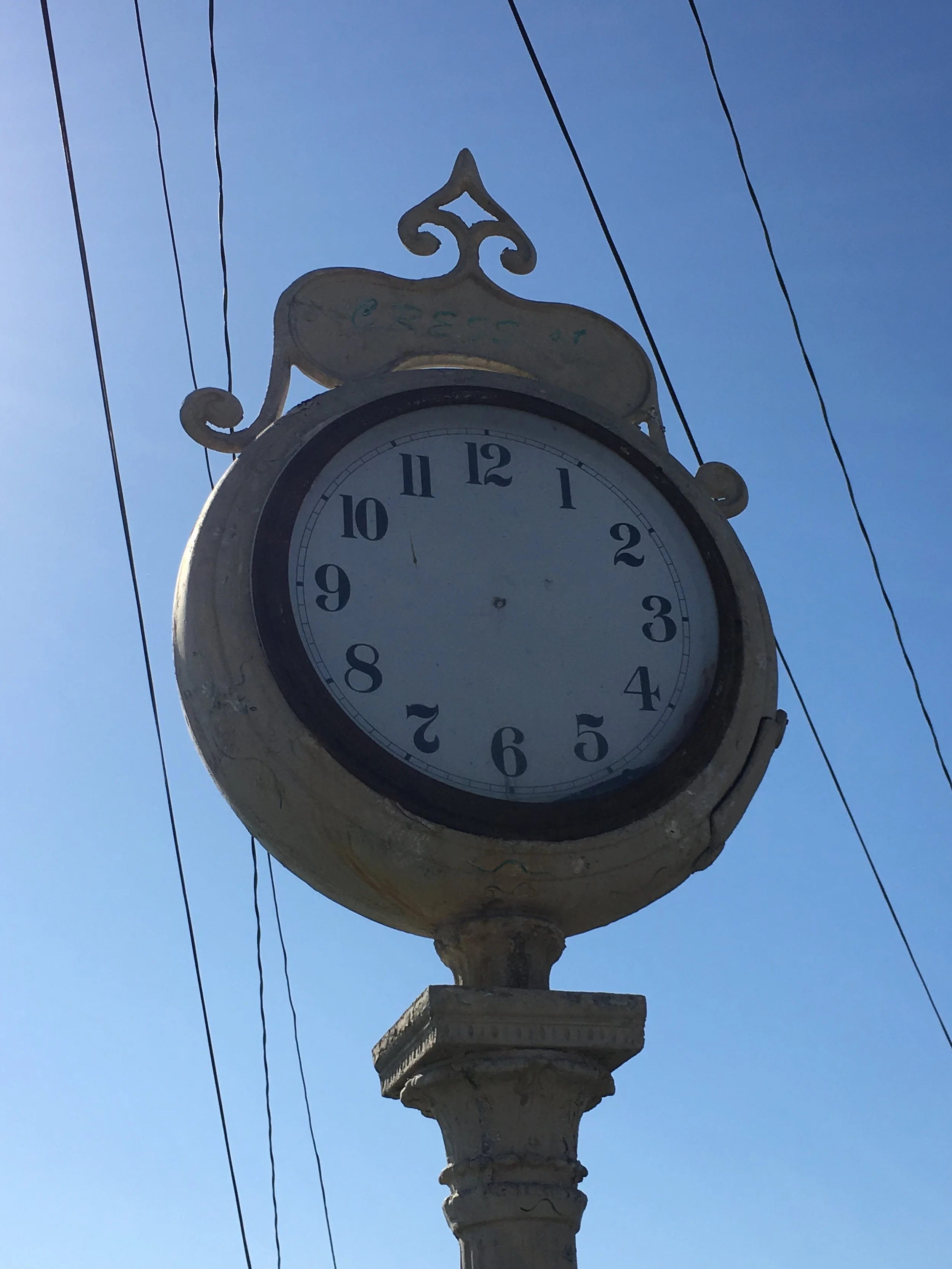
With all the stress and uncertainty, sometimes we need to harvest some small joy. Write a poem about a time you were utterly blissful. Perhaps it was during a relationship that didn’t last or maybe it was a time during childhood and that hopefulness is long gone; regardless, focus on that moment of elation.

Happy poems can be more difficult to write than sad ones. Pain and sorrow seem to translate across barriers and languages. We might worry that cheerful poems will come across as shallow or lazily sentimental—and they can—so practice writing joy so that your audience can experience it too. (This instruction is directed at myself more than anyone else.)

Adjustments.jpeg

Bonus prompt: write a persona poem from the mouse. Be extravagant in your delight.

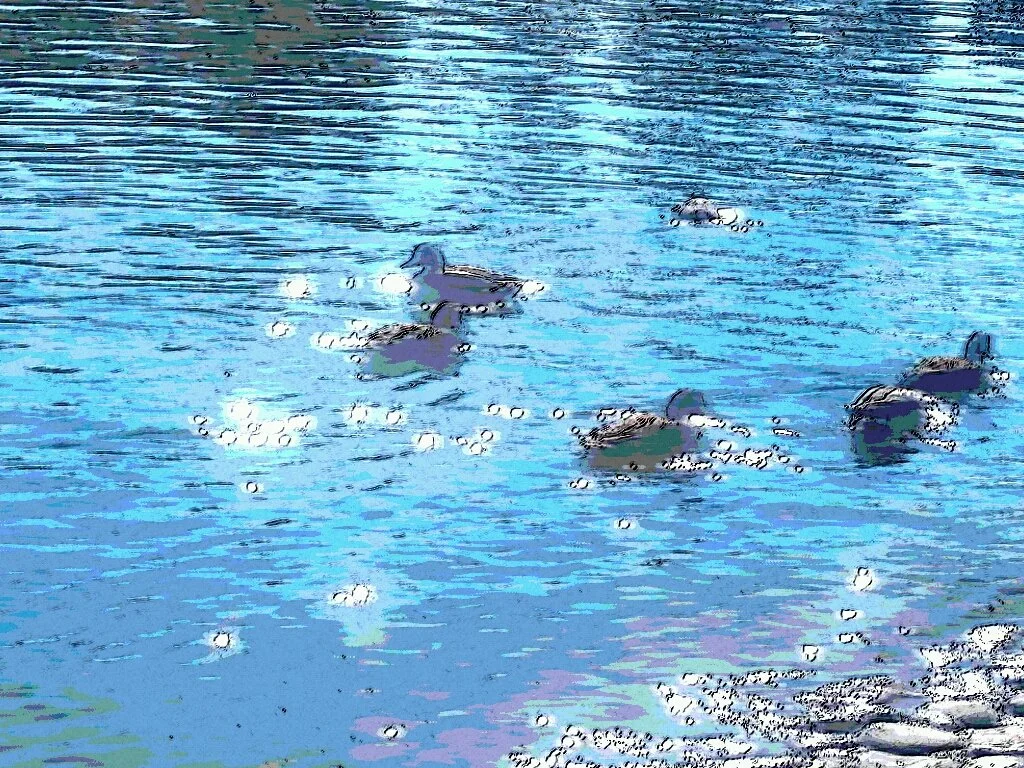
Another Stolen Twitter Prompt—Gathering Your Field of Ducks (per Autocorrect)

We don’t always get what we want but perhaps we do get what we deserve:

Adjustments.jpeg

Write a poem in which you did this and, damn, did you ever. Or write a short story that’s story arc can summed up by this.

Good luck reaping what you sowed, but, hey, you got a story or a poem out of it. Good enough.

IMG_0939.jpeg

Flower-headed People, the Best People—Ekphrastic Prompts Inspired by Shaylin Wallace

I fell in love with these amazing photos by Shaylin Wallace. If only I could have my head replaced with flowers so that I could feed on light and my entire face could open up for my lover.

For the first prompt, write a monologue from one of these four portraits.

Adjustments.jpeg
IMG_2777.png
IMG_2778.png
IMG_2779.png
IMG_2780.png

For the second prompt, write a conversation by the four of them. Or describe the language they share. Does it hum like bees or the ruffling of small wings? What does it mean when one of them opens up? Do the others listen? Do bees and other pollinators carry their words to one another?

For a third prompt, choose the one that represents you and explain why. If none of them resonate with you, check out the artist’s website, which include titles for these portraits. And here is where you can get reprints.

Here is the website in case the links don’t work: https://www.smwvisuals.com/photo-manipulations

OMG, It’s August and I Am Already Two Days Behind on the Sealey Challenge!
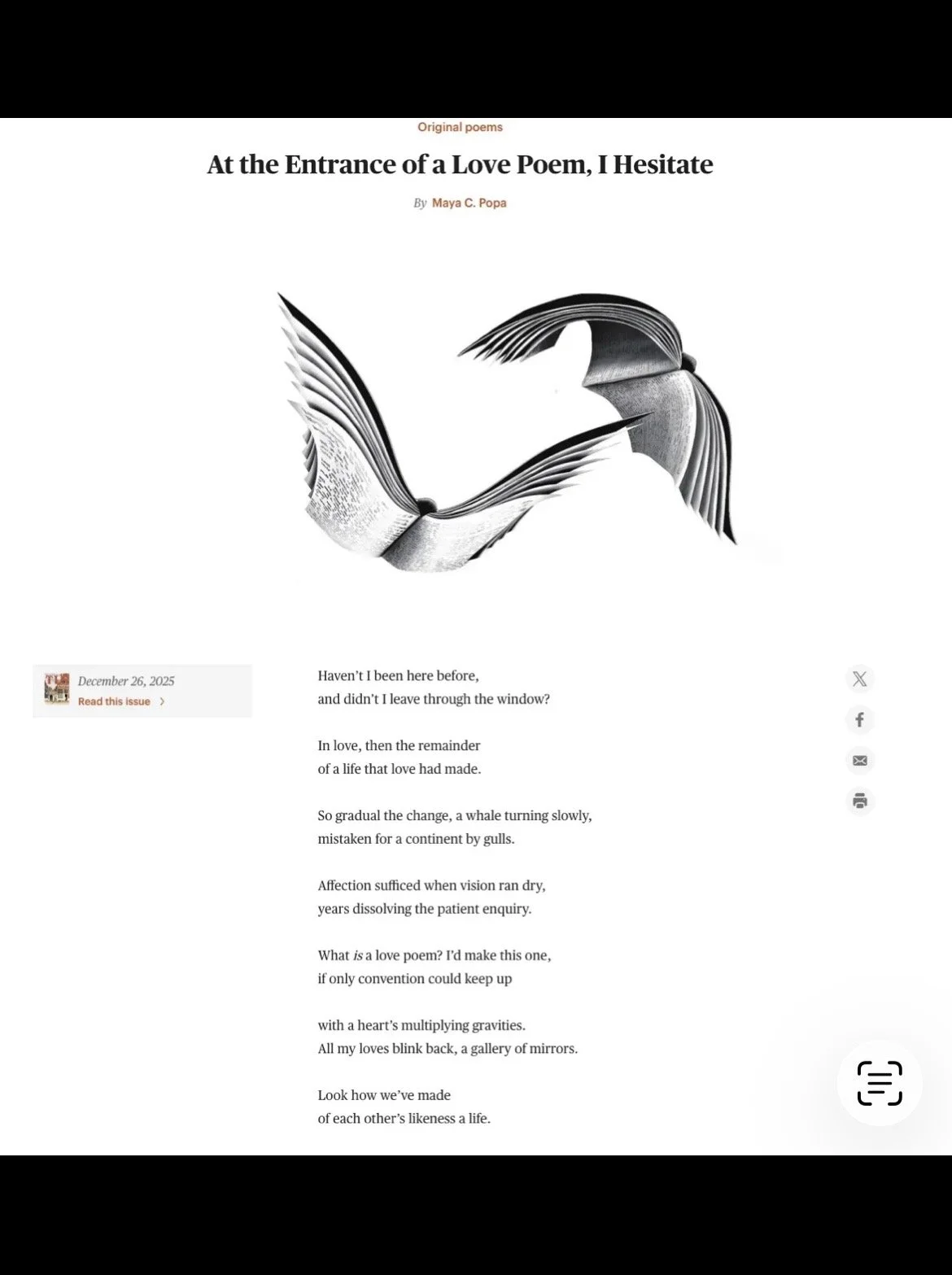
So I certainly know that one of the best ways to become a better writer is to be a voracious reader. I heard in a workshop (and of course cannot remember which or by whom) that writers need to spend three hours reading for every hour of writing. If Twitter counts, I certainly do that; otherwise…

Poet Nicole Sealey created the Sealey Challenge—read 31 poetry books or chap books in 31 days. Like NaPoWriMo (April’s writing 30 poems in 30 days challenge), there is no trophy, but the goal is to make you a better reader and writer, and online communities recommend and discuss books. The challenge is a way to promote new and lesser known authors too.

If you are interested in joining me, let me know! And of course send me your book recommendations!

Here is what I am reading now: Ways We Vanish by Todd Dillard. It’s excellent!

IMG_1289.jpeg

For your prompt, use the title “Ways Things Vanish” by Todd Dillard and create a list poem. Here are the first few lines of the poem (this link takes you to the entire poem in the journal Cotton Xenomorph).

Adjustments.jpeg

Write a Damn Happy Poem—A Prompt and Reminder for Myself

I still am struggling with a lack of inspiration and motivation—the day slips by without me even starting what I had intended to finish. So much is terrible that it is difficult for me to find a quiet enough space inside to create something of my own.

Now it seems impossible to not echo the loss and rage all around (and feel guilt at my fortune in not losing anyone or being targeted). I recently wrote a poem that tried to explore some of the history of racial injustice in the US but instead sounded as if I were appropriating other people’s pain, and some of the language and imagery I used did not match my intention.

I am lucky to have friends who can read and point out my mistakes and offer me guidance, but of course I am responsible for ensuring I don’t appropriate another person’s experiences and that I don’t center myself in other people’s struggles.

I also don’t want to feel as if I am mining my own pain just for a poem to show off as if it were some trendy piece of jewelry, nor do I want to trap myself within my own trauma and erase all the joys I also experienced. Or forget that I survived. I found comedian Hannah Gadsby’s “Nanette” and “Douglas” to address these issues brilliantly.

Likewise I found Gaia Rajan’s poem “Inside Every Poem You Can Hear Muffled Screams” to be incredibly powerful and insightful. I know I will come back to it again and again.

Adjustments.jpeg

Your prompt is to write a poem in which you free yourself within the poem from the cage you already escaped.

IMG_0950.jpeg

Bonus prompt: imagine spilling your guts and out came flowers and herbs.

Structure a Poem—An Editing Prompt Prompted by Twitter

A while back I read a fascinating discussion between two poets. Since then I have been thinking about quatrains as rooms and trying to visualize what a couplet would be. A covered porch, a gazebo? Here is the discussion below:

Adjustments.jpeg

What kind of structure feels most natural to you? Or do you experiment with multiple forms? Why or why not? Has your structure changed over time?

For this prompt, take a poem you’ve written and reorganize it into first quatrains or then into couplets. Think of this process as creating spaces—either covered patios or indoor rooms. See what the affect of the extra line space affects the pacing. Which feels fits the poem better? Think about why and possibly even write down these differences to clarify this for yourself.

Analyze a set of four or five poems all related on a theme and edit them specifically for structure. See if the restructuring changes the overall feel.

If you wish, you can try to use this as a writing prompt: consciously write a poem as if you were building a structure with each stanza of quatrain as a wall/support or each couplet a covered walkway moving the poem along. What do you see? What is upheld by your structure? Where do you end up?

IMG_8008.jpeg

Bonus prompt: using sound associations of the word “monostrophe,” address a poem—in one stanza—to a monster. Good luck!