“A Break from Dread”—Prompts Inspired by Suzanne Cleary

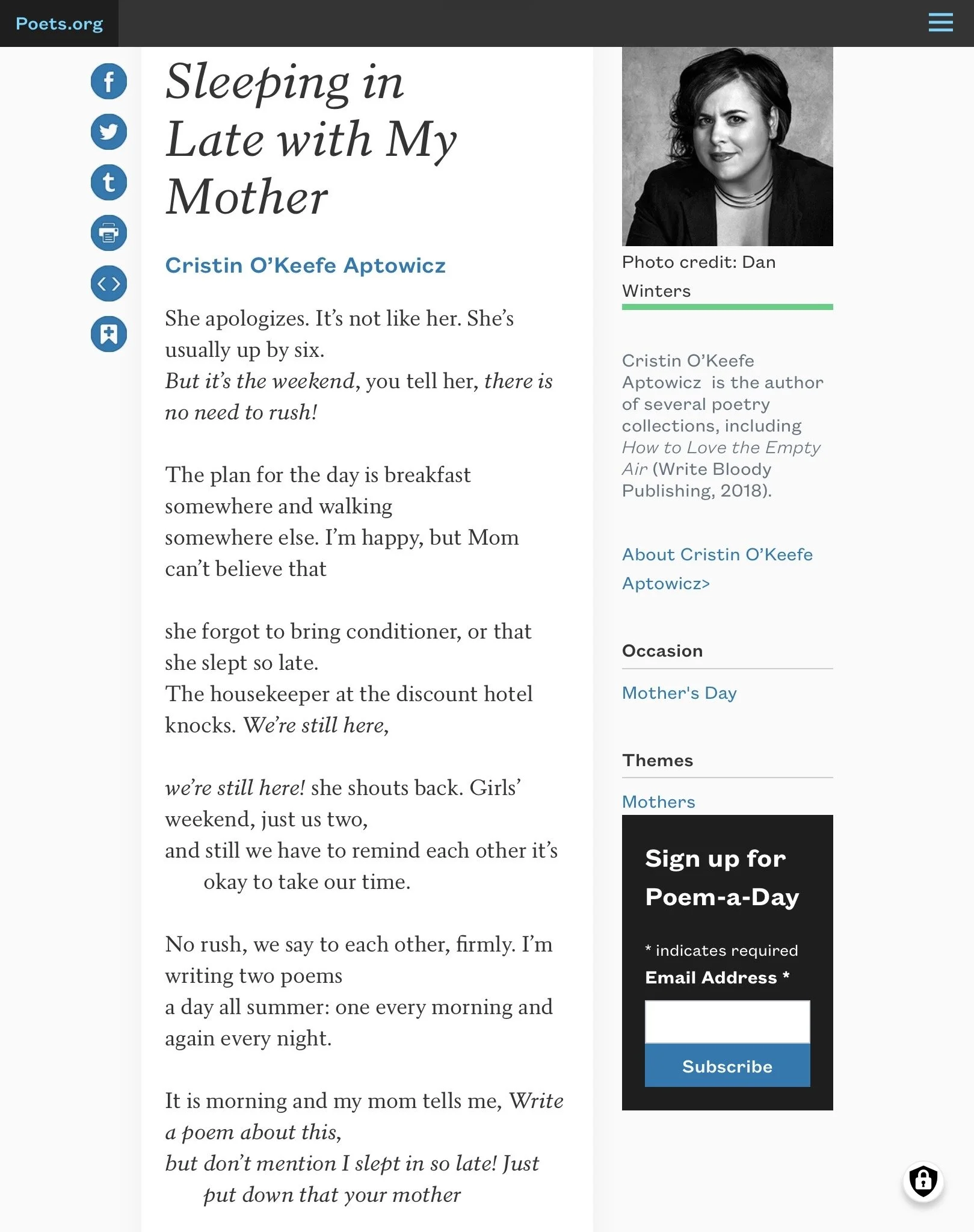
I had forgotten how much I enjoyed receiving a great poem emailed to me through poem-a-day and discovering new poets to enjoy. Today, as the poem's narrator states, I do "need a break from dread."  I admire how even though the poem begins by telling us no one was hurt, I still didn't expect the precise details or the clear visualization of the dog at the poem's ending.

Click on the link to hear the poet read “Mercury”: https://poets.org/poem/mercury.

For the first prompt, write a narrative poem that begins by telling the story's end (that no one was hurt or that someone was or that someone died). Focus on the building of details to bring about a satisfactory conclusion. 

The second prompt is to use the line “no one seems to be at the wheel” for a ghostline. Remember to erase the line after drafting the poem and credit the poet perhaps in an after statement or the title.

A third prompt is to write a poem entitled “Mercury” that incorporates the car model, the metal and the planet. Bonus points if you include the fact that mercury, the only metal liquid at room temperature, tarnishes in humidity.

For the last, write a poem using the following list of words: “buttons,” “brake,” “mercury,” “speed,” “leveled,” “break,” “wheel,” “circles,” “circuitry” and “living.”

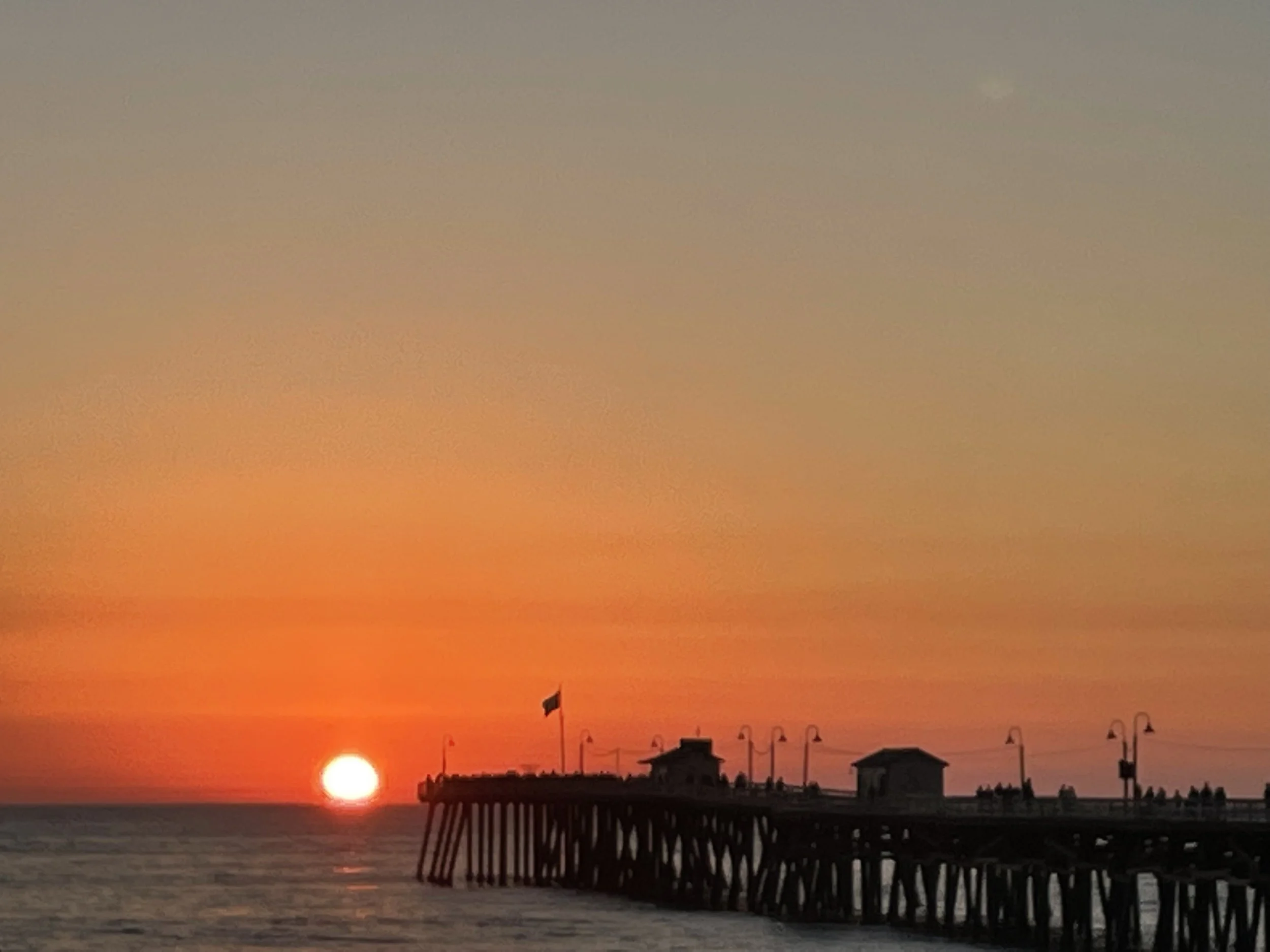
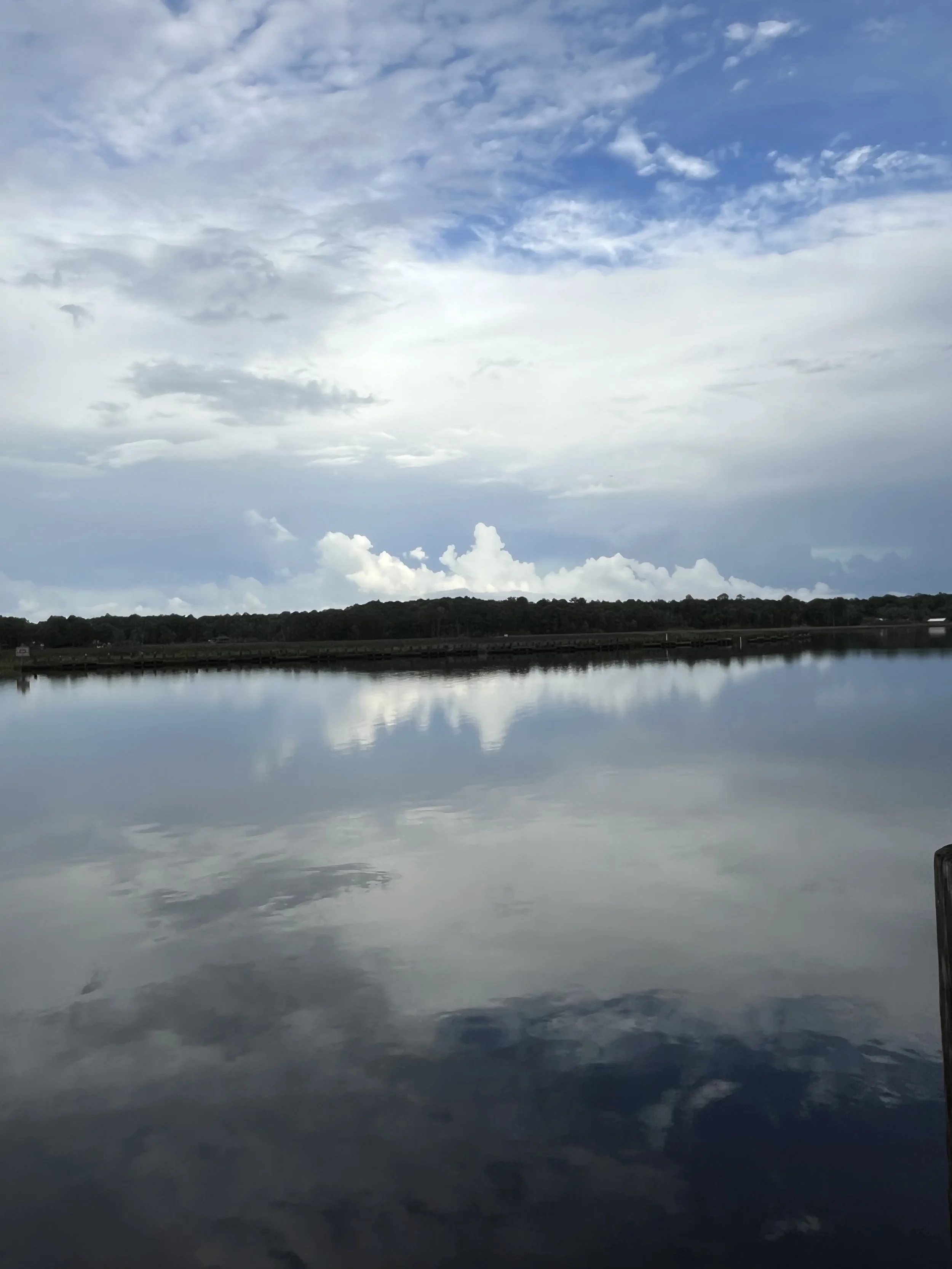
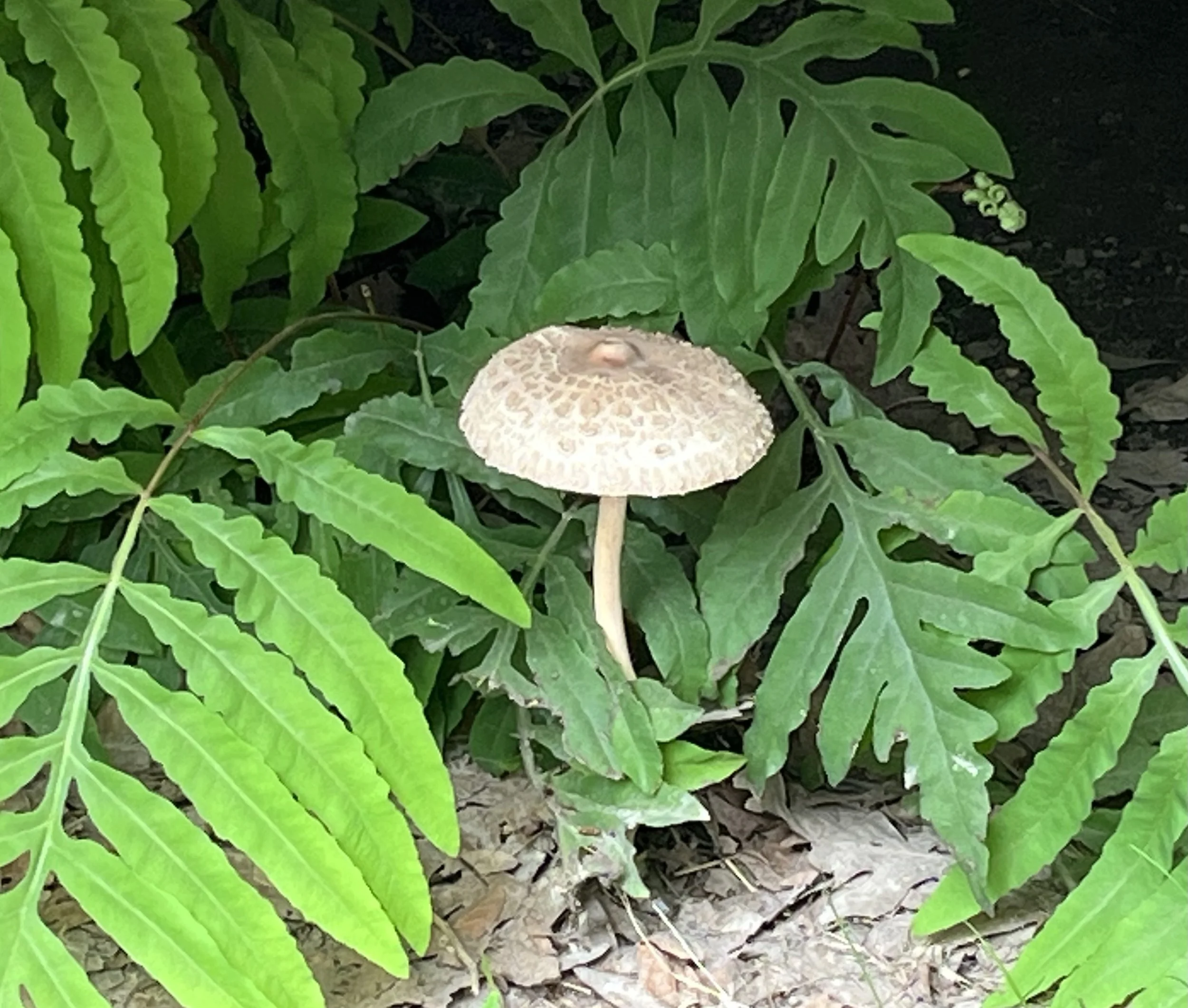
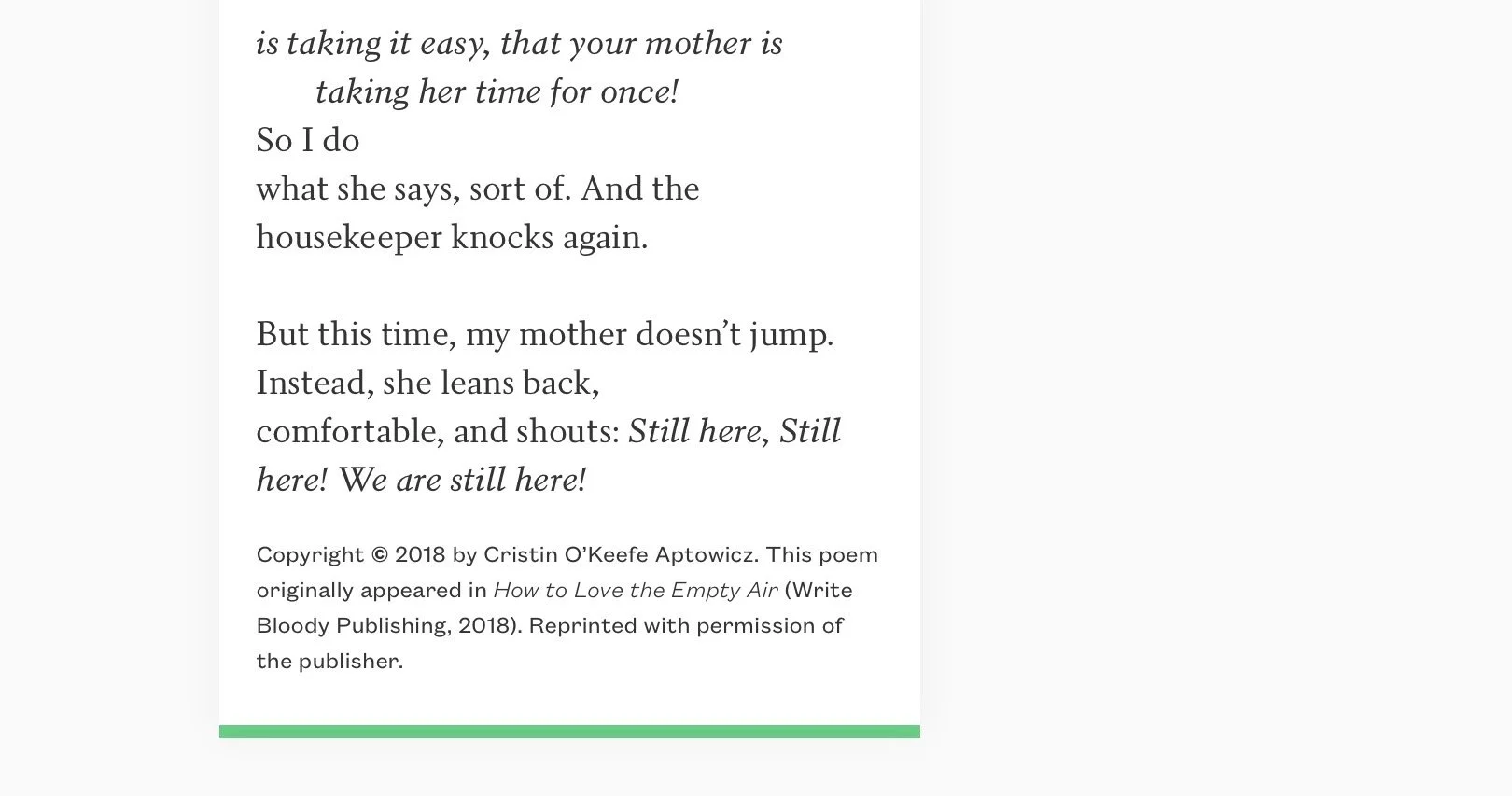
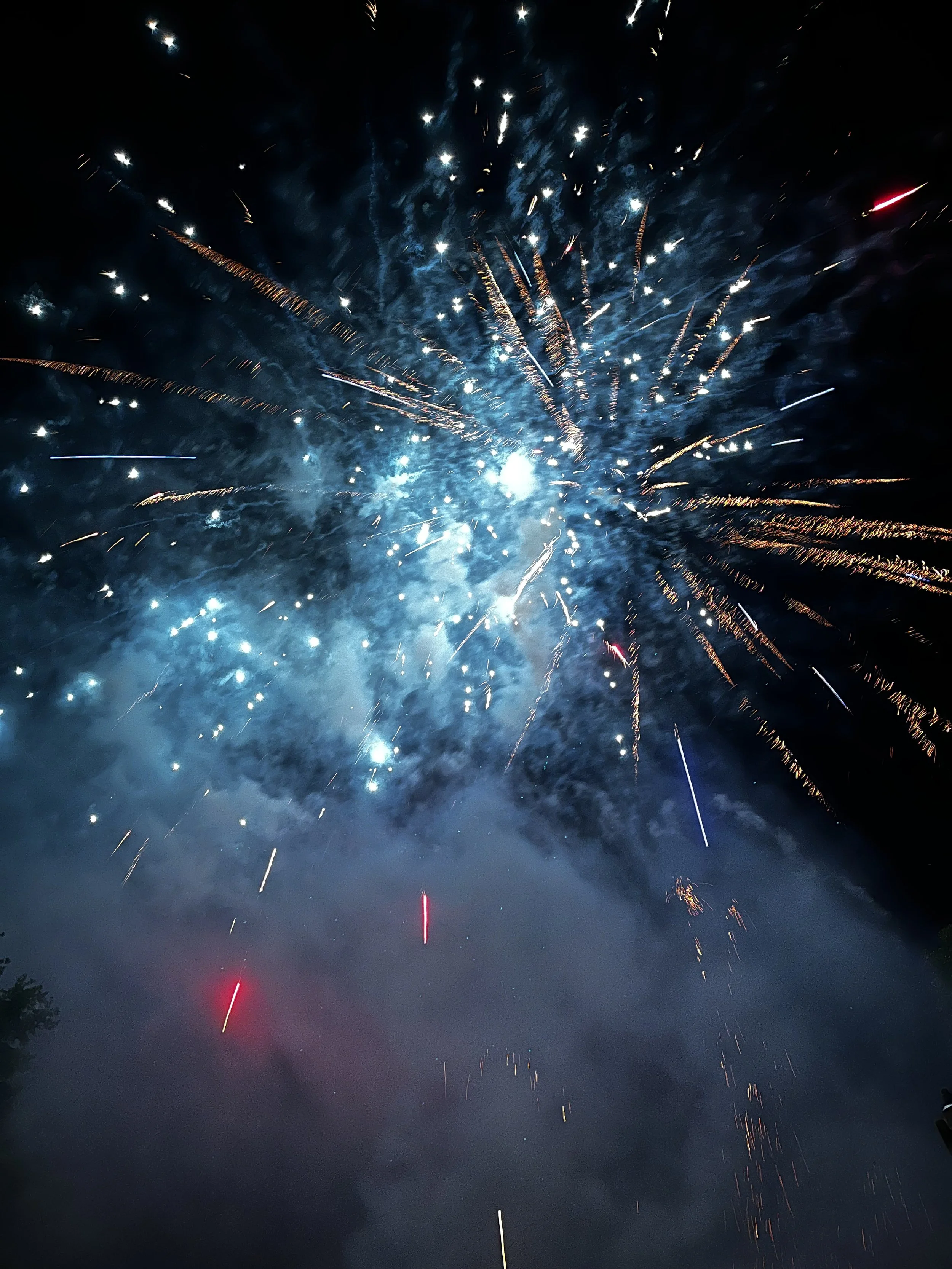
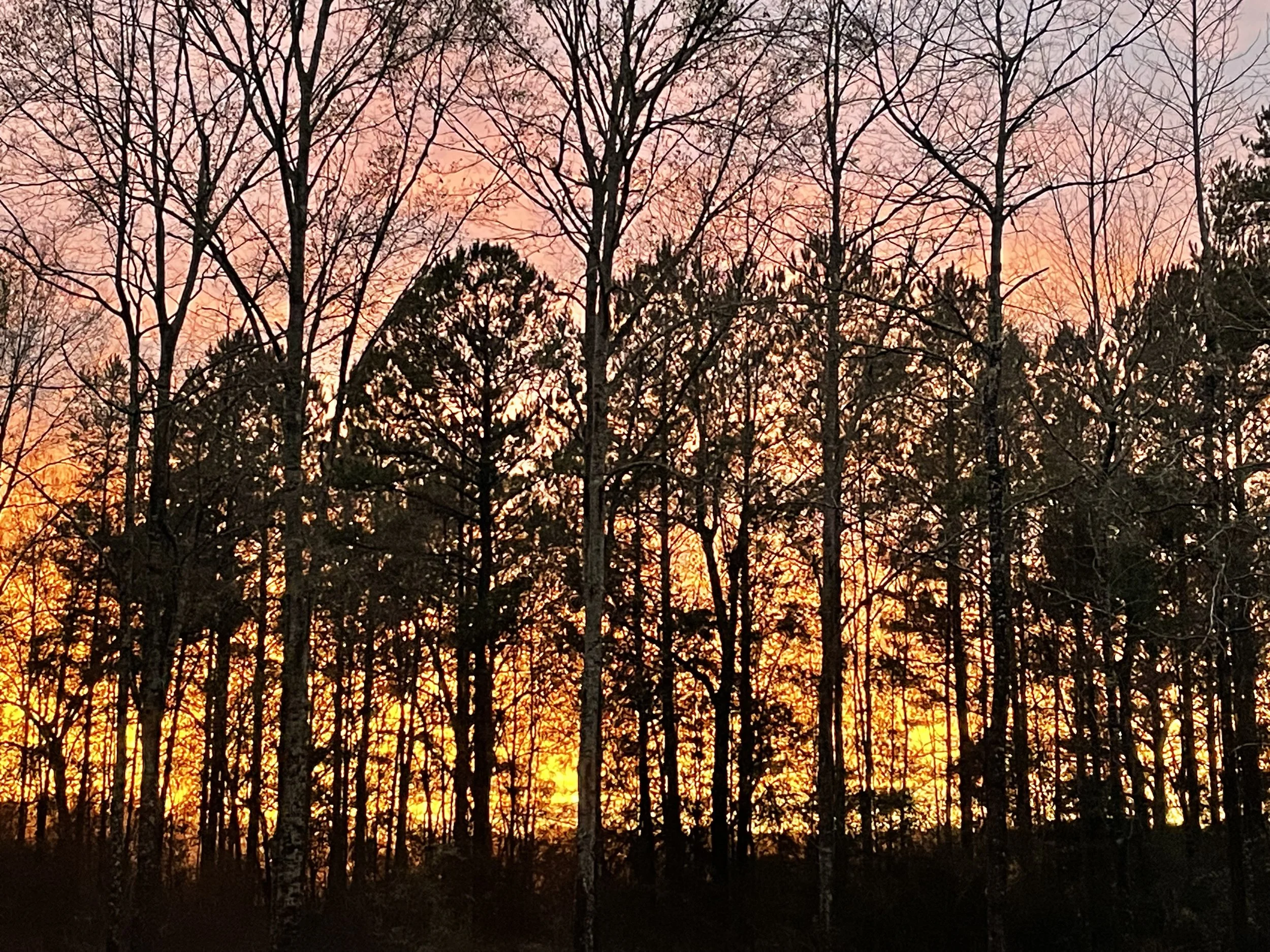
Bonus prompt: write whatever this photo inspires.

Good luck writing.

The Future Beyond Imagining—Prompts Inspired by Jane Hirshfield

As you may know, I am a huge fan of Jane Hirshfield. I admire how in her “I speak with the future” she can include eons and the present day all the while looking at a future far beyond our understanding.

If you would like to hear her read “I speak with the future, click on the link: https://poets.org/poem/i-speak-future.

It may be helpful to know Merriam-Webster's definition of “kalpa” is "a duration of time in Hinduism covering a complete cosmic cycle from the origination to the destruction of a world system."

For the first prompt, use the line "We speak of beauty by moving our jaws and teeth" as a ghostline, erasing the line after writing the poem and crediting the poet in an after statement or in your title. 

The second prompt is to create two places within your poem: a safe inner place and an outer one full of the world's tragedies and harms. 

The third is to write a poem, imagining the world reborn after ours is destroyed. 

For the next, look at Piranesi's “The Staircase with Trophies,” from his series Le Carceri d’Invenzione (The Imaginary Prisons) for inspiration: https://www.nypl.org/events/exhibitions/galleries/visual-world/item/5541

For the final prompt, create a poem from the following list of words: "bones," "teeth," "walled," "staircase," "hummingbird," "world," "nectar," "uneclipsed," "passing," "portions" and "imagine."

Bonus prompt: what made the birds rise and describe their movements and sound.

Good luck writing!
Wolves—Prompts Inspired by Marissa Lingen

Uncanny Magazine is a great publication. Marissa Lingen’s “The Truth About Wolves” is a wonderful example of what they publish. Here is the link to her poem: https://www.uncannymagazine.com/article/the-truth-about-wolves/

I love the idea behind “The Truth About Wolves” and its implementation—how the poem moves from two wolves to a pack to forest and stream to the very moon. Again, I appreciate a poem that breaks the taboo of writing about the moon (or the prohibition once said by one person that seems to get passed around to all writers), and this poem does so decisively. Personally, I need a whole pack and likely the moon to keep me going this week.

For the first prompt, take a familiar allegory or parable and adapt it. Perhaps the fox who couldn’t reach the grapes, calling them sour, does reach them and discovers them to be fermented. Perhaps your scorpion chooses not to sting the frog; it can change.

The second prompt is to use the first line, “They will tell you lies about wolves,” to create a list poem of lies and fables about the animals and their behavior. You can include the now-debunked theory of an alpha wolf.

The third prompt is to address loved one(s) and create a mythology of them for them.

For the last, create a poem—not about wolves—from the following word list: “contain,” “feed,” “full,” “whole,” “tumbling,” “nurturing,” “entrails,” “blood,” “forest” and “stream.”

Again these prompts are focused on poetry but can be used for stories or essays.

Bonus prompt: write about what famous—cartoon or otherwise—wolves are inside you.

Bonus bonus prompt: write whatever this woodcut inspires.

Good luck writing.

Holding—Prompts Inspired by beyza ozer

Today was a terrible day to read the news. Every American should feel horror and shame for the harm our nation is inflicting upon the world and sorrow for what we are doing to ourselves. I don’t know how to stop this, only try to reach for the good and appreciate the beautiful while I can.

Here is a beautiful poem by beyza ozer, https://poets.org/poem/holding-rose-water.

For the first prompt, write about what is left unsaid in families, interspersed with familial rituals, comfort foods and specific memories of lost loved ones and/or homes. 

For the second prompt, mix your own family's migration with those of migratory birds and other species. Do you ever return home?  Can you? Where is your home now? Is it a place or a time or both?  

For the third, use the lines "There is never / a good time" as your title or as a refrain. Indicate that these are quoted through italics and attribution. 

The next prompt is to write a poem from this word list: "holding," "fight," "stopped," "now," "forever," "time,"  "instant," "wraps" "unreachable," "grief" and "talk."

For the last prompt, use the line "We fight so hard. We open the tops of" as a ghostline. Remember to erase the line after you've finished drafting the poem and credit the poet for the inspiration. 

Bonus prompt: write what a heart-shaped coffee ground means to you.

Good luck writing. May tomorrow be a more peaceful day for everyone.

Love Your Work—Prompts Inspired by the NE Ohio Regional Sewer District social media account

UPDATE: I thought this posted last night. I don’t know what happened.

It’s Monday, and you spend more waking hours at work than you do home, so let’s try to love our jobs as much as the NE Ohio Regional Sewer District social media account worker seems to.

For the first prompt, take lines from a famous poem book (Goodnight Moon here) and adapt it to your own job.

The second prompt is to write your appreciation for indoor plumbing, sanitation services or any other convenience that is so easy to take for granted until you go tent camping or lose electricity for more than a day.

The third prompt is to write a nature poem using the following list of words: “night,” “streams,” “settling,” “banks,” “scientists,” “crews,” “serving” and “care.” Substitute any of the other professionals for scientists, or add them all in here. Beavers are great engineers.

The next prompt is to write whatever this photo inspires.

Additional prompts inspired by the NE Ohio Regional Sewer District account: write a poem about love, envy and settling.

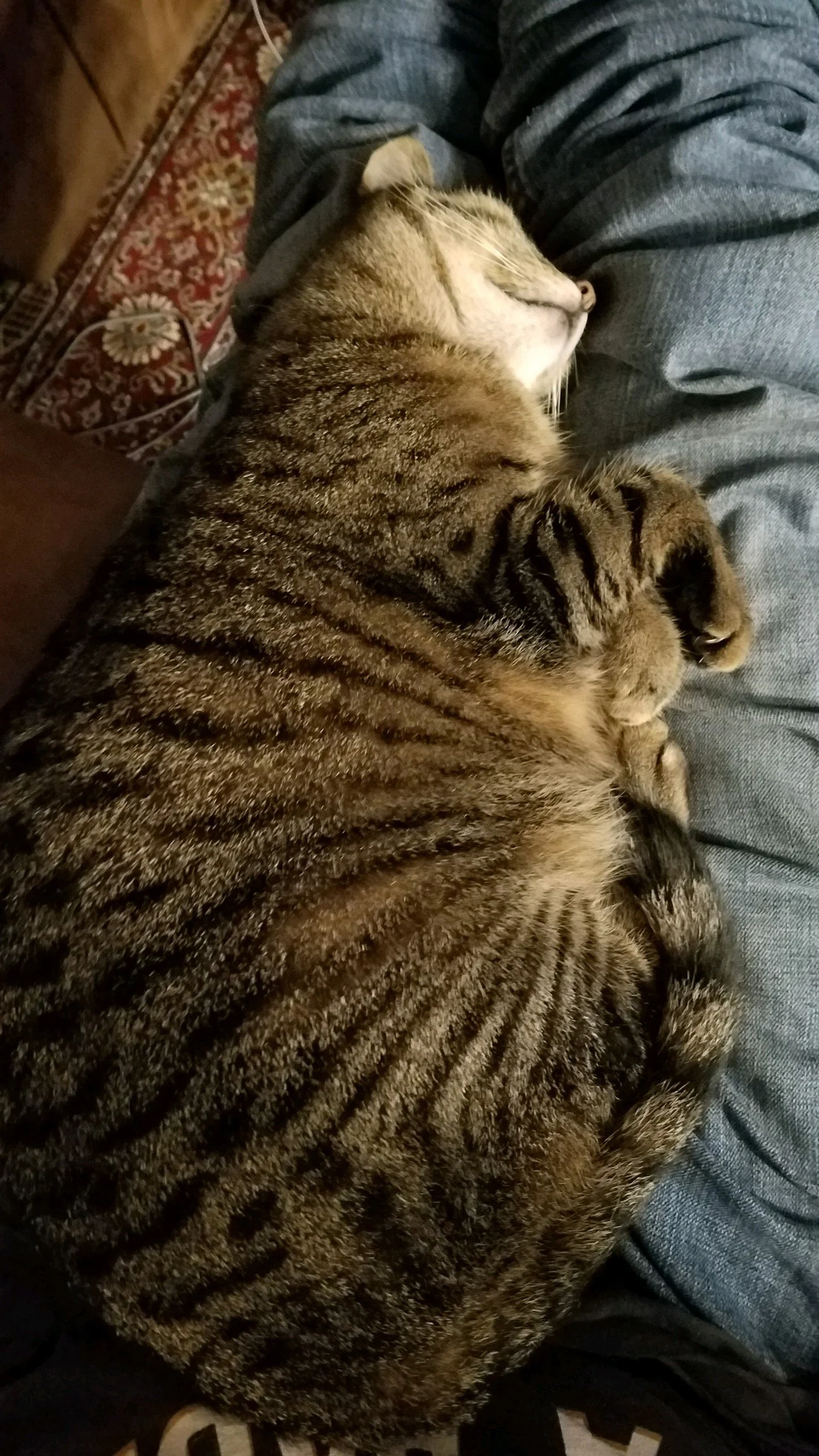
Bonus prompt: write about this kitty discovering a sink.

Good luck writing this week. Have fun at work!

“Easter in full drag”—Prompts Inspired by Charles Wright

Charles Wright has such beautiful descriptions of nature and a depth, again that layering I so admire. Here is a lovely poem I hope you will like too.

For the first prompt, write about seasonal transitions from winter to spring, the occasional back step and false spring, or from spring to fall. Let the description convey the mood and deeper rumination.

The second prompt is to write a poem that moves from long descriptions of nature or the surroundings to personification of nature or humanity, using short, cutting phrases for impact.

The third prompt is to use the line “There is no end to the other world“ as your title or as your first line, remembering to attribute Wright for the line, and describe this other world.

The next prompt is to use “As our fathers were bold to tell us,” as a ghostline, remembering to erase the line after the poem is written and to credit Wright for the inspiration.

The last prompt is to write a poem using the following list of words: “blood,” “redbud,” “crosses,” “bowing,” “fey,” “bones,”“rosettes,” “bib,” “cutlery” and “slice.”

As always, you can use these prompts for essays or fiction; I am simply focusing on poetry for this month.

Bonus prompt: write about how beautiful lilies are and how pure and pristine their symbolism in contrast to their toxicity. Or write whatever this photo inspires.

Happy Easter if you celebrate the holiday. Good luck writing!

So we have “something to push against”—Prompts Inspired by Jamaal May

I have loved Jamaal May’s writing ever since Hum came out, and “I Have this Way of Being” is another beautiful poem. I find how it builds power through its initial—and deliberate—generality particularly interesting. I enjoy poems that have something to say, a deeper layer that rewards digging (yes, pun intended here). If you want to hear him read his poem, click on the link: https://poets.org/lesson-plan/teach-poem-i-have-way-being-jamaal-may.

For the first prompt, write about a task (perhaps the task of writing or of learning a skill) and the underlying reason you do it even if you have to struggle for the words. 

The second prompt is to describe something without knowing the exact terms as the poet did with the names of the flower: you could describe trying to fix a leaky faucet or assemble a cabinet without knowing the names for the various parts and fasteners.

The third prompt is to write a poem using the following list of words: "mouth," "odd," "pastel," "lung," "fist," "weeds," "windswept," "kneel,"  "push"  and "petal."

For the last prompt, build to a penultimate line of "will have something to push against," indicating through italics and within the title (or statement below it) the quoted text and source. 

Bonus prompt: write a poem about growing and reaching toward light or whatever this photo inspires.

Good luck writing!

Escape artist—Prompts Inspired by Mohammed Moussa

This post is a little more like my usual ones. Again I admire those poets who can use just a few words to mean so much. It is a beautiful poem, and the events surrounding the poet make it even more harrowing.

For the first prompt, write about your own methods of escapism, of forgetting, not of what but of how.

The second is to write a poem in conversation with this one. What would you say to the poet (or narrator) if you could speak face to face?

The last prompt is to write a poem in which all that was lost and destroyed is rebuilt, focusing on the time and care it takes to place a brick or sweep a street clean.

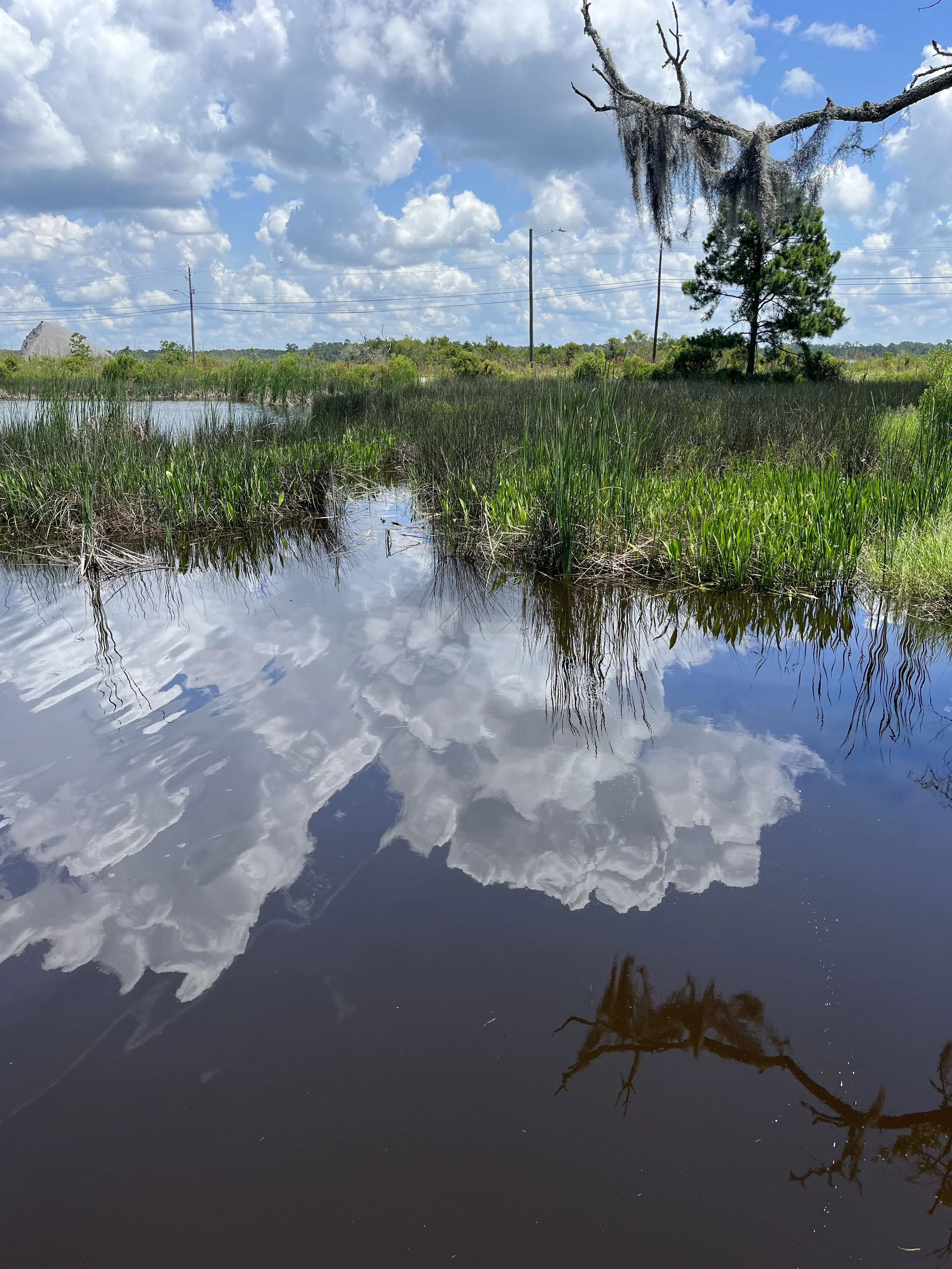
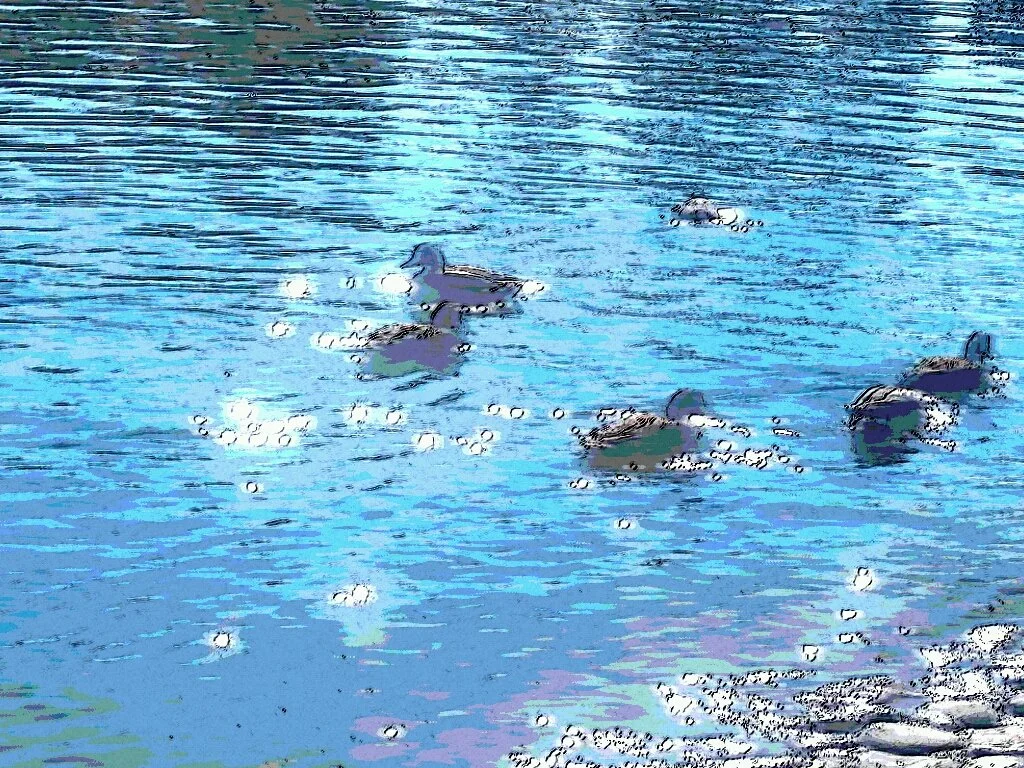
Write whatever this photo of a heron in the Gulf inspires.

Good luck.

Mountain Dew and Love

So I meant to post this last night but forgot! Not a great start to 30/30!

Here is another borrowed prompt, this one from Kayleigh Jayshree for the Poetry Society of the UK. Check out the other great prompts: https://poetrysociety.org.uk/wp-content/uploads/2024/05/Resource-3-love-poems-1.pdf.

The photo below may explain one reason why this poem resonates so strongly for me, especially considering that my husband recently went grocery shopping for my soda.

Good luck writing! Have fun!

Malapropisms of Maladies

Let’s try something a little different tonight. Rather than building prompts from a particular poem, let’s play with missed-phrasings. Cait, mother of perfect kitty Adonis, shared a list of malapropisms (using words that don’t fit the context or in a common phrase, often similar sounding to the correct word).

Your first prompt is to read over these two lists and write whatever comes to mind.

The second is to create your own malapropism or misspelled/mispronounced word, use it as the title and build a poem around it.

The third is to combine as many of them as you can in one poem. Go all out. It is your first day of the challenge, and you should start out strong.

Here is a fabulous poem by Brendan Constantine: https://www.versedaily.org/2013/earofourlord.shtml

Bonus prompt: why is this pig statue so happy at a bbq joint?

Good luck! Have fun!

NaPoWriMo Starts Wednesday

Once again April is knocking on the door and asking you for poems for its 30 poems/30 days challenge, celebrating National Poetry Month. I will try to post a poetry/writing prompt every day this month along with trying to write a poem a day. Most of the prompts will be shorter than usual, and I will frequently borrow others’ prompts and provide links to their websites and books.

Let the borrowing begin with posting NaPoWriMo’s early bird prompt from 2022, https://www.napowrimo.net/2022/03/. Maureen Thorson began NaPoWriMo back in 2003 and got help to create the website, https://www.napowrimo.net. It is a great resource for anyone wanting to participate in the challenge or looking for writing prompts throughout the year. Please do check out the official site: https://www.napowrimo.net. There be an early bird prompt posted tomorrow. Also, if you want to share your daily poems, you can submit your website/blog’s link (the site’s FAQ explains how).

Bonus prompt: write whatever this orchid inspires (perhaps fear).

Good luck writing!

“Assiduous”—Prompts Inspired by Rae Armantrout

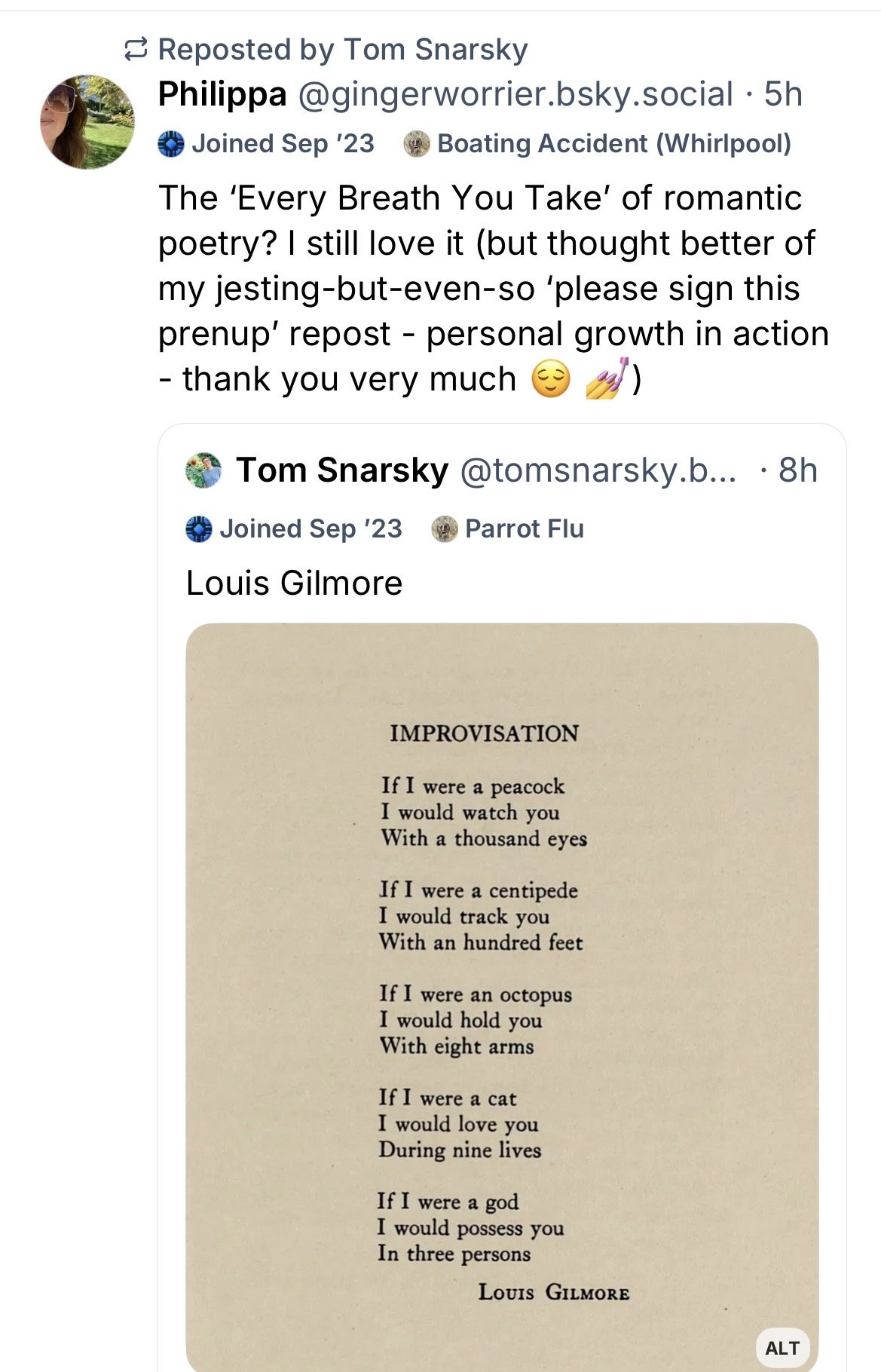
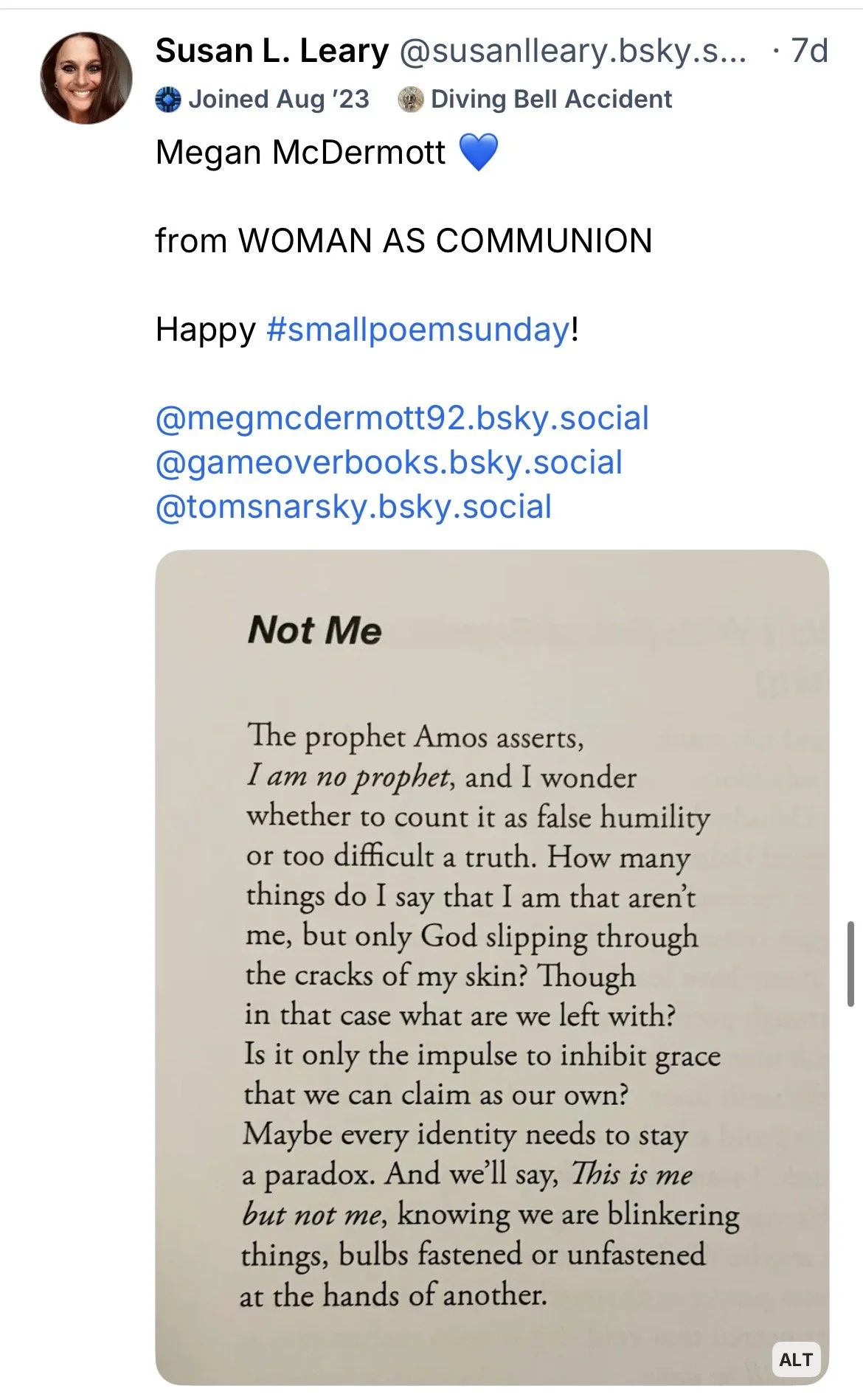
I do admire poets who can say so much in a few lines. Rae Armantrout has great short poems, and poet Tom Snarsky is a wonderful poet to follow: for his poems and for his #smallpoemsunday feed. Tonight I tried to be less wordy than usual in appreciation but failed.

For the first prompt, describe a pet’s behavior and connect it to a human trait in a poem, essay or story.

I particularly enjoy the surprise created by the break between the poem’s second and third lines. The second prompt is to take an old poem that feels unfinished and play with its line breaks, trying to create unexpected turns.

I find the poem’s snarky tone delicious. For the next prompt, write a poem or story narrated with a similarly sarcastic voice. Let your target be a politician, media personalty, even a family member or coworker—anyone is fair game as long as you don’t share it with them or people they know. A snide poem may even prevent an unfortunate outburst.

Notice how the level of detail changes among the stanzas: the first introducing the cat and offering a twist, the middle providing a clear description and the last two making the intended connection with rather abstract language. For me, the language and word choice works. I love how “assiduous” suggests both diligence and fawning especially in combination with “self regard.” For the last prompt, write a poem or story using the following list of words: “self,” “assiduous,” “bland,” “patch,” “claws,” “angles,” “superior,” “balanced” and “same.”

Bonus prompt: write whatever this photo of the younger cat annoying the older one inspires. Or use it as a metaphor for sibling rivalry, dating, office politics or other pesky human interaction.

Good luck!

Dillydallying in Yellow—Prompts Inspired by Charles Simic

As you may have noticed, I’ve switched to posting on Monday rather than Sunday nights. I hope this change improves my consistency since Sundays are less predictable.

I don’t believe I have posted a poem by Charles Simic, a poet I need to read more of. I hope you like this one as much as I did. I also need to post poetry by Phillip Crymble soon, whose work and social media posts I enjoy.

I enjoy how the poem lazes throughout—its sleepy repetition of “l’s,” “s’s” and “z’s”—until the end with its abrupt “click” sound for turning on the lamp. For the first prompt, use the last line, “To click on the yellow table lamp,” as a ghostline. After using it as the starting point for a poem or story, erase the line and credit the poet in your title or with an “after” statement.

For the second prompt, begin by naming one of the seven deadly sins (or other vice) and then provide a setting for it in a poem or story or a description from a remembered place and time for an essay.

The third prompt is to borrow the title, “The Secret of the Yellow Room,” and mash the use of personification with tropes of the YA mystery genre (Nancy Drew, the Hardy Boys or more modern detectives). Be sure to credit the poet for the title.

The next is to write a poem or story using the following list of words from the poem: “lolling,” “dressing,” “breeze,” “dozing,” “silky,” “lilies,” “nuzzle,” “dillydallying,” “stupor” and “lamp.” I love the word “dillydallying”—its sound matching its meaning. The whole poem is a treat to read aloud.

Bonus prompt: Write whatever this photo of a bathroom with cat walkways and stairs inspires you to write. I have no idea where my daughter found these photos.

Additional bonus prompt: write a lullaby for this bee.

Good luck writing. Have fun.

Lines—Prompts Inspired by Brenda Shaughnessy

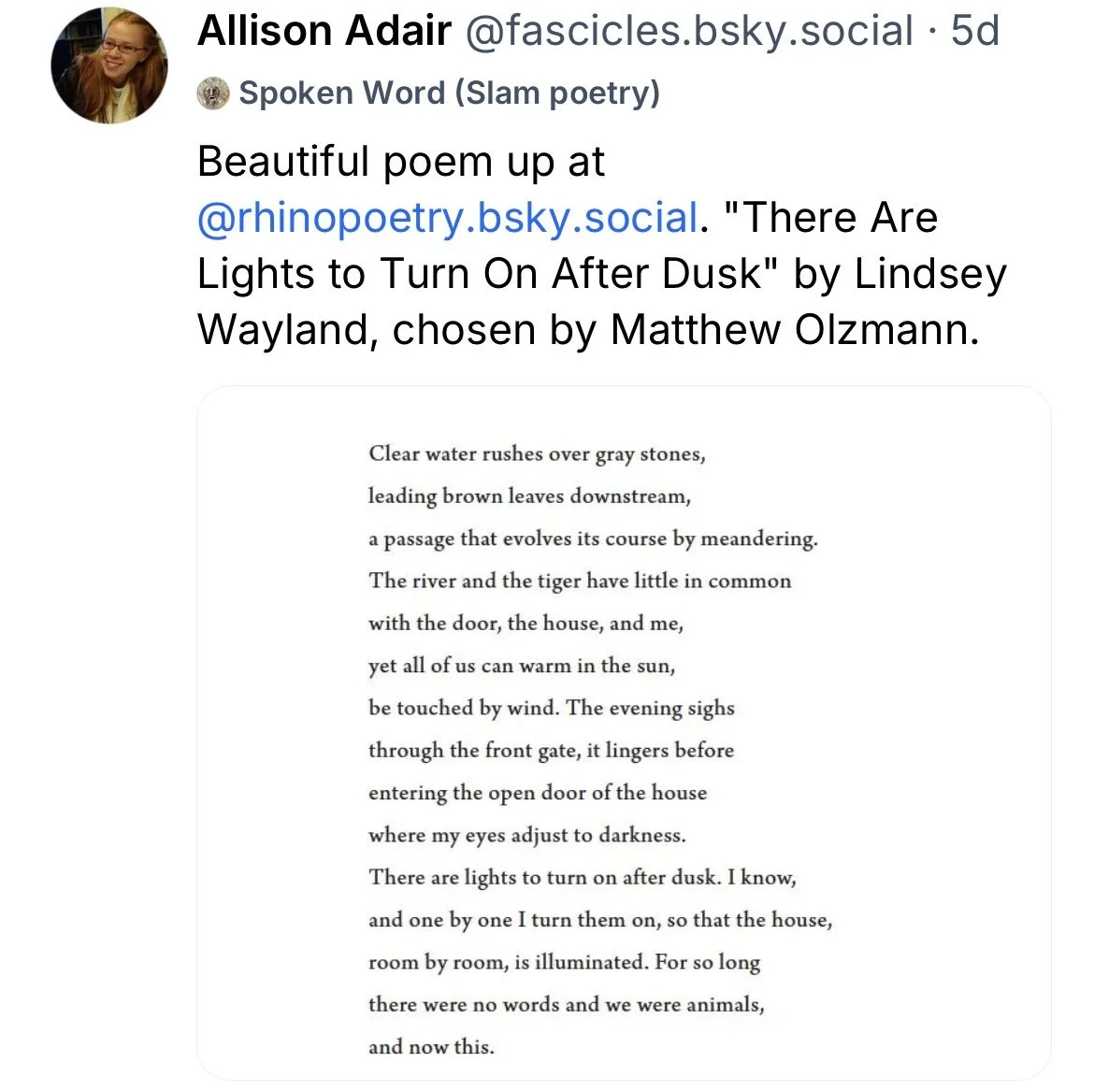
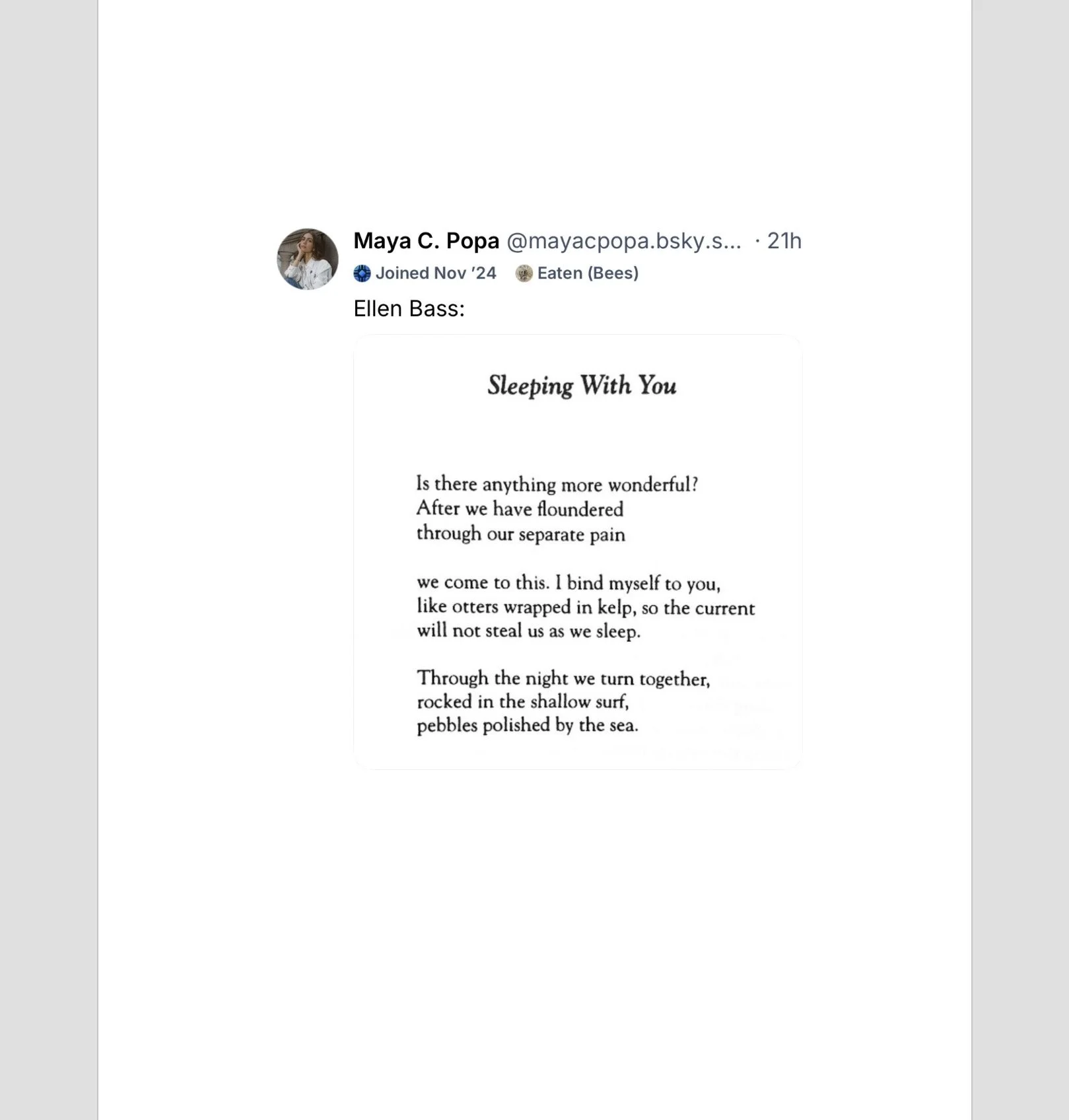
For all of the horrors social media platforms exacerbate or even cause, the sharing of poems is an endless joy. I find @Litbowl to be a great account to follow on Bluesky (I do not actually recommend the platform itself because of its bigoted moderation).

I love this poem by Brenda Shaughnessy from her book Our Andromeda with its beautiful illustration of position and perspective through simple lines and conversational language.

For the first prompt, write about yourself as a small child looking up at skyscrapers or a crowd of adults and as an adult watching ants or similarly tiny creatures. Play with the perspective, adapting tone, description and even syntax if possible. You could experiment with switching from a short words and lines, indicating immediacy, to a distant tone, more technical/academic language and longer lines to indicate higher position/status.

The second prompt is to anthropomorphize a pattern or shape to apply to yourself. Is your life full of circles, cycles and clocks, or perhaps you are trapped in a world of rigid boxes, rules, barriers and borders?

The third prompt is to use the line “Or am I what god thinks” as a ghostline. Remember to erase the line itself after finishing your story, essay or poem and to acknowledge the poet with “after Brenda Shaughnessy” below your title or within your title.

Bonus prompt: write from the perspective of the bird, the camera or that of one of the wires attempting to prevent the bird from roosting.

Good luck writing.

Daily—Prompts Inspired by Larry Levis

Larry Levis is a great poet. His poem from 1972 is powerful, the language gutting and—unfortunately—apt today.

The first prompt is to choose a headline from the last few days and use that as your title or first line.

For the second prompt, use the first line of the poem, “He thought he could ignore the war,” as a ghostline, erasing the line after you’ve finished writing a poem or story and remembering to credit the poet.

For the third, write a poem or story using the following list of words: “paid,” “silence, “sales,” “photographs,” “flames,” “cold,” “number,” “cowed,” “nightsticks” and “alone.”

The next prompt is to juxtapose daily life, driving past schools and hospitals, and the bombings of those same places by our government.

The last prompt is to create a persona poem of War as an unavoidable internet troll or as an abusive stalker.

Bonus prompt: write how future archaeologists will decipher these carvings. How do they describe our civilization?

Good luck.

Seeing and Naming—Prompts Inspired by Fanny Howe

I hope you all are doing well—or as well as possible—in these times. Sometimes we need to step away from the turmoil and suffering if we can. I like to think that in this poem, the narrator walks into the forest to get away from other people, from herself even, but everywhere there are people and her own awareness.

For the first prompt, name the names in this forest’s trees, whose faces and hands do you see and how did they come there?

I am prone to pareidolia—seeing faces and shapes in trees, shadows on the ground, clouds, even houses and kitchen sinks—which is perhaps why I am particularly skeptical of AI hype. Humans are as quick to attribute human characteristics or sentience to objects as they are to deny them of other groups of humans. For the next prompt, write about your own experience with this phenomenon or explore it through a fictional account.

The third prompt is to imagine a world without human faces and voices and what will fill that absence and perform the naming?

For the next, write a poem or story using the following list of words: “lost,” “knots,” “hands,” “elms,” “shivered,” “wind,” “ease” and “name.”

The last prompt is to use the the line “I wanted to be air, or wind—to be at ease” for a ghostline, remembering to erase the line after finishing the poem or story and crediting the poet.

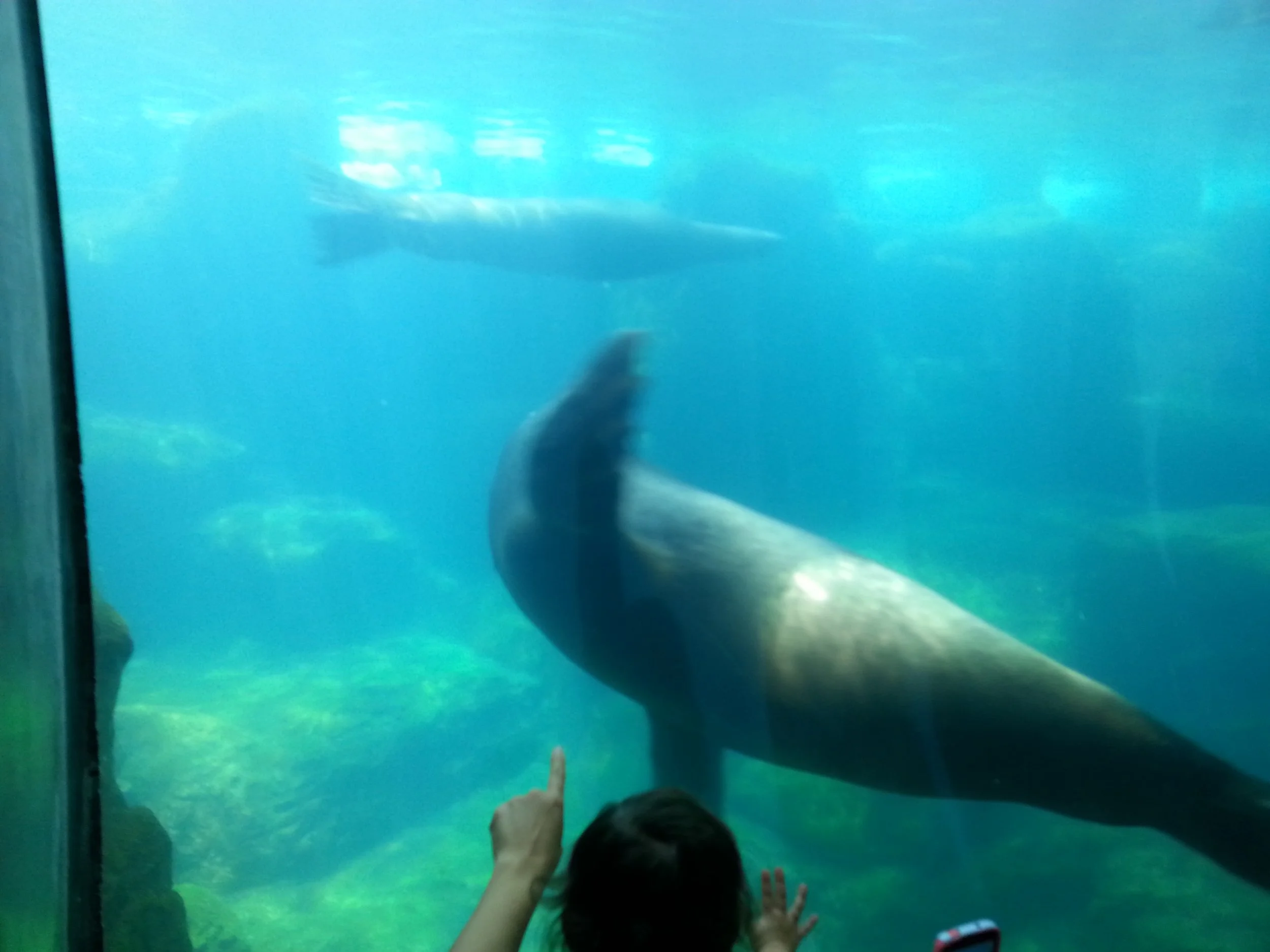
While at the Buffalo River, I saw a skeletal woman in the shape of this moss-covered rock, but my photo didn’t capture the illusion. Write whatever this photo inspires for bonus prompt.

To end on a more cheerful prompt, write from this surprised sink’s perspective. What just happened?

Good luck writing. Have fun.

What Should Break a Heart—Prompts Inspired by Brian Turner

Many years ago I was able to meet Brian Turner at a conference. I had just read his Here, Bullet and was telling a vendor how much I loved it when he walked up. He was so kind to me. I want to share his poem because it tells the deepest truth, and the photo it is paired with should break our heart.

For the first prompt, write a one-sentence poem that builds up to a devastating statement. (Yes, I know, I am giving you a Follow that! here)

The second prompt is to the line “you carry in your fists, my friend” for a ghostline. After you’ve finished the poem or story, erase the line and credit the poet.

For the third, write an epistolary poem offering advice with the direct address near the end.

The next is to write a poem or story using the following list of words: “shake,” “desert,” “irrevocable,” “seared,” “adrenaline,” “muscle,” “crackling,” “down,” “fists” and “break.”

Bonus prompt: write about ice breaking and thawing into spring or whatever this photo from northern Minnesota inspires.

Good luck writing.

Topical—Prompts Inspired by Isaac Pickell

Sorry, everyone, for the long delay. Once I missed a couple of weeks due to the holidays and a new job, I just couldn’t get myself writing again, the blog or poetry. I have been in a bad headspace in spite of such beautiful poems to discuss.

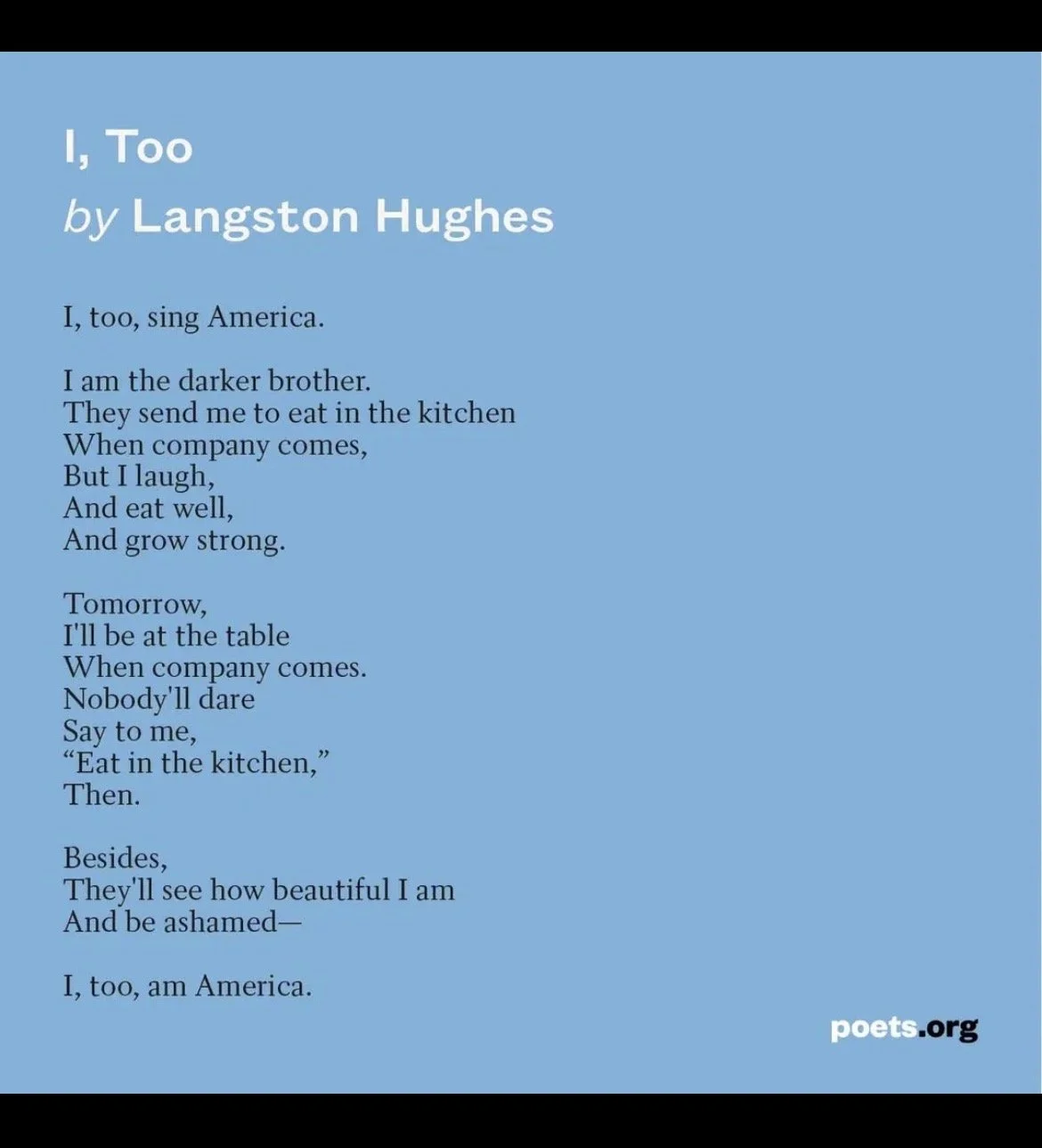
I had the fortune to run across Isaac Pickell’s powerful poem “Settle/ment” online and have loved everything I’ve read since. He kindly sent me “They took Dylan Roof to Burger King” and “Topical poetry when you are the topic” to share here.

I now have two more books to add to my ever-expanding to-read list (a wonderful problem to have): everything saved will be last (https://blacklawrencepress.com/books/everything-saved-will-be-last/) and It’s Not Over Once You Figure It Out (https://www.blackocean.org/catalog1/its-not-over). You will likely see one of them featured in September for the Sealey Challenge.

I admire poems that are honest and acknowledge the complexities of identity, of who is targeted and the collective response. This poem was posted after the Bondi Beach attack in Australia. After every reported mass shooting—most are no longer “newsworthy” here—I too pray that it will be a white man with well-known rightwing views so that an entire group of people will not be smeared and their safety further threatened. For the first prompt, write about reactions to targeted violence and which voices are heard.

The poem opens with the reference to the famous poem “First They Came.” For the next prompt, write who you will speak out for and who will speak out for you.

I found the poem’s deliberate shift of pronouns powerful. The third prompt is to write a poem or story using the following list of pronouns and other words: “everyone,” “target,” “universal,” “fear,” “threat,” “right,” “mine,” “my,” “they,” “mourning” and “you.”

For the next prompt, use the last lines “Don’t worry / they won’t come for you” as a ghostline, remembering to erase the line after writing your poem or story and crediting the poet for your inspiration with an after statement or in the title.

Often what is left unsaid in a poem echoes in the spaces and after the last line. For this first prompt, ask a question within the story or poem but leave the reader to answer it.

Because I admire the careful use of language in both poems, the next prompt is again a word list: “topical,” “sorrow,” “steeping,” “wait,” “innocence,” “ashes,” “whisper,” “deserve” and “true.”

The last prompt is another repeat: a ghostline. Begin a poem or story with “don’t / tell me how to” but fill in your own action. Remember to delete the line and credit the poet. This prompt I admit is my own reaction to years of obedience before rejection.

Bonus prompt: write whatever this photo from New Orleans’ Audubon Riverview Park inspires.

Good luck writing. I hope I have finally broken through my own block. I hope this year is a productive one (and better than it began).

Join me tomorrow at Homegrown literary festival!

I will get back to writing prompts soon. Promise.

Tomorrow though, please join me at the USM Gulf Park Campus for the Homegrown festival if you are on the Mississippi Gulf Coast. I am excited by the great panels offered and grateful to be included in the second event for the Biloxi Community Reading Series.