Prompt

To-Do List Prompt

The last prompt—before I got the flu—was about New Year’s Resolutions and lists of what we didn’t get done. Now let’s write a poem for what we plan to do. Use your daily to-do list and make a poem. Let’s get some real use out of that list.

Listen to C. D. Wright’s poem “Living” for inspiration. Notice the frequent repetition of the phrase “If this is Wednesday.” Repetition of a word or phrase that occurs at the beginning of a line is called anaphora. This literary device can be extremely helpful in generating writing. Brendan Constantine recommended it in one of his workshops. If you have a chance to take a workshop with Brendan, do so. I have learned so much from him, and he is truly fun (and brilliant, kind and generous). His next workshop is with poet and novelist Maxine Chernoff on Saturday, Jan. 13th, in Santa Monica (Camera Obscura Art Lab, 1450 Ocean Ave.) at 1-4 p.m. Click on workshop for the link to buy a ticket ($30).

I am so grateful to Chelsea Dingman, Hannah VanderHart, and other poets recommending C. D. Wright’s work on Twitter. I had read a poem or two of hers previously but am rediscovering how much I like her writing.

IMG_2108.JPG

New Year’s Resolutions—To-Do’s and Did-Not’s

Most of us contemplate the new year with a to-do list of promises: exercise more, read more, write more, worry less, binge Netflix less, etc., most of which we will break within the first weeks. I am not here to judge you—honest. I am too busy stressing about my own ever-growing list of expectations and likely failures. If hope springs eternal, my clock springs must be rusty and bent.

On that optimistic note...write a poem about what you didn’t get done this past year. Rather than pushing against that mudslide of regret, use its momentum and put your obsessive analyzing of past mistakes to good use. For inspiration and commiseration, read Richard Hoffman’s “December 31st” personifying his undone to-do items. 

Another possible prompt using Hoffman’s poem: describe the calendar’s artwork or specifically January’s to create an ekphrastic poem (a poem that describes a piece of artwork or a scene). We will dive further into ekphrastic poetry in a later post. For now, you can jump to the Poetry Foundation’s definition of the ekphrastic form and its recommended sample, the famous “Ode to a Grecian Urn” by Keats.

Or if you would like your own 17th century still life with skull, refer to the painting Vanitas Still Life by François van Daellen (c. 1650)

IMG_2055.JPG

 Click “painting” for a link to its free downloadable image at NGA Images from the National Gallery of Art. Check out other images too.

Breakup Prompt for the Year

Last January, HanaLena Fennel gave this prompt at the Ugly Mug reading: “Break up with last year. You are too good to be treated like this.”

I am unsure about your year, but for me 2016 was a flaming trash heap, and then 2017 waltzed up and said, “hold my beer.” So I am repeating this prompt for 2017. Don’t hold back. Don’t tell 2017 you just want to be friends or that it is really you, not it, that’s the problem. You tell 2017 off for every insult and lie slapped across your face. Get political, get dirty, get revenge. Burn its calendar and erase entire months from your memory. We all deserve better. 

Here is a photo of your ex. Launch a dart or a missile, whichever is more appropriate.

IMG_2054.JPEG

Here are the two poems I wrote to 2016:


2016
bent me over a table.
I was doubly bored.


2016,
you rolling dumpster fire,
burning down career,
government, confidence, skills—
I piss on your calendar.


If you want more prompts from the fanatastic HanaLena Fennel and wish an encouraging online community, subscribe to her Patreon page.

IMG_2053.JPEG

I believe the half scratched off price sticker on the bottom of my coffee mug may explain the universe’s attitude towards me... Don't worry, I will write a poem for it too.

Gold, Frankincense and Myrrh—Three Offerings

Recently I posted a prompt of three items that can be used for either poems or short fiction. Let’s update that prompt to fit the holiday: choose three items, but make these items offerings. Like the three kings, you may offer three items of value to God’s first-born son, or something less tangible, perhaps the first deep embrace you received after a year alone, the smell of rain after a long drought, the last goodbye you said to someone you lost.

Or make your offerings to some other power in your life, whether benevolent or malignant. Or make offerings to multiple influences. Regardless of who receives them or what the offerings are, you paid a price to have these or will pay dearly to give them away. For inspiration, read T. S. Eliot’s “The Gift of the Magi.”

IMG_2052.JPEG

‘Tis the Season to Earn that Coal—Sex Prompts

There is time enough to post prompts celebrating the true spirit of Christmas and Hanukkah. Tonight is for all the naughty boys and girls to whom Santa gives coal to keep those furnaces burning hot... If you wish, keep the Christmas theme. Are you Santa’s favorite elf? Write about sitting on his lap. Does Santa carry a candy cane in is pocket, or he is really happy to give you a present? Is there dancing on the North Pole? Santa did name one of his reindeer vixen.  

If the season of giving and receiving does not make you make you think of fishnet stockings, then let’s just get down to business. Write a sex poem. Don’t hold back unless edging is your thing. Remember, really nice boys finish last—after the girl does. 

 For inspiration, read Kim Addonizio’s “What Women Want” and listen to the poet read her work. 

This prompt works for short stories too.  If you need a little help to get started, check out this NSFW random prompt generator. I think I will let you find your own stories...


IMG_2051.JPEG

Christmas

Christmas and Hanukkah are almost here. The presents are wrapped under the tree (nope). Holiday cards have all been sent (oops). The stockings are stuffed (with lint). You may sense a theme.... The Internet is a blessing though and allows slackers like me to borrow ideas from industrious souls. Check out these creative writing prompts for both poetry and fiction at LitBridge

IMG_2050.JPEG

Three Lists, Three Elements, Good Things Come in Threes

Yes, I know I promised to provide prompts for short stories too. I admit I am a slacker. I do have a prompt (a borrowed one) that will work for either short stories or for poetry. Behold, the Power of Three: three categories, three elements, three spinning rings of hell, however you wish to think of it. I “borrowed” this idea from two places, Steve Ramirez and the website Creative Writing Now.  

Poetry workshops with Steve Ramirez usually involve two or even three categories of five items: i.e. five mythological beasts, five mundane tasks and five embarrassing secrets. Mix and match until you get friction. Perhaps you decide Medusa likes to sing Disney songs in the shower as she washes her snakes. Which song does she like best? Describe her voice. Do the snakes provide backup?

IMG_2049.JPEG

Now for the short story prompt Three Elements: Choose a set of three elements and write a story that contains all three of them.

  1. A stolen ring, fear of spiders, and a sinister stranger. 
  2. A campfire, a scream, and a small lie that gets bigger and bigger.
  3. A broken wristwatch, peppermints, and a hug that goes too far.

Somehow the “hug that goes too far” draws me in. Check out the full list of three element sets as well as other short story ideas. 

The story “Cat Person” has generated a lot of attention on Twitter. I think Red Vines, movie theater, and bad sex would be its three-element prompt if I were to attempt to reverse engineer the story. 

The CDC’s 7 Forbidden Words—Another Word List Prompt

As you may have read, the Trump Administration is prohibiting officials at the CDC from using seven words/phrases in official documents being prepared for next year’s budget.

The list of forbidden words:

  1. Evidence-based
  2. science-based
  3. vulnerable
  4. entitlement
  5. diversity
  6. transgender
  7. fetus.

Several poets have suggested using these seven words in a poem. I first read of the prompt from Cathy Park Hong on Twitter, but several others posted the idea on Facebook.

Here is an opportunity you might like: Sarah Freligh and Amy Lemmon invited poets to submit poems in any form but using all seven words (preferably in repetition) to CDCpoetry@gmail.com for publication on their blog. Check their blog out for updates, more prompts and poems.


IMG_2048.JPEG

IKEA Instructions for a Pantoum

Yes, I have covered the pantoum form before, but sometimes step-by-step instructions are necessary or at least helpful in writing a new form. The awesome Rachel McKibbens provides such instructions on her blog. Please jump to Writing Exercise #89 on her blog.

IMG_2047.JPEG

There is absolutely no reason for this photo other than I like it. 

Rachel provides an amazing sample poem on her blog, but if you want to read the poem I created using her prompt, check it out here. It was posted on the blog of Denise Wueve, editor of the temporarily closed Wherewithal, which I truly hope will return soon.

Faerie Tales Revisited—A Prompt from Two Idiots Peddling Poetry

From my last post, you know how much the Two Idiots Peddling Poetry reading series means to me. Along with providing amazing features, supporting local poets and providing a welcome home for zombie and Star Trek poems, co-host Steve Ramirez posts prompts every day for April’s 30/30 challenge.

Here is a prompt from Steve posted way back in 2013. He even provides sample poems, bless his heart. 

Btw, Steve began his own blog. Check it out.

IMG_2039.JPEG

Because I am personally focusing on poetry right now, I have neglected all other forms of writing. I will try to do better in the future, but Steve’s prompt lends itself equally to fiction, whether flash or longer pieces. Check out Jan Stinchcomb’s story published at Rose Red Review.

To read more of Jan’s amazing fiction, visit her website with its links to her other published stories. And buy her book. ;-)

IMG_2042.JPEG

Monuments

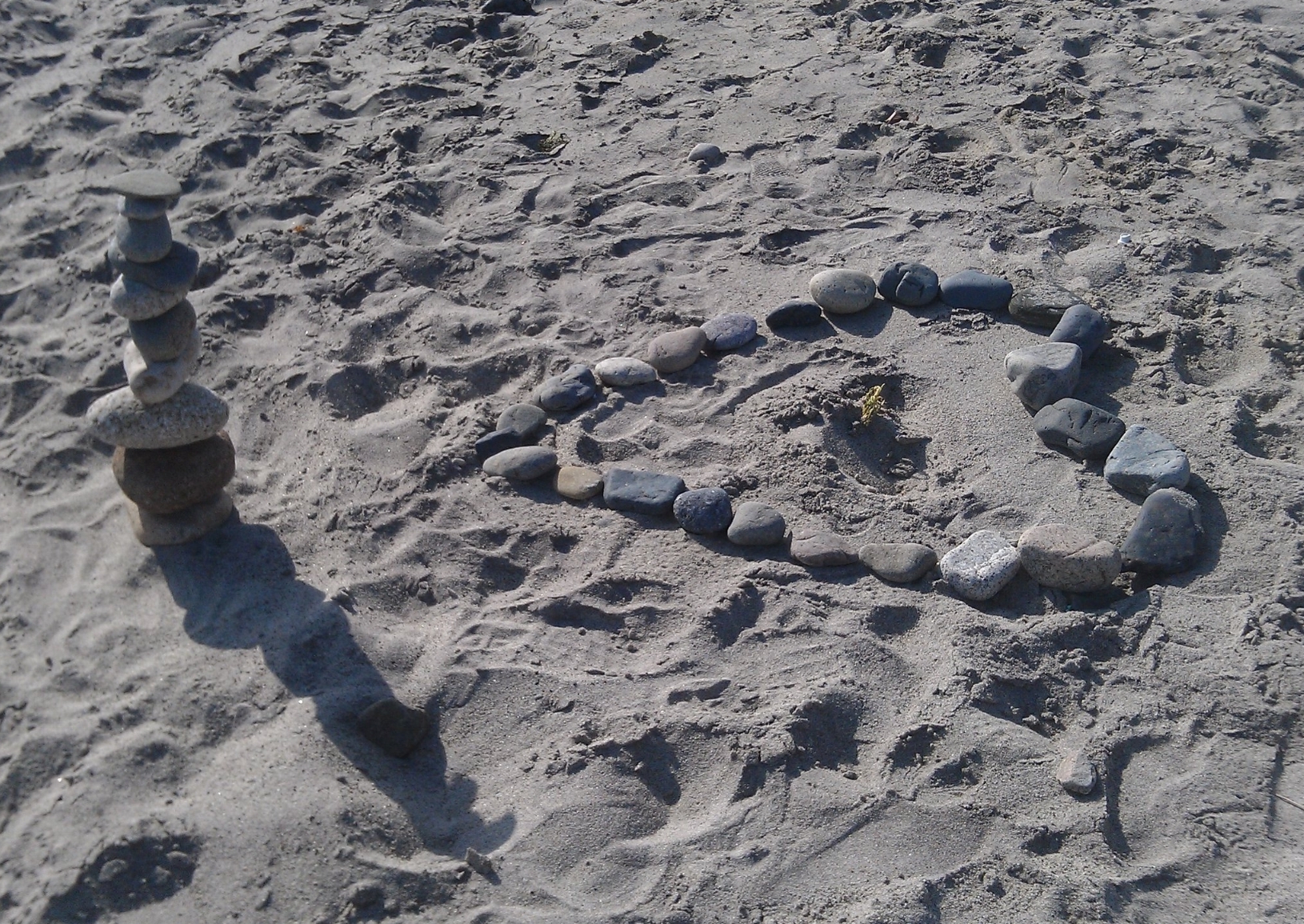
What monuments do you build to your loved ones? A tower on a mountainside, a mausoleum of marble regret, a pyramid among shifting sands, paper hearts or paper cranes, a cairn of stones? Will your monument endure after your loved one is gone? Or was the beauty in its transience? 

IMG_2035.JPEG

What does your choice of media say about your love or about your loved one. Stone hearts or paper hearts? 

File Dec 04, 2 16 39 PM.jpeg

The Temple of Your Body

If your body is a temple, whom do you welcome inside? Do you keep the doors open, or is there an iron padlock, a bar across your doors, a moat with drawbridge and alligators? Is your temple guarded by fire-breathing dragon or yipping chihuahuas or cooing doves?

If your body is a temple, what hymns are sung inside? Is the hymn book from your childhood? If not hymns, what music or rhythms move your body—jazz, pop, waltz, dirge? What instruments play inside you? Pipe organ, piano, harp, trombone, flute, bagpipe? Or is all the music of your body percussion—the beating of drums and the clanging of cymbals? Or is the only sound inside that of a small fountain or the surrounding waves?

IMG_2034.JPEG

If your body is a temple, what incense is burned? Frankincense and myrrh, sandalwood, lavender, patchouli? Or do you burn sage to drive out negative spirits? Why do you need to? Or do you fill yourself with the scents of vanilla and cinnamon to make yourself a sweet warmth for your congregation? Or do you spray Febreze to cover the odors you cannot drive out? If so, describe those odors. What creatures do they attract?

Who are your temple’s worshipers? How many? Are all your pews filled? Standing room only or barren?

File Sep 17, 7 35 51 PM.jpeg

Is your temple domed or turreted or simply a covered courtyard? Is a breeze allowed in? Does sun shine through stained-glass windows? If so, what colors? Red only through your panes? Or is your temple in darkness, shrouded? Can your worshippers see cracks in the walls, crumbling tile, debris on the floor? Or is your temple draped in velvet, lit with crystal chandeliers, and gilded to welcome only the worthy? Is the pulpit polished mahoghany or stainless steel or tarnished brass? Who stands there? Who speaks your message? What are the words?

2746.jpg

Show Your Answers—the Questionnaire Prompt

Questionnaires are dry and clinical even when the subject matter is anything but impersonal. Use a form or questionnaire as the jumping off point. Answer the questions with essential truths—the metaphorical truth—rather than a list of symptoms. Let the family tree bear fruit. Show the worms and the rot and the sweetness. Or take an insurance form, as dry as a cracker in the desert, and make it bloom. If you need a sample questionnaire, refer to this form, which includes general medical questions along with a checklist of occupational and environmental exposures plus questions specific to the asbestos program. Good times.

For inspiration and/or intimidation, see Oliver De La Paz’s powerful answers to an autism screening questionnaire for his son in the poem “Autism Screening Questionnaire—Speech and Language Delay” on the Poetry Foundation’s site. Listen to the poet read his poem. So beautiful.

Or be dazzled by Nicole Sealey’s “Medical History” published at The Account. How she takes standard medical questions and transforms them into a wonder—I am awed.

IMG_2032.JPG

Ghost Line—Prompt from Rachel McKibbens

Alas, the time for ghosts and goblins is past, but I was too busy procrastinating to post in October. Nonetheless, let’s talk about ghost lines. A ghost line is a line from a poem or novel or really anywhere that is the jumping off point for your own poem. It is the first line of your poem written in invisible ink. You omit it once you are finished. If you feel the line is necessary, make sure you indicate the line is not yours and attribute it to the author. You could make the line an epigraph if you wish. Even after omitting the line, many poets will acknowledge the poem’s inspiration by adding “after Tarfia Faizullah” or whoever provided that first step.

Because my habitual procrastination has continued into the next month (and probably until my last, put-off breath) but mostly since I enjoy fangirling fantastic poets, I would like you to jump to the site of the amazing Rachel McKibbens for her ghost line prompt.

IMG_2029.JPEG

Thanksgiving Part II—What You Ate

Thanksgiving is a holiday for spending time with family and friends, ignoring the problematic parts of American history, avoiding politics and overeating. Ultimately, the overeating tends to linger longer in my case...as my pants can readily affirm. 

Now is your chance to write an ode to stuffing (or over-stuffing), a sonnet to green bean casserole or that villanelle to repeating heartburn.  

Or if you wish to write a truly depressing poem, research nutmeg and never eat pumpkin pie with a clean conscience again. The politics of the dinner table can be as brutal as those discussed around it, but I prefer not to sob over my dessert on a day off, so my prompt is the cheerful and/or creepy instruction to address a poem to a Thanksgiving dish—traditional, take-out, main course, side or just dessert—anything you ate yesterday. And no judgment from the rest of us. Perhaps you can even zombify it. Maybe it will eat you back—from the inside out. 

Check out Bruce Guersey’s “Yam” on the Poetry Foundation website  .


IMG_2028.JPEG

Thanksgiving—What You Gave

For this Thanksgiving, let’s focus on the giving rather than expressing gratitude for our gifts. Write a poem about what you gave. Use anaphora (repetition of the first word or phrase at the beginning of the line) to tie the poem together. Put a bow on it. This is your present.

Begin each line or, if you prefer, each stanza with I gave.

These gifts may have been unwanted—perhaps they were curses—or maybe they were all that you could  give, but you gave them nonetheless. Who accepted them, and who turned away? What did your gift make?

You can read and listen to Alberto Ríos recite his lovely poem “When Giving Is All We Have” at poets.org

IMG_2027.JPEG

Erasure: Cutting Down to a Poem

Erasure (along with its cousin “blackout poetry”) is the technique of omitting parts of an existing text (whether poem, article, reprint of a speech, a novel or an excerpt) to create a poem. With blackout poetry, the text is left as is with the omitted words, phrases and sentences marked out. Part of its appeal is its dramatic presentation. Erasure typically reorganizes the remaining text perhaps into stanzas.

Some poets take full poetic license in erasure by changing the wording or the forms of words and even combining letters to create words not found in the original as long as the words/letters remain in the original sequence. I admit I truly enjoyed cutting the text of Mike Huckabee’s speech to have him seemingly admit to a torrid desire for a shirtless Vladimir Putin.

While my erasure of Huckabee’s speech was merely silly, erasure is a great technique to use for political snark and for knifepoint observations. A recent article in Fast Company noted the form’s skill in delivering harsh truth. The poet Isobel O’Hare recently applied erasure to the recent statements from celebrities accused of sexual harassment and posted these blackout poems to Instagram. For more examples, check out her website.

Full disclosure, I first came upon Isobel O’Hare’s poems on the Poetry Foundation's Harriet blog, and the next day my stepson sent me a link to her poetry. 

I first tried erasure at Poetry Lab, the inspiring generative workshop run by Danielle Mitchell. This prompt is hers. She gave everyone this block of text from Virginia Wolf’s The Voyage Out and required that we cut it down to just twenty words.

Your prompt is to do the same. Cut this text down to just twenty words:

Chapter XIV

The sun of that same day going down, dusk was saluted as usual at the hotel by an instantaneous sparkle of electric lights. The hours between dinner and bedtime were always difficult enough to kill, and the night after the dance they were further tarnished by the peevishness of dissipation. Certainly, in the opinion of Hirst and Hewet, who lay back in long arm-chairs in the middle of the hall, with their coffee-cups beside them, and their cigarettes in their hands, the evening was unusually dull, the women unusually badly dressed, the men unusually fatuous. Moreover, when the mail had been distributed half an hour ago there were no letters for either of the two young men. As every other person, practically, had received two or three plump letters from England, which they were now engaged in reading, this seemed hard, and prompted Hirst to make the caustic remark that the animals had been fed. Their silence, he said, reminded him of the silence in the lion-house when each beast holds a lump of raw meat in its paws. He went on, stimulated by this comparison, to liken some to hippopotamuses, some to canary birds, some to swine, some to parrots, and some to loathsome reptiles curled round the half-decayed bodies of sheep. The intermittent sounds—now a cough, now a horrible wheezing or throat-clearing, now a little patter of conversation—were just, he declared, what you hear if you stand in the lion-house when the bones are being mauled. But these comparisons did not rouse Hewet, who, after a careless glance round the room, fixed his eyes upon a thicket of native spears which were so ingeniously arranged as to run their points at you whichever way you approached them. He was clearly oblivious of his surroundings; whereupon Hirst, perceiving that Hewet's mind was a complete blank, fixed his attention more closely upon his fellow-creatures. He was too far from them, however, to hear what they were saying, but it pleased him to construct little theories about them from their gestures and appearance.

Here is my rough process (scribbled, crumpled and torn):

File Nov 15, 4 59 24 PM.jpeg

Even though everyone began with the same text, the final results differed dramatically among the workshop’s participants.

Here is the final version of my erasure from the text:

Virgin Wolf:
Erasure of Virginia Woolf’s The Voyage Out

Going down was saluted
by the kill.
Plump meat stimulated
by throat—
bones mauled
to rouse the thicket
of spears.

And here is the erasure poem created by another participant, Ben Trigg.

Erasure from The Voyage Out, Virginia Woolf

The dusk electric hours lay long in their hands.
The women of hard silence rouse spears to attention.
Little gestures.

Good luck!

Femme Fairy Tale Word List

Word lists, yes, word lists. While all of us remember having to write out vocabulary words, exercises using words from one poem or by a particular poet can propel some useful freewriting or even lead into a poem or short story. Just as a form can force our writing into a new direction by its restrictions, word lists and ghost lines can offer a starting point. Sometimes a box opens into a whole new room.  

Below is a femme fairy tale word and phrase list from “Little Red”in Double Jinx by Nancy Reddy.

Choose eight and climb in. See where it carries you.

Gorged                                                                       Kindling

Grainy                                                                         Hearth

Swallowed                                                                  Framed

Rib cage                                                                      Rumbling

Papered                                                                       Hidden

Shelved                                                                       Pinned

Belly plump                                                                Vivisection

Gobbled                                                                      Pink

Roast                                                                           Fall

Cracking                                                                     Inside

Double Jinx.jpg

Nancy Reddy

Rather than reading the poem that originated the list, which may restrict your own originality, check out the fabulous "The Case of the Double Jinx" by Nancy Reddy. 

Storm

File Nov 05, 7 44 25 PM.jpeg

Storm

Let the ocean squall. Accept the hurricane. Embrace the tornado. Pick a natural disaster. Don't look for meaning in it. Let it be both personal and overwhelming. Write a destruction poem.

This prompt is brought to you from the fabulous HanaLena Fennel. If you want more prompts and unicorn glitter from her, subscribe to her Patreon page. 


51sru3r8gSL.jpg

Patricia Smith

Check out the amazing Patricia Smith reading her poem "Katrina" at the Poetry Foundation. "Katrina" appears in her amazing collection, the award-winning Blood Dazzler.

Along with wildfires burning across eight western states, the U.S. was slammed this year by hurricanes Harvey, Irma and Maria. Puerto Rico in particular is still suffering. Please donate, or donate again, if you can. Here is Charity Navigator's list of highly rated charities specifically helping Puerto Rico and other areas harmed by Hurricane Maria.