Absence—Prompts Inspired by Richard Siken

Today I got to hear great poems and discussions about archival processes and hybrid collaborations. My head is too full to untangle, so I apologize if this post is even more disorganized than usual.

Richard Siken’s poem embodies the feeling I had as the tagalong little cousin, the youngest, at reunions, all the others so much older and bigger and more important. I often played by myself somewhere out of the way, lost in my head, in the clouds, invisible.
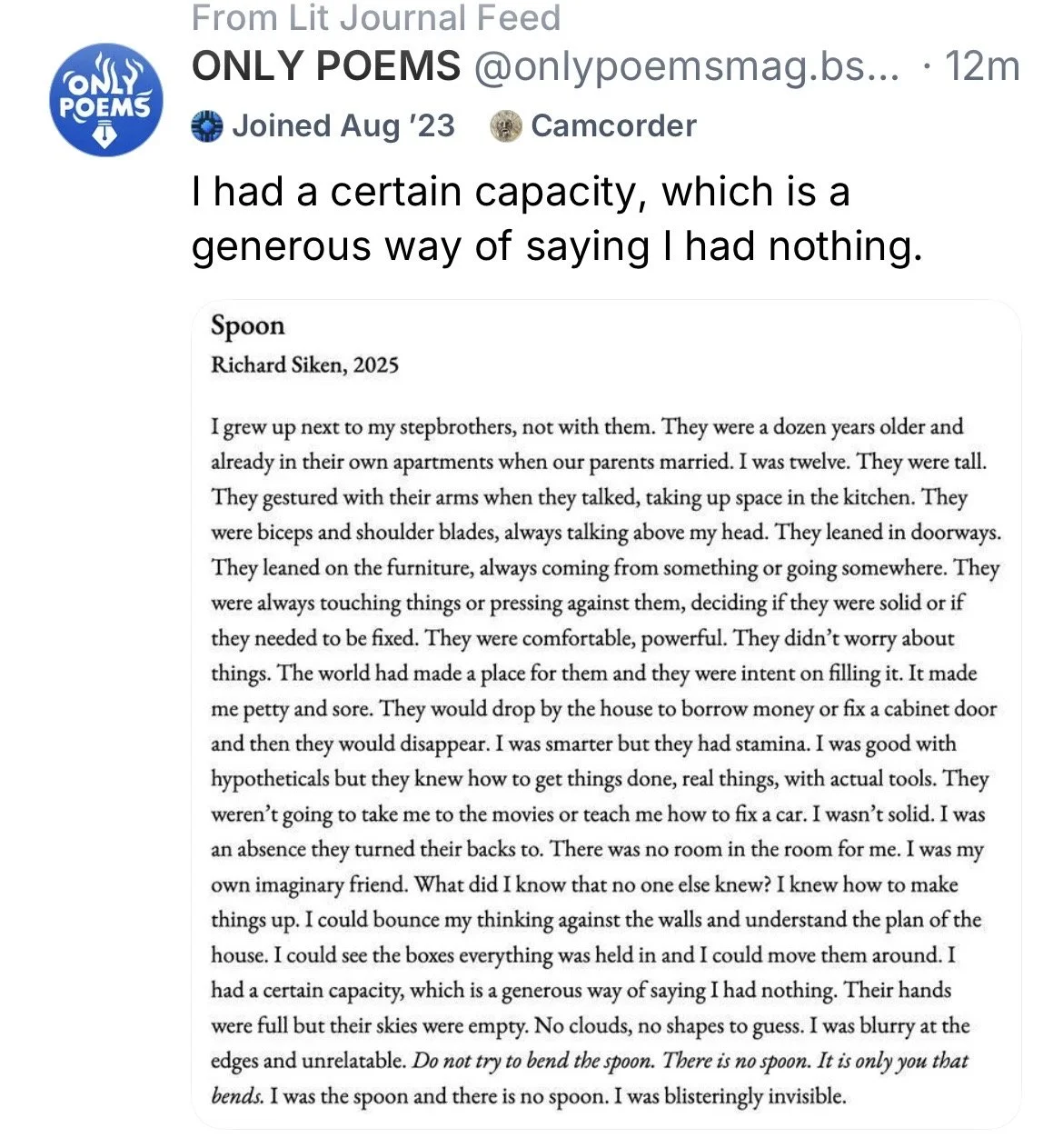
For the first prompt, choose a line from a move and let it become a powerful metaphor as the poet did with the quote from The Matrix. I like that the narrator says his stepbrothers wouldn’t take him to the movies but later quotes a movie he’d seen to describe himself.

For the second prompt, juxtapose a series of opposites as the poem does, “hypotheticals” and “real,” “capacity” and “nothing” and “full” and “empty.

The third prompt is to use the poem’s question “What did I know that no one else knew?” as a ghostline. Remember to erase the line after drafting your poem and credit the poet with an after statement or in the title.

The last prompt is to build a poem using the following list of words: “blades,” “pressing,” “tools,” “solid,” “bounce,” ”absence,” “hands,” “shapes,” “blurry,” “capacity” and “invisible.”
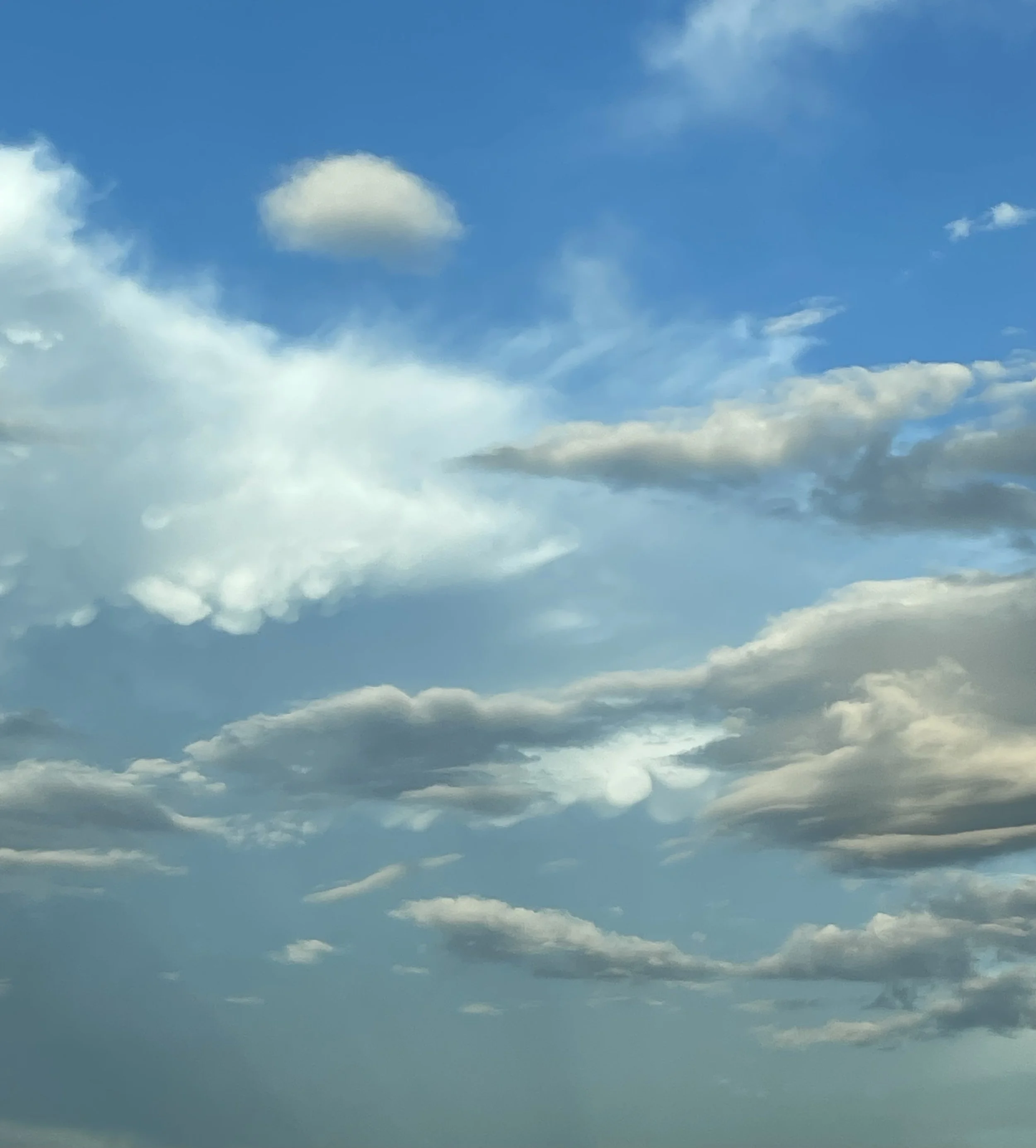
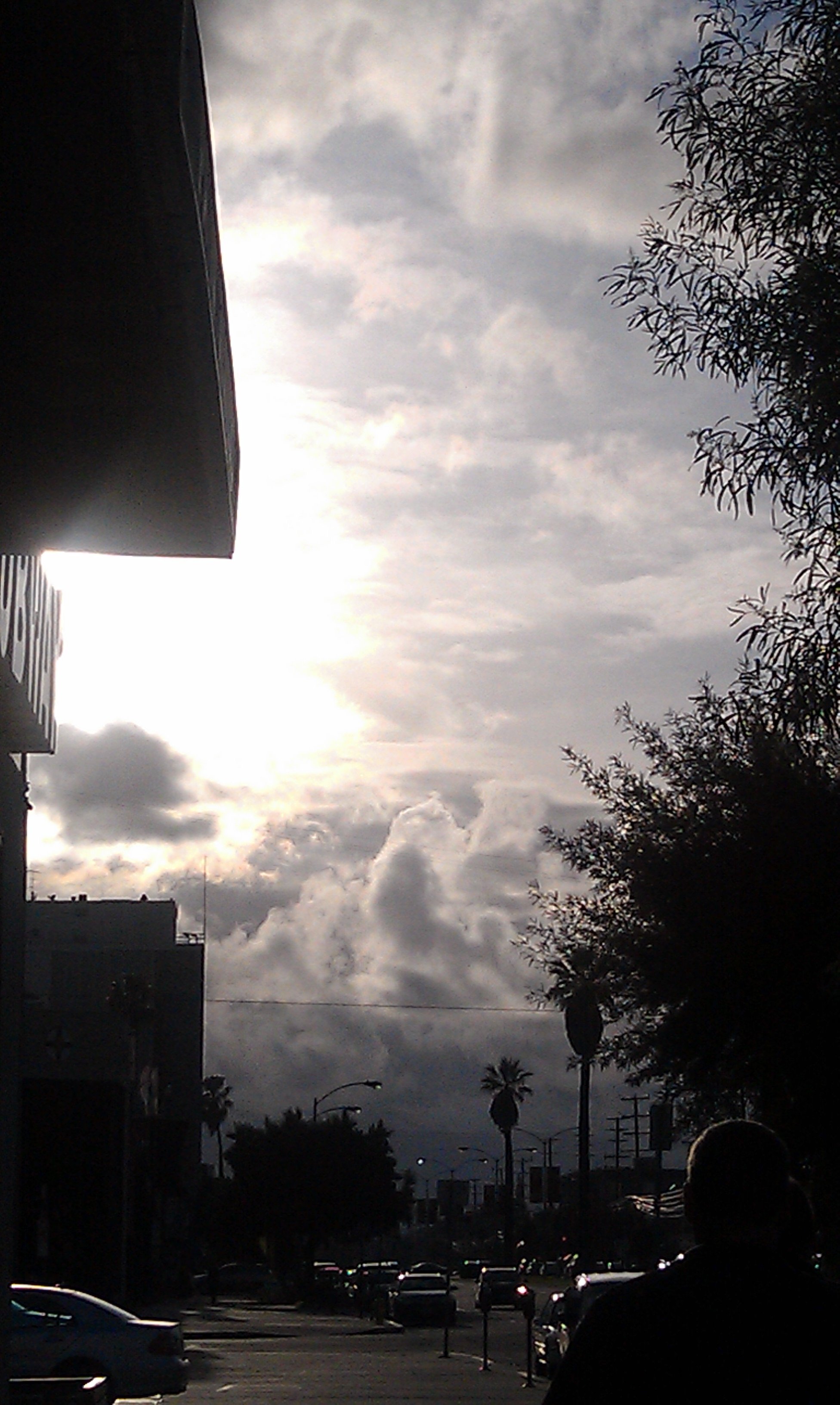
Bonus prompt: write whatever this photo of the sky inspires.

Good luck!
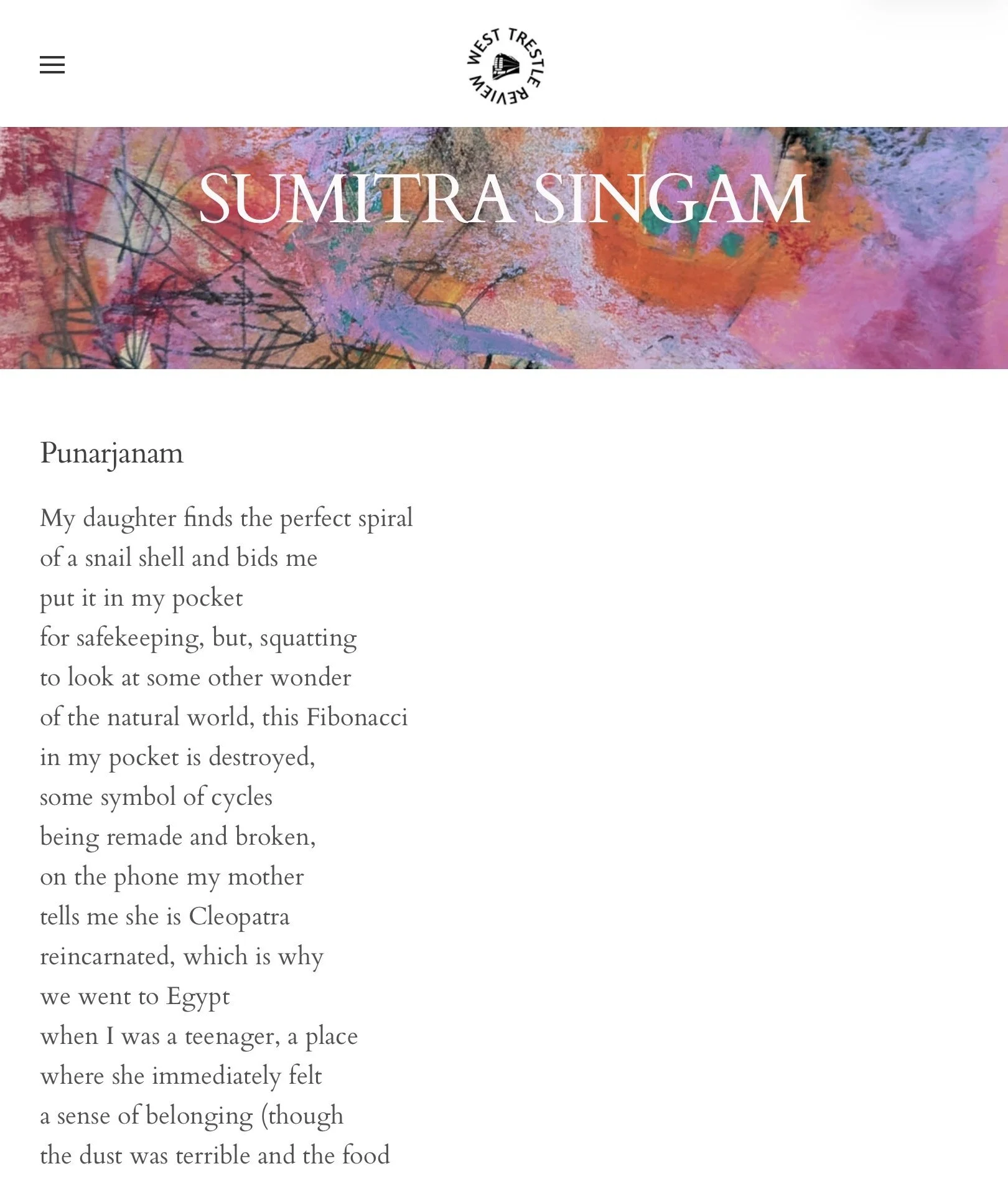
“some symbol of cycles”—Prompts Inspired by Sumitra Singamm

How is the challenge going for you? I am now four poems behind, which is honestly better than usual for this time in the challenge.

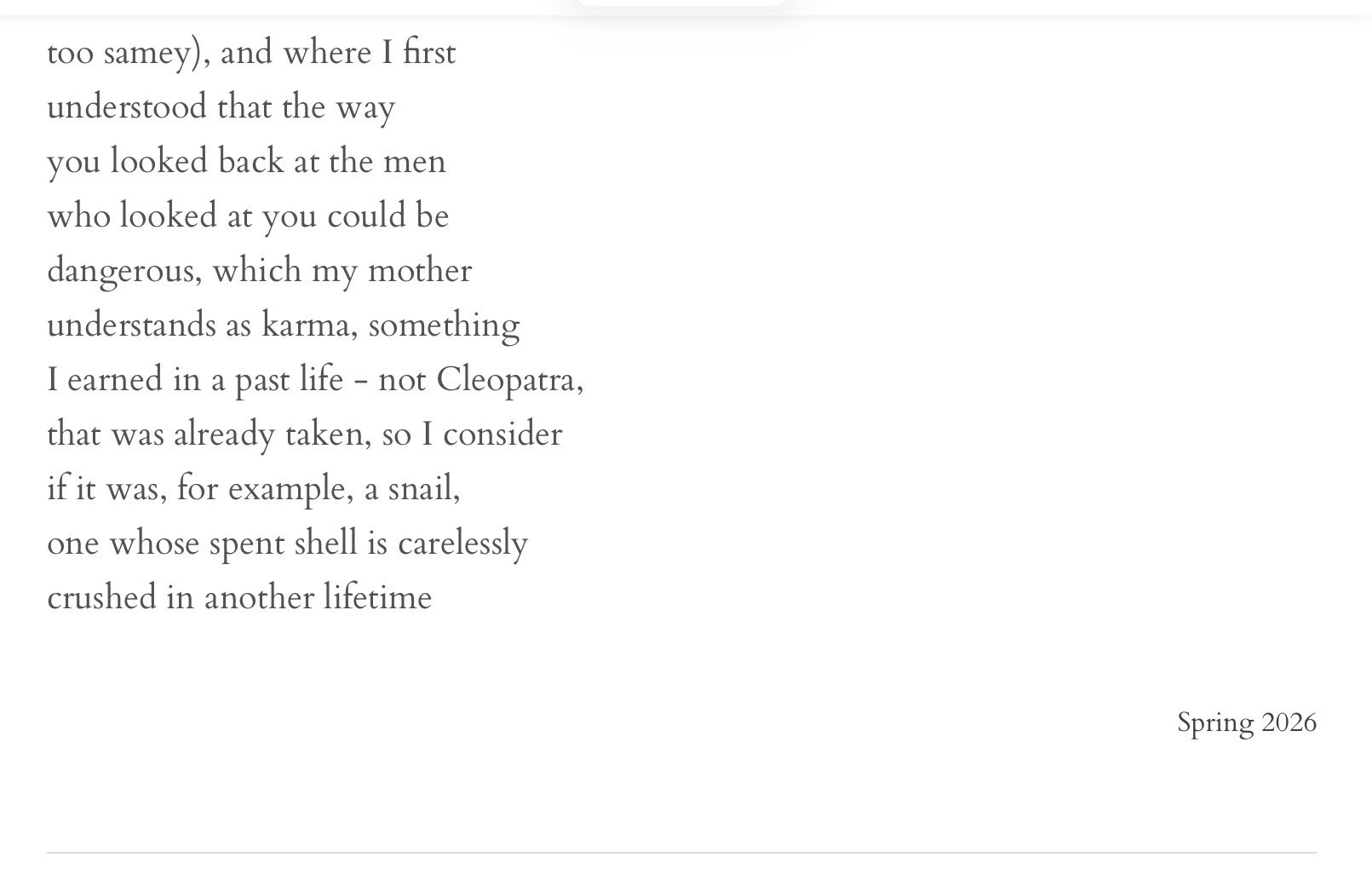
I just came across this journal online, and its spring issue is lovely. Here is the link if you want to check out the issue: https://www.westtrestlereview.com/spring_2026.html. I plan to read more of West Trestle Review and more of Sumitra Singam whose conversational poem so beautifully circles around to the initial image (perfect for its title, meaning rebirth and related to karma in the Hindu religion).

For the first prompt, write a poem that begins with a starting image or event and moves on before circling back to the original image.

I so enjoy the conversational tone and humor of the poem (along with the musicality of some lines). The second prompt is mix an event with retelling a conversation and joining the two.

For the third prompt, write a poem about Cleopatra and what you would have learned from her in a former life or a poem about what modern advice she would give.

The last prompt is write a poem using the following list of words: “spiral,” “pocket,” “squatting,” “wonder,” “belonging,” “dust,” “taken,” “spent” and “crushed.”

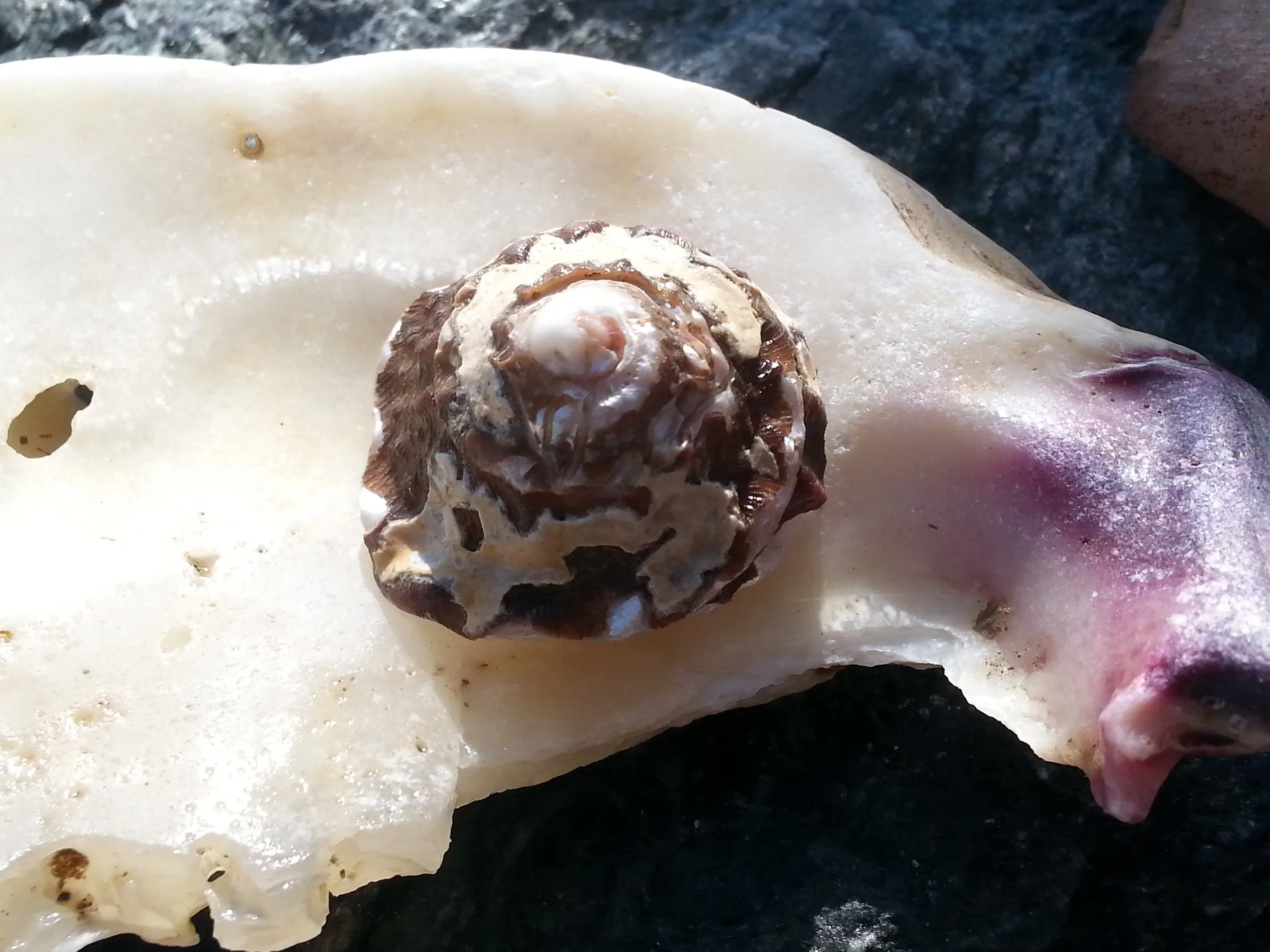
For the first bonus prompt: write about whatever these broken shells inspire.

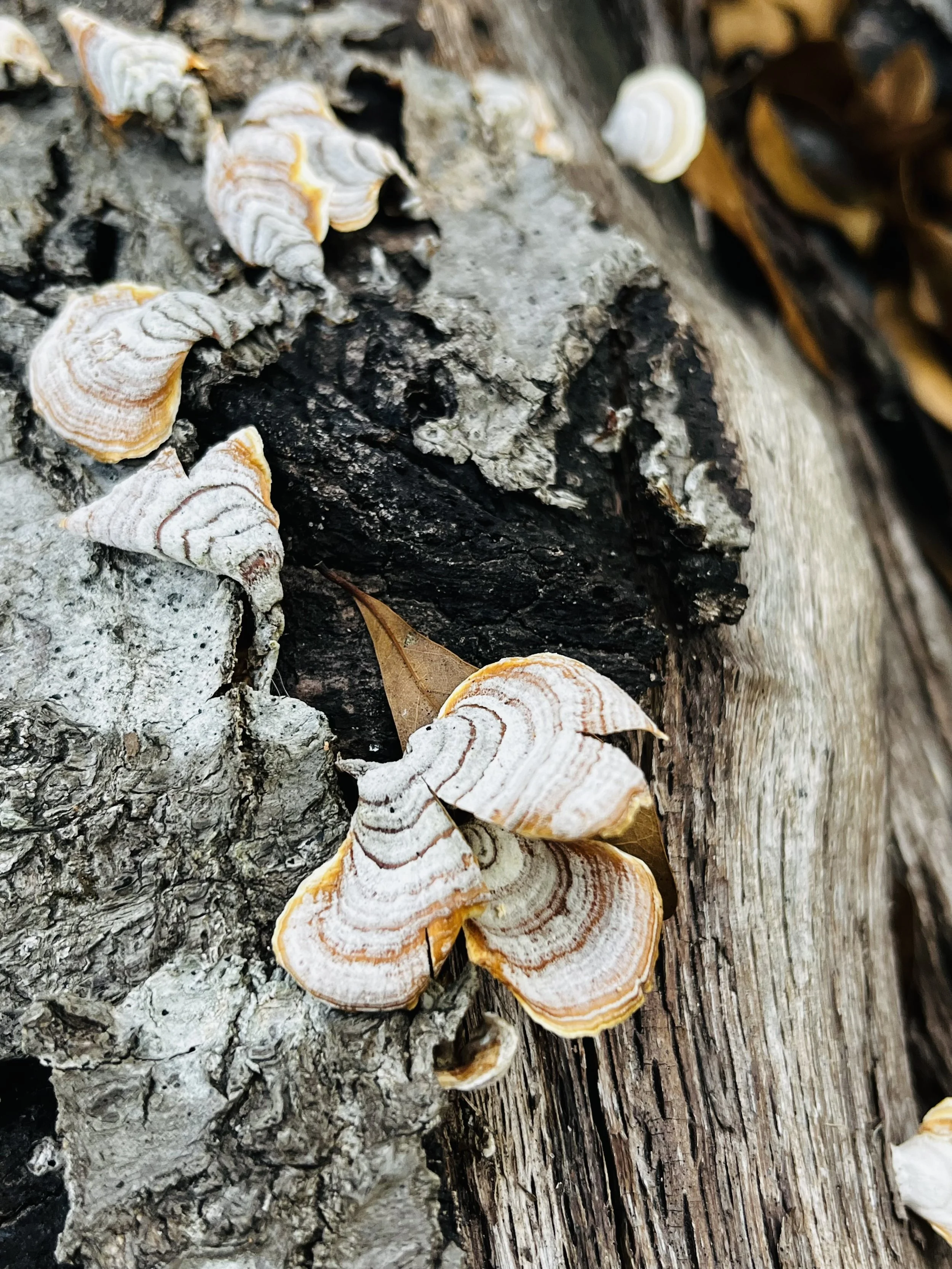
For the second bonus prompt, notice how this fungus looks like shells and write poem about this photo or a comparison of the two photos.

Good luck writing!

“personal rainmaking”—Prompts Inspired by Francis Harvey

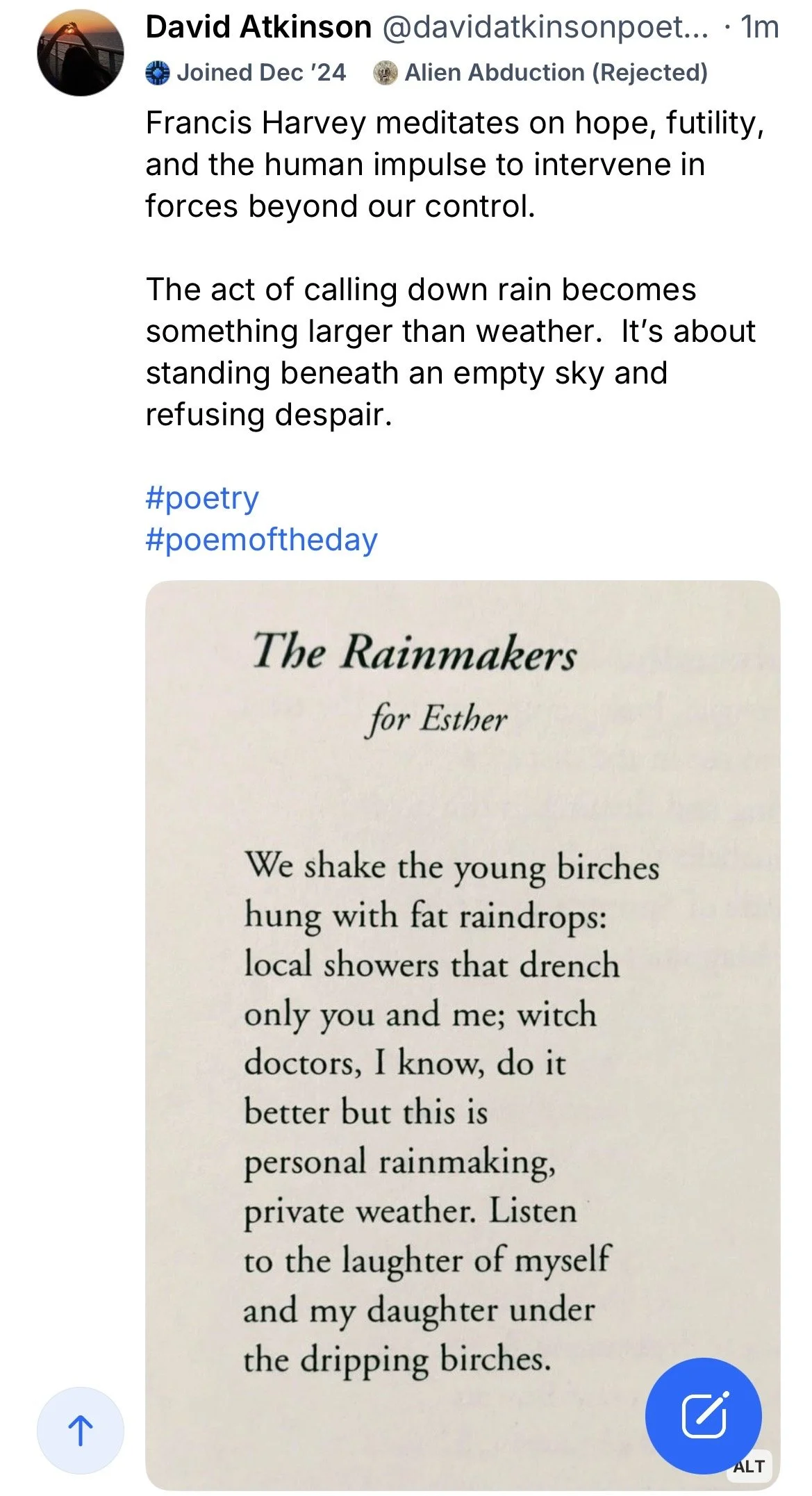
I enjoy others’ enjoyment, the sharing of poems and appreciation of their artistry. The imagery in Francis Harvey’s “The Rainmakers” is lovely, and likewise David Atkinson’s response.

The first prompt is another writing exercise just to get something started if you are burning out mid-challenge. Write the poem as is, but replace the nouns and verbs with your own. If you like a line you’ve created, take that line and use it for a ghostline.

The second prompt is to use the lines “witch / doctors, I know, do it / better but this is” as a ghostline, completing the sentence and using it as a starting point. Remember to erase the line after drafting your poem and credit the poet.

For the third prompt, write about a time you and a loved one were outside after a rain.

The next prompt is to take an old poem that never felt right to you and play with the line breaks. Notice how “personal rainmaking” rests on its own, giving weight to the phrase. Perhaps try shorter lines, dividing clauses in unexpected places but leaving one phrase, the central image or point you wish to make central.

The last prompt is to write a poem using the following list of words: “shake,” “young,” “local,” “drench,” “doctors,” “personal,” “weather,” “laughter” and “dripping.”

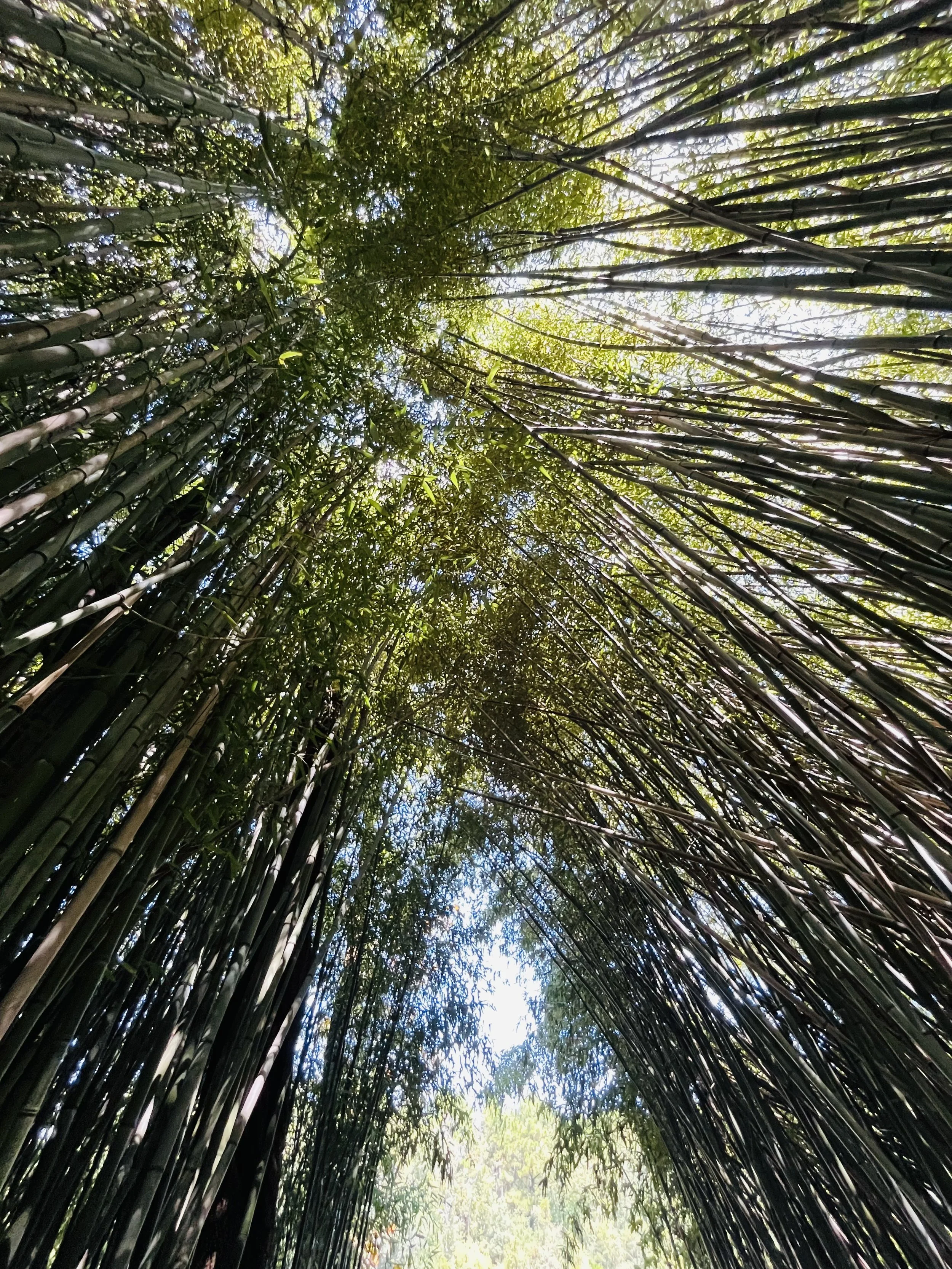
Bonus prompt: describe what it is like standing under this bamboo canopy or whatever this photo inspires.

Good luck!
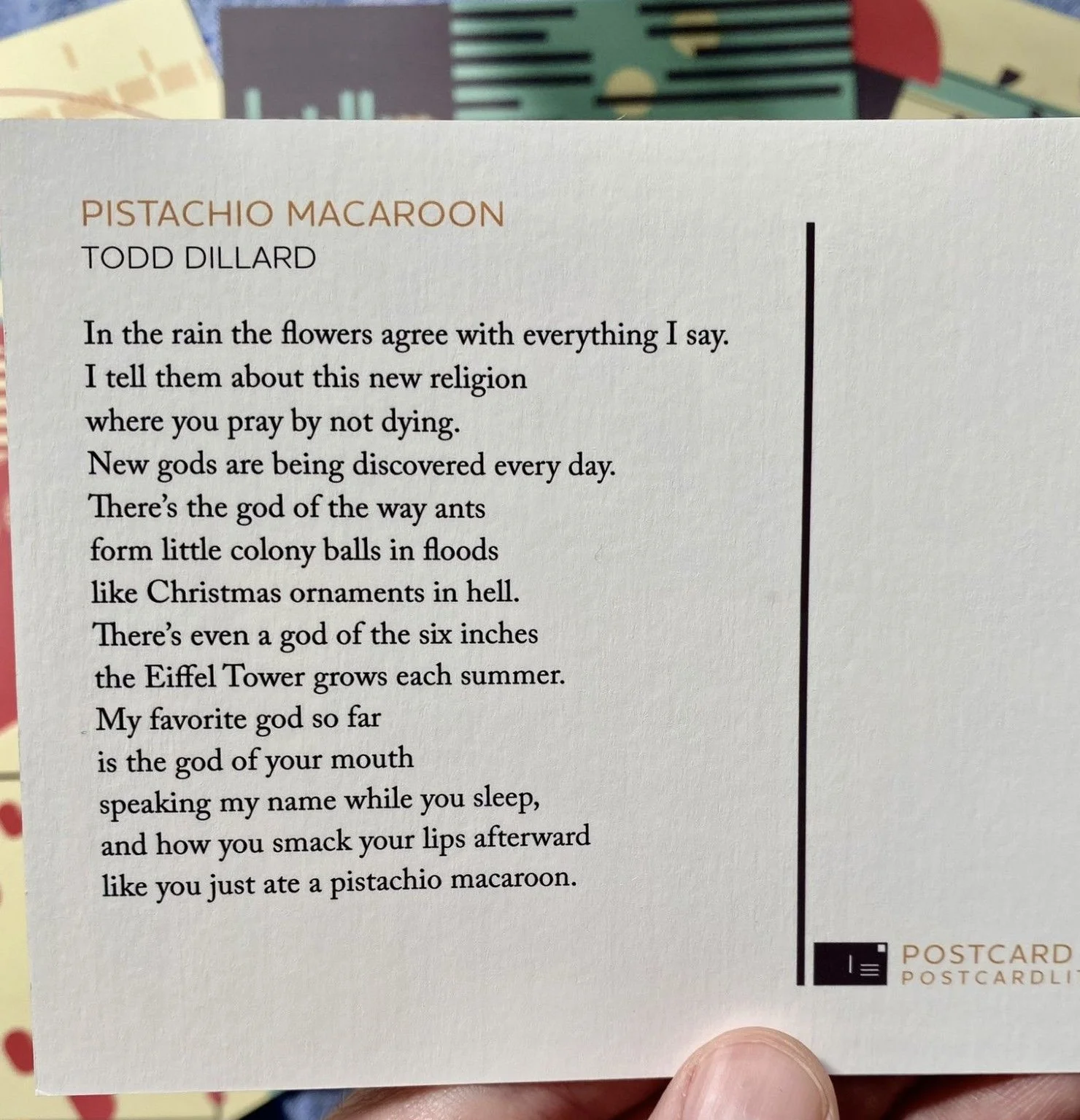
New Gods—Prompts Inspired by Todd Dillard

Once again, I am over here fangirling Todd Dillard.

So I am incredibly tired and am unsure these prompts will make sense tomorrow.

For the first prompt, write a list poem with “New gods are being discovered every day” as your first line or your title. Make sure to credit the poet for either.

The second prompt is to introduce yourself to one of these new gods, perhaps the god of Eiffel Tower growth. For some reason, the (misquoted) phrase “New god, who dis?” Is stuck in my head as a possible title. I am really sleepy.

The third prompt is write a poem about what you would tell the flowers in the rain.

For the last, write a poem using the following word list: “agree,” “pray,” “colony,” “floods,” “ornaments,” “inches,” “summer,” “speaking,” “smack” and “macaroon.”

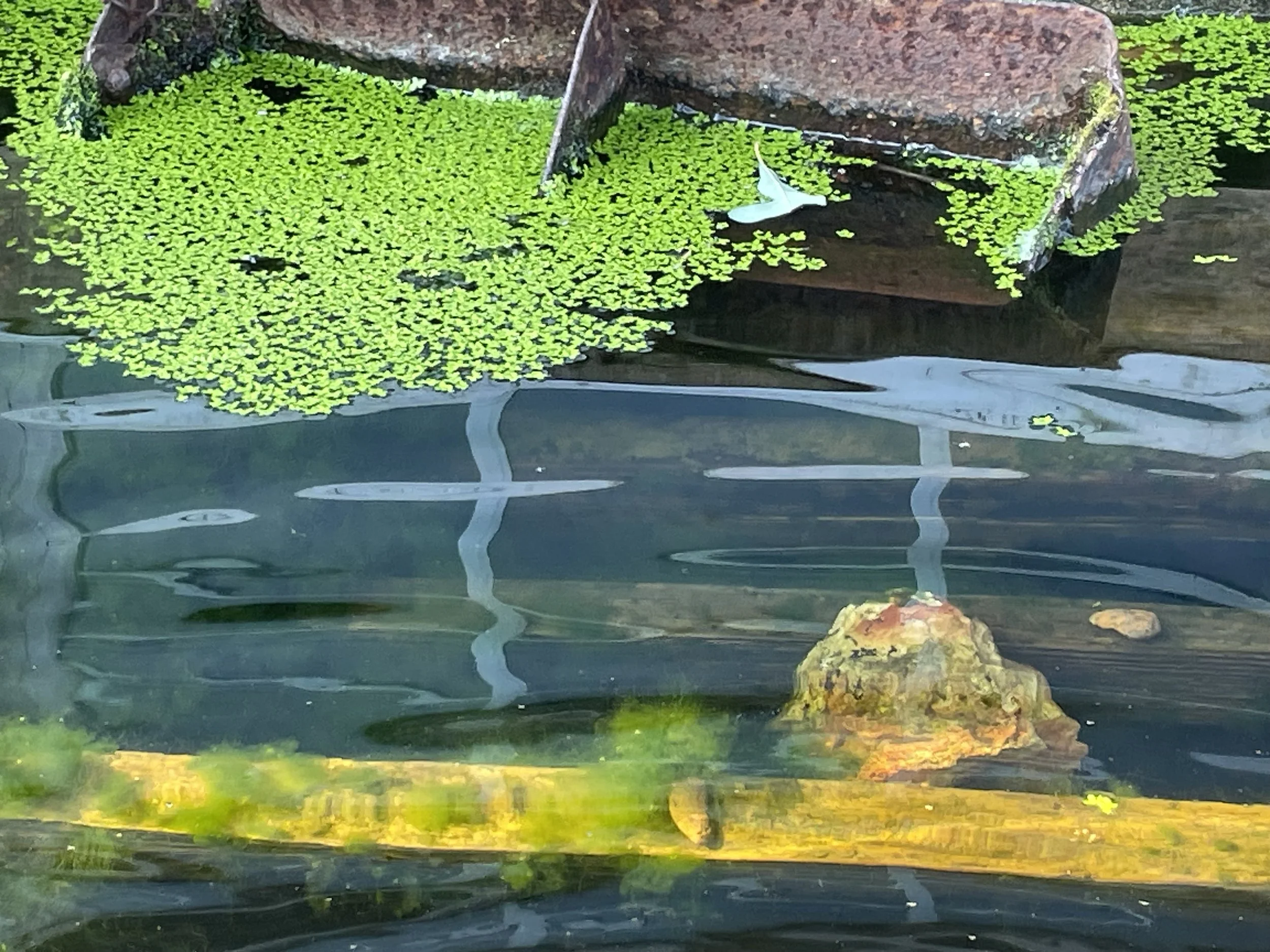
Bonus prompt: write of the god of duckweed or whatever you think of with this picture.

Good luck writing.

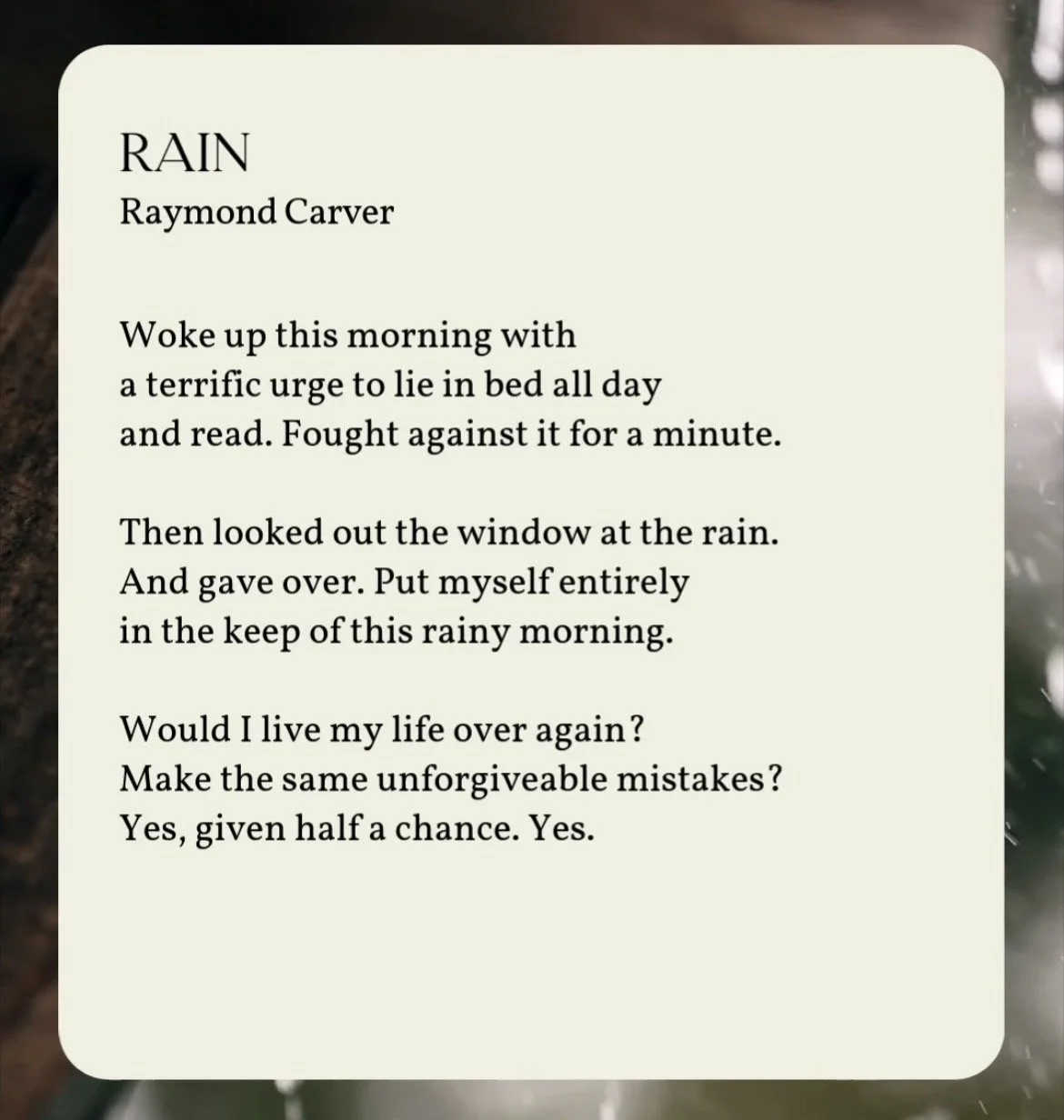
Giving In—Prompts Inspired by Raymond Carver

How is the 30/30 challenge for you? Almost halfway through the challenge and hitting a wall, I am three days behind on poems. All day I was just blank on how to begin (despite the prompts). I hope tomorrow is more productive, but I do not regret napping on the beach on Sunday. And, Raymond Carver’s “Rain” justifies that choice.

This is a writing exercise to get started more than a prompt: rewrite this poem, replacing all the nouns, verbs and adjectives with your own. Try to use antonyms where possible. Even with these substitutions, the structure and overall feel of your drafted poem is too similar to the original, but you can take one of the lines from your draft and use it for a ghostline.

For the first prompt, write about giving in to temptation. At the end, say whether you would make the same choice.

The next prompt is to use “Would I live my life over again?” as a ghostline, erasing the line and crediting the poet in your title or in an after statement.

For the final prompt, write a poem using the following list of words from the poem: “morning,” “urge,” “lie,” “fought,” “window,” “gave,” “keep,” “unforgivable” and “chance.”

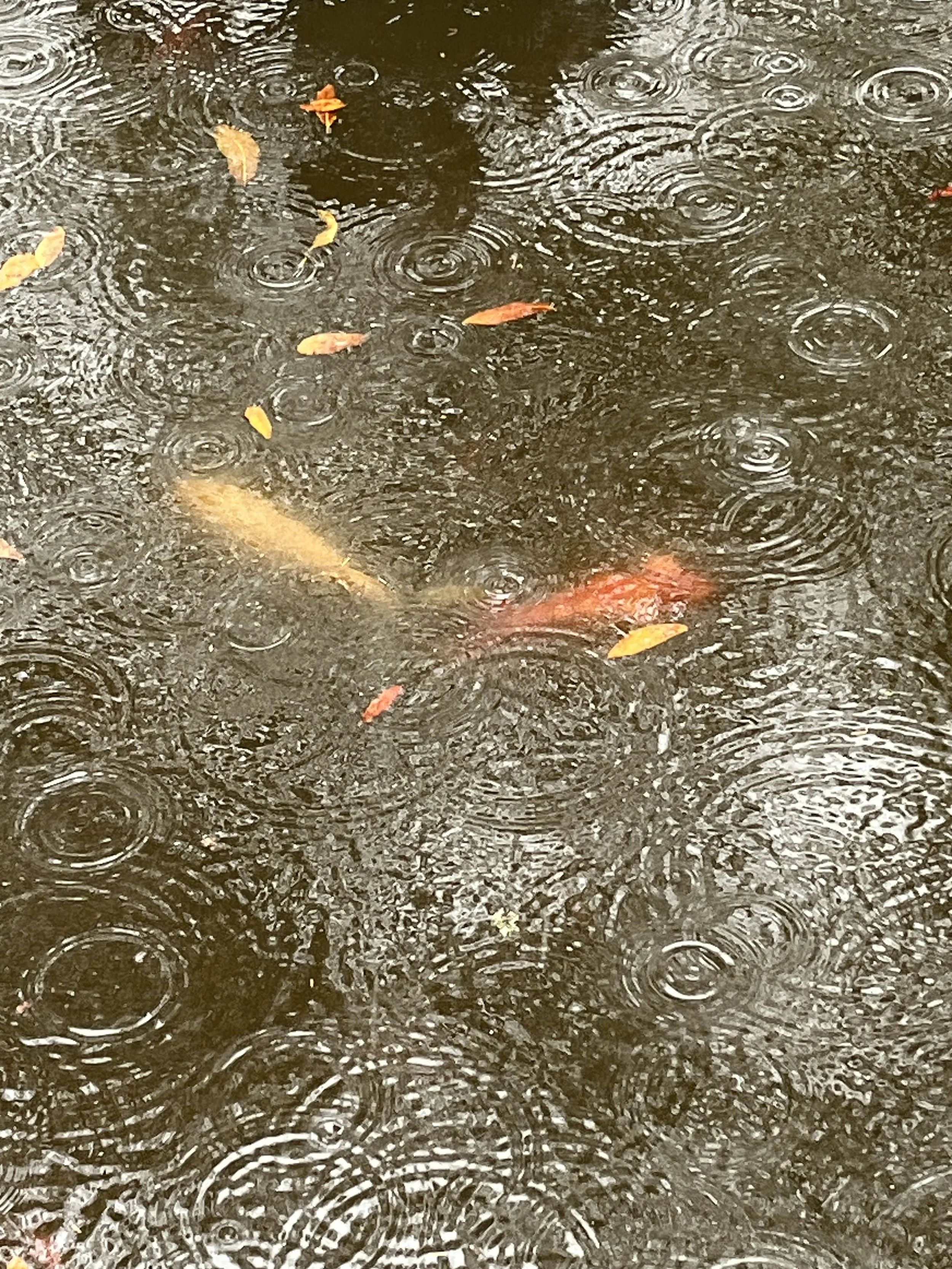
Bonus prompt: write whatever this photo of rain falling on a koi pond inspires.

Good luck writing! Keep at it (I tell myself).

Greening—Prompts Inspired by Ada Limón

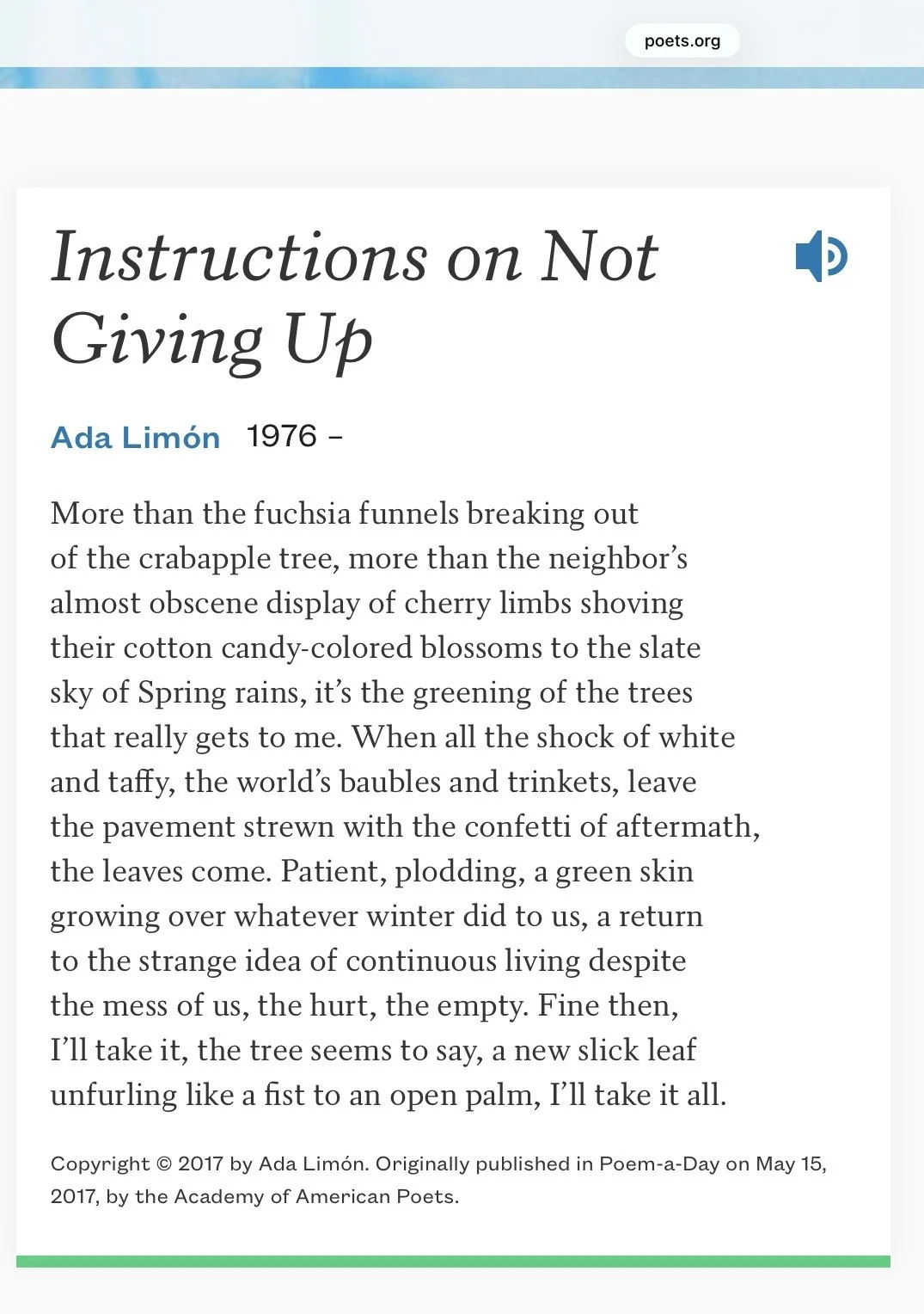
There was good news in the world today, but it has been a hectic week, and I needed this poem. I hope reading it helps you too. If you want to listen to the poet read it aloud, click on the link: https://poets.org/poem/instructions-not-giving.

For the first prompt, write what spring (and hope) means to you.

The second prompt is to write about what you see outside your window or on your way to work: what ordinary thing—the neighbor’s tree, perhaps the trilling bird calls, or the purple house you pass by—brightens your morning or welcomes on your way home.

I love the descriptions: “cotton candy-colored,” “taffy” and “confetti.” While I enjoy the narrator’s admiration for the steady green leaves, let’s celebrate the gaudy. Describe a world of sweets and carnivals.

The next is to write a poem using the following list of words: “funnels,” “limbs,” “slate,” “taffy,” “trinkets,” “confetti,” “plodding,” “skin,” “slick” and “palm.”

For the last prompt, use the partial line “When all the shock of white” as a ghostline. Remember to erase the line after you’ve drafted the poem and credit the poet in your title or in an after statement.

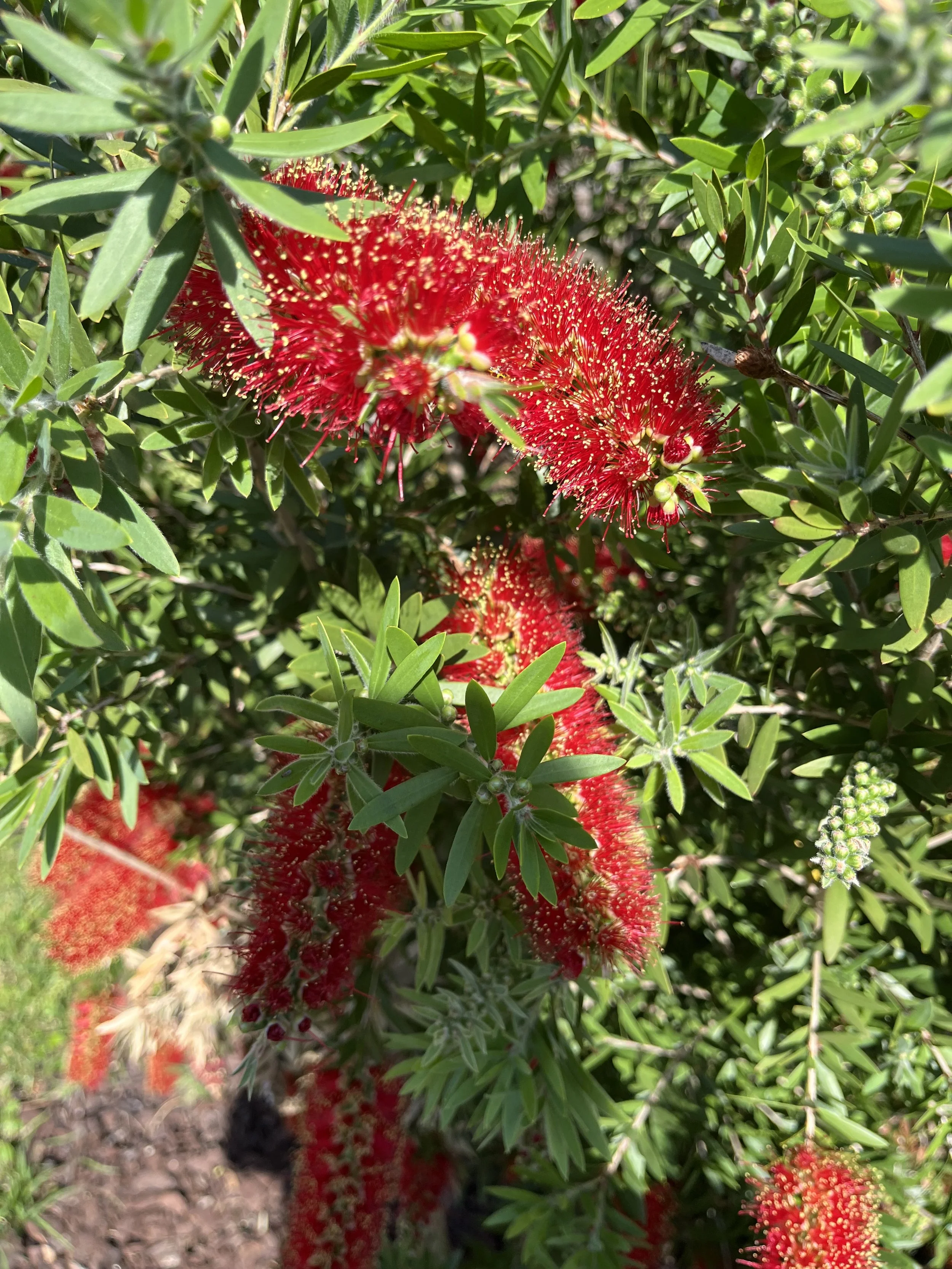
Yes, I know I should post a photo of a tree in all its green glory, but this bottlebrush is the one I see outside kitchen window. This is the tree that welcomed us into this home and entertains us and the cats with the birds it provides a landing, the same tree we thought lost to the harsh winter and had to cut down to almost the ground. It is back and beautiful. The shadow is mine, as I admire its healthy blooms.

So for the bonus prompt, write about coming back from the cold in glorious fashion.

Good luck!
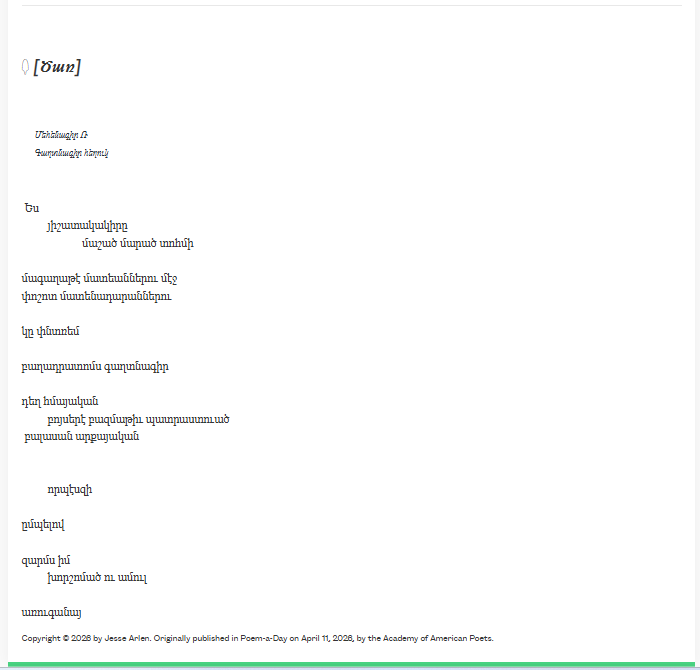
Revived—Prompts Inspired by Jesse Arlen

I am fascinated by multilingual poets, their ability to create layered meaning in multiple languages, how one language can set the frame for another and all the choices required in translating from one language to another. My friends who write bilingual poems convey meaning and emotion even if readers do not speak both languages.

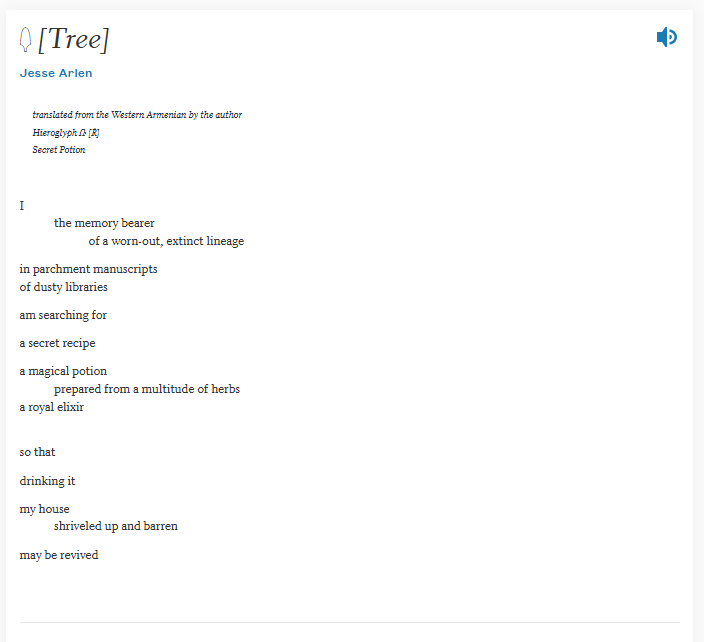
If you wish to learn more about the poem’s languages, including the Egyptian hieroglyph, and hear Jesse Arlen read it aloud, you can click on this link: https://poets.org/poem/tree-1.

For the first prompt, write a poem in your first language and provide an English translation or vice versa.

The second prompt is to write how you would discover or recreate your history, that of your people, your family or your individual self. Where would you search, what items you use and whose testimonies would you gather? 

The third prompt is to write a poem using the following list of words: "bearer," "extinct," "parchment," "secret," "potion," "herbs," "elixir," "barren" and "revived."

The last prompt is to write a one-sentence poem, broken up into stanzas, that represents an essential goal of your life. 

As always, these prompts can be used for short stories and essays. 

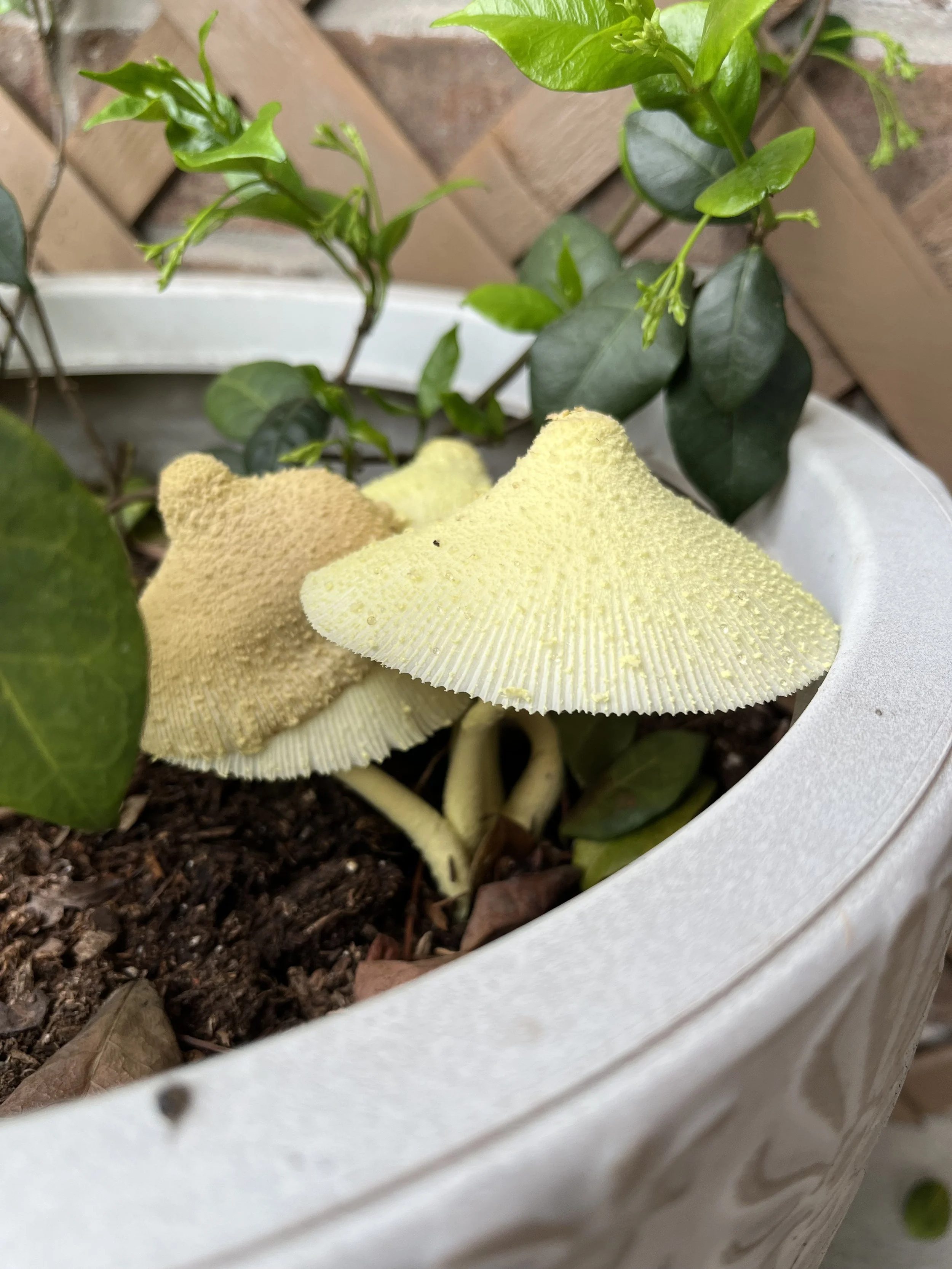
Bonus, prompt, write about these mushrooms that appeared the next day after a rain. One seems to be wearing another mushroom as a hat.

Good luck writing.

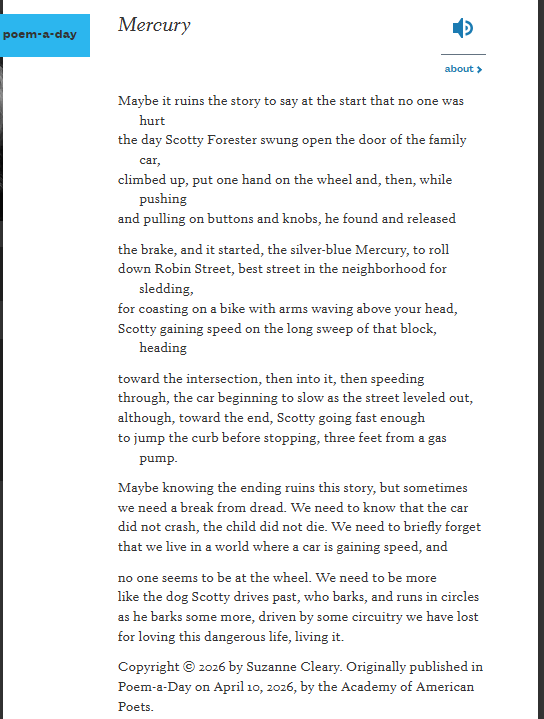
“A Break from Dread”—Prompts Inspired by Suzanne Cleary

I had forgotten how much I enjoyed receiving a great poem emailed to me through poem-a-day and discovering new poets to enjoy. Today, as the poem's narrator states, I do "need a break from dread."  I admire how even though the poem begins by telling us no one was hurt, I still didn't expect the precise details or the clear visualization of the dog at the poem's ending.

Click on the link to hear the poet read “Mercury”: https://poets.org/poem/mercury.

For the first prompt, write a narrative poem that begins by telling the story's end (that no one was hurt or that someone was or that someone died). Focus on the building of details to bring about a satisfactory conclusion. 

The second prompt is to use the line “no one seems to be at the wheel” for a ghostline. Remember to erase the line after drafting the poem and credit the poet perhaps in an after statement or the title.

A third prompt is to write a poem entitled “Mercury” that incorporates the car model, the metal and the planet. Bonus points if you include the fact that mercury, the only metal liquid at room temperature, tarnishes in humidity.

For the last, write a poem using the following list of words: “buttons,” “brake,” “mercury,” “speed,” “leveled,” “break,” “wheel,” “circles,” “circuitry” and “living.”

Bonus prompt: write whatever this photo inspires.

Good luck writing.

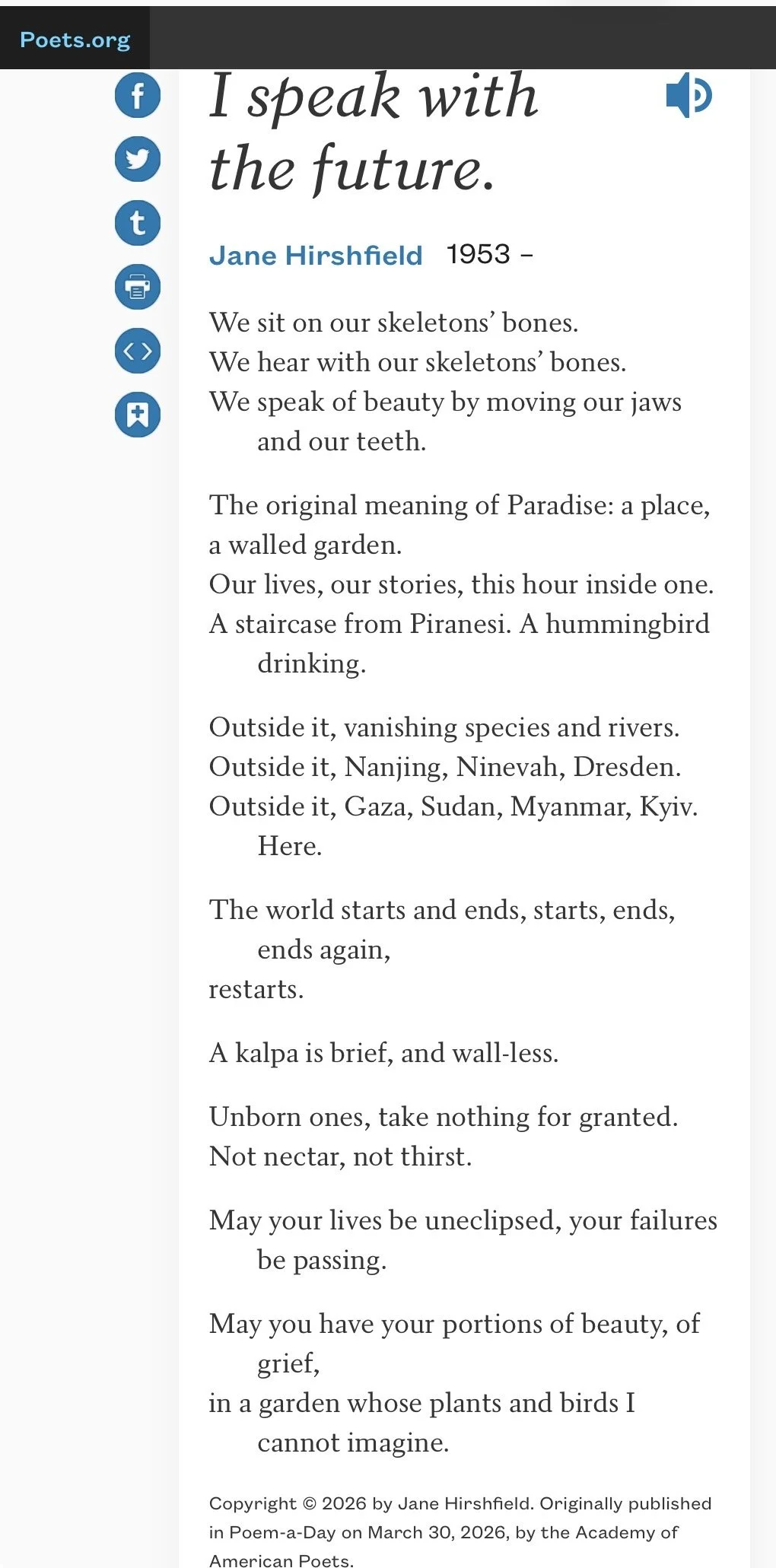
The Future Beyond Imagining—Prompts Inspired by Jane Hirshfield

As you may know, I am a huge fan of Jane Hirshfield. I admire how in her “I speak with the future” she can include eons and the present day all the while looking at a future far beyond our understanding.

If you would like to hear her read “I speak with the future, click on the link: https://poets.org/poem/i-speak-future.

It may be helpful to know Merriam-Webster's definition of “kalpa” is "a duration of time in Hinduism covering a complete cosmic cycle from the origination to the destruction of a world system."

For the first prompt, use the line "We speak of beauty by moving our jaws and teeth" as a ghostline, erasing the line after writing the poem and crediting the poet in an after statement or in your title. 

The second prompt is to create two places within your poem: a safe inner place and an outer one full of the world's tragedies and harms. 

The third is to write a poem, imagining the world reborn after ours is destroyed. 

For the next, look at Piranesi's “The Staircase with Trophies,” from his series Le Carceri d’Invenzione (The Imaginary Prisons) for inspiration: https://www.nypl.org/events/exhibitions/galleries/visual-world/item/5541

For the final prompt, create a poem from the following list of words: "bones," "teeth," "walled," "staircase," "hummingbird," "world," "nectar," "uneclipsed," "passing," "portions" and "imagine."

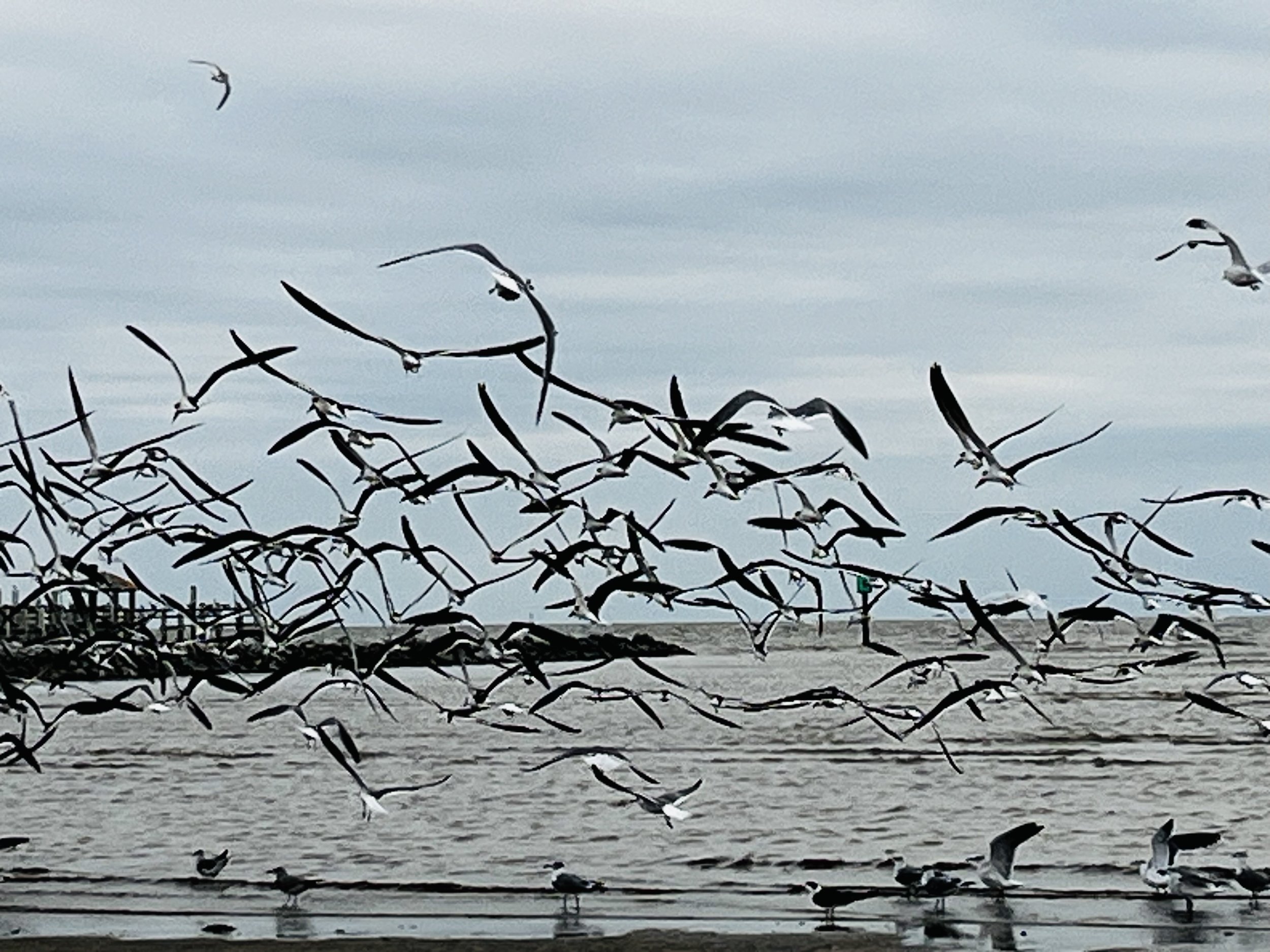
Bonus prompt: what made the birds rise and describe their movements and sound.

Good luck writing!

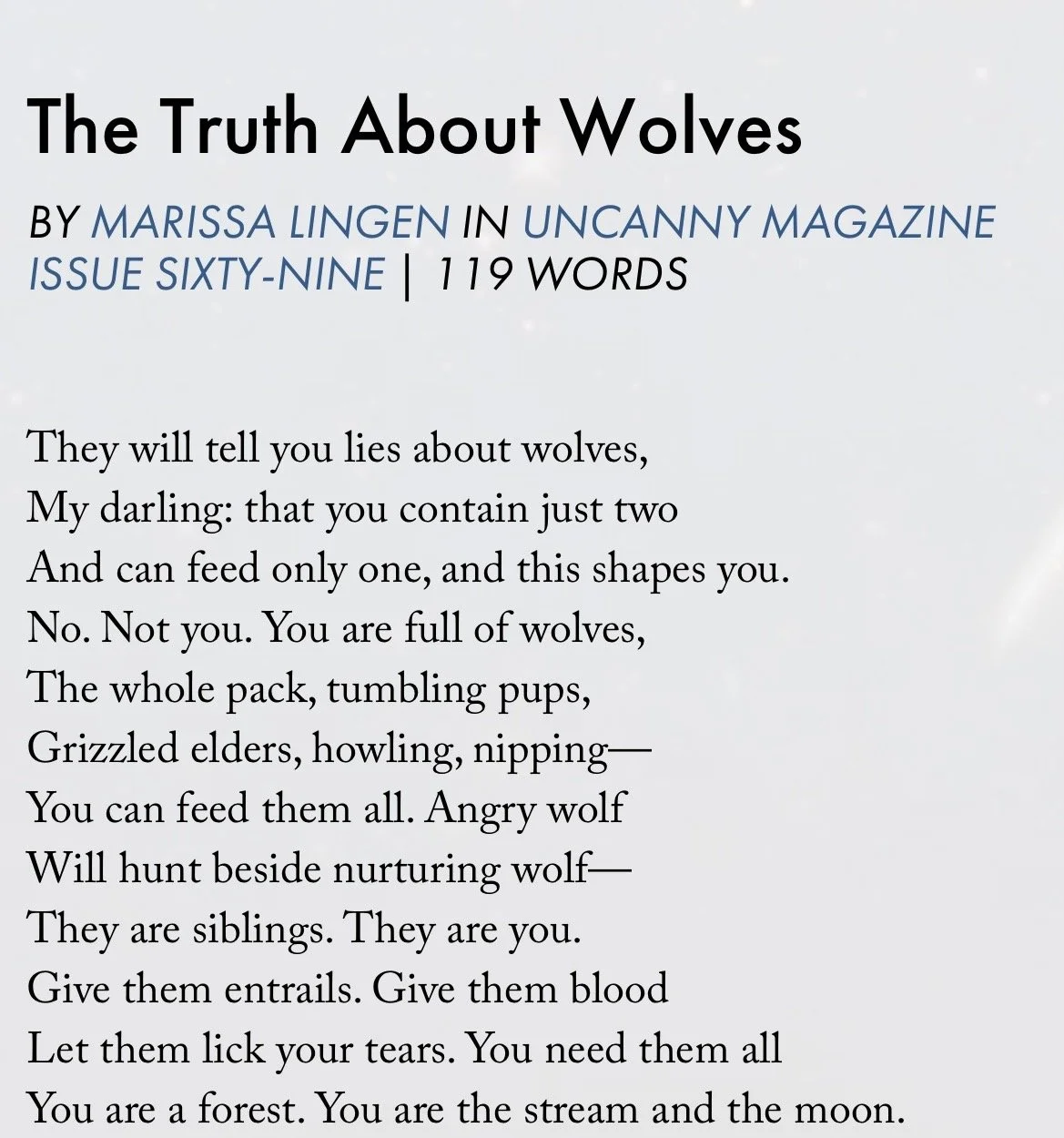
Wolves—Prompts Inspired by Marissa Lingen

Uncanny Magazine is a great publication. Marissa Lingen’s “The Truth About Wolves” is a wonderful example of what they publish. Here is the link to her poem: https://www.uncannymagazine.com/article/the-truth-about-wolves/

I love the idea behind “The Truth About Wolves” and its implementation—how the poem moves from two wolves to a pack to forest and stream to the very moon. Again, I appreciate a poem that breaks the taboo of writing about the moon (or the prohibition once said by one person that seems to get passed around to all writers), and this poem does so decisively. Personally, I need a whole pack and likely the moon to keep me going this week.

For the first prompt, take a familiar allegory or parable and adapt it. Perhaps the fox who couldn’t reach the grapes, calling them sour, does reach them and discovers them to be fermented. Perhaps your scorpion chooses not to sting the frog; it can change.

The second prompt is to use the first line, “They will tell you lies about wolves,” to create a list poem of lies and fables about the animals and their behavior. You can include the now-debunked theory of an alpha wolf.

The third prompt is to address loved one(s) and create a mythology of them for them.

For the last, create a poem—not about wolves—from the following word list: “contain,” “feed,” “full,” “whole,” “tumbling,” “nurturing,” “entrails,” “blood,” “forest” and “stream.”

Again these prompts are focused on poetry but can be used for stories or essays.

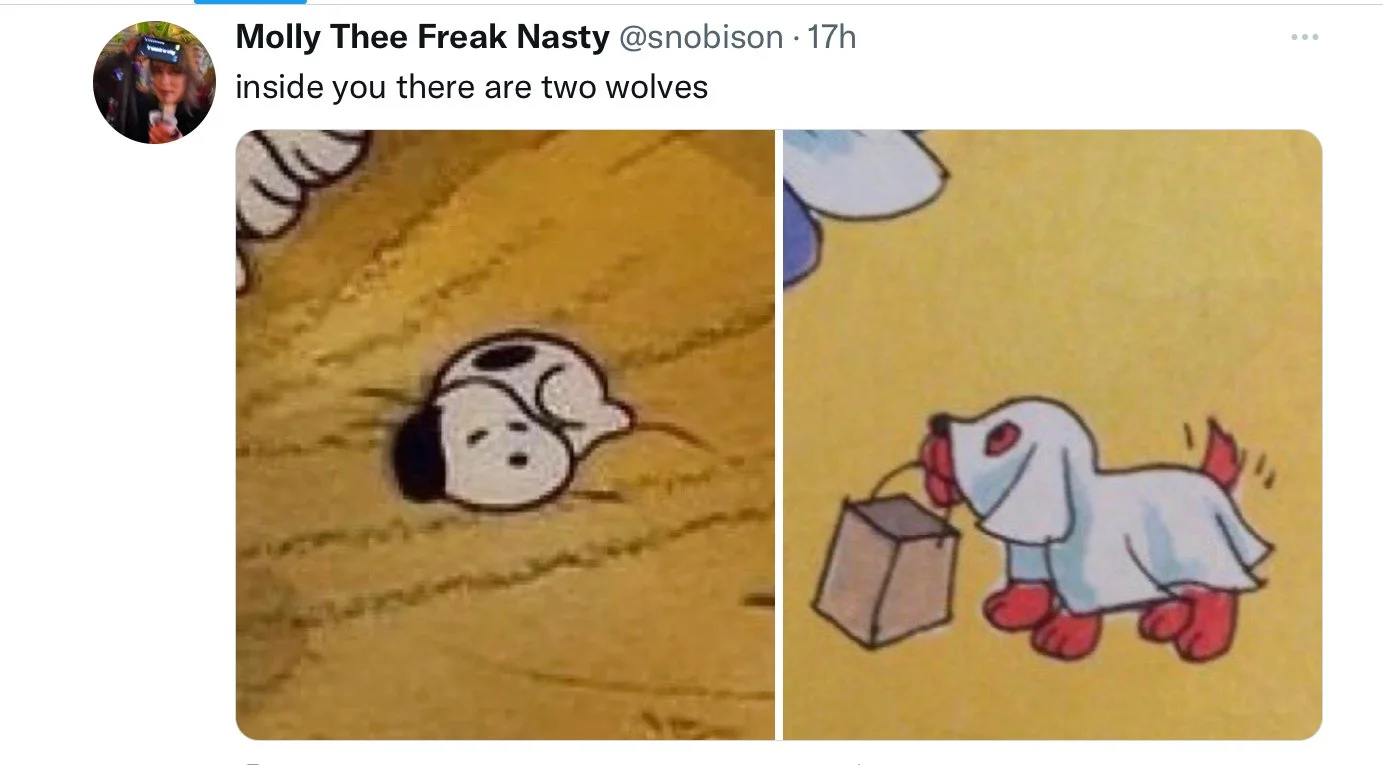
Bonus prompt: write about what famous—cartoon or otherwise—wolves are inside you.

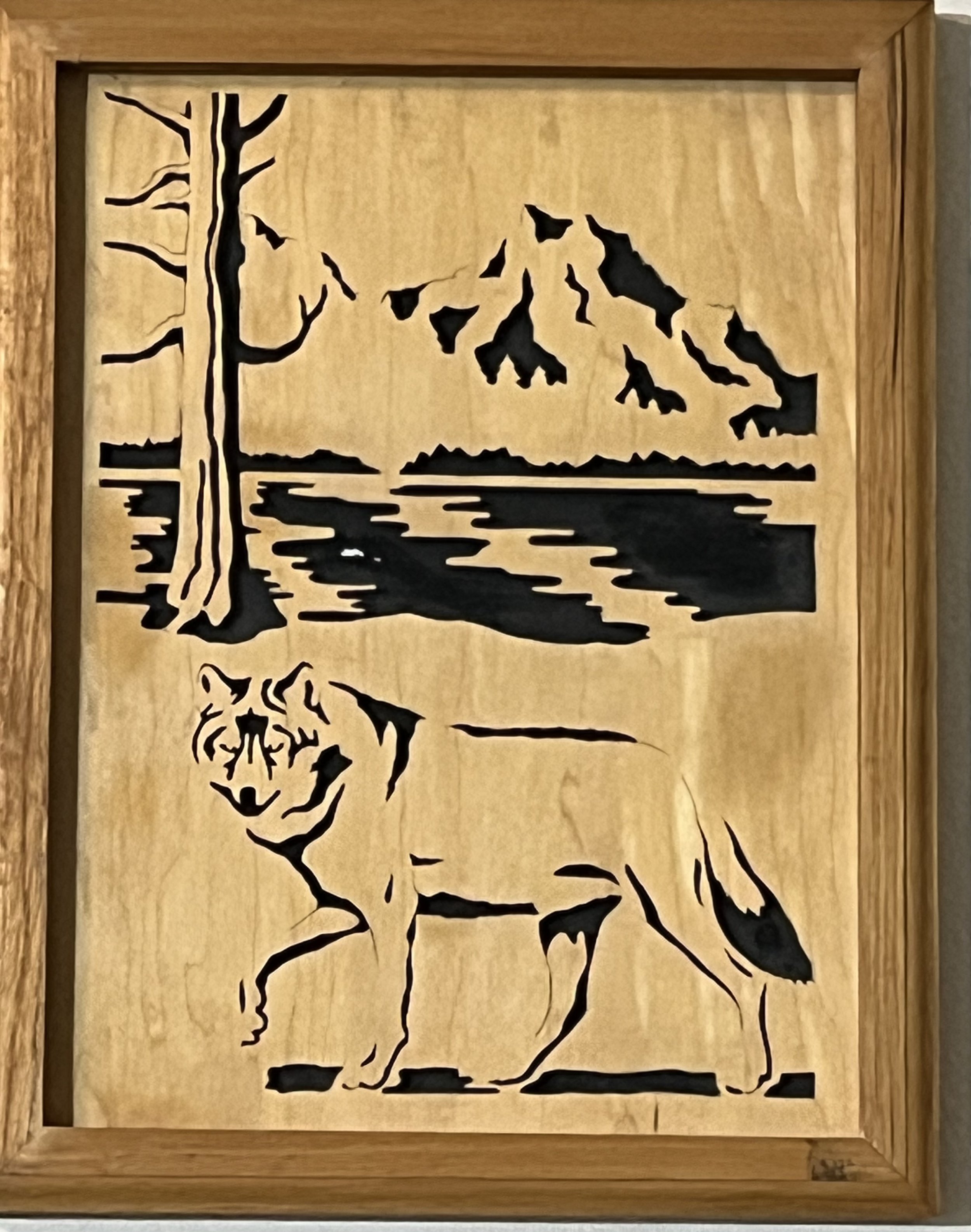
Bonus bonus prompt: write whatever this woodcut inspires.

Good luck writing.

Holding—Prompts Inspired by beyza ozer

Today was a terrible day to read the news. Every American should feel horror and shame for the harm our nation is inflicting upon the world and sorrow for what we are doing to ourselves. I don’t know how to stop this, only try to reach for the good and appreciate the beautiful while I can.

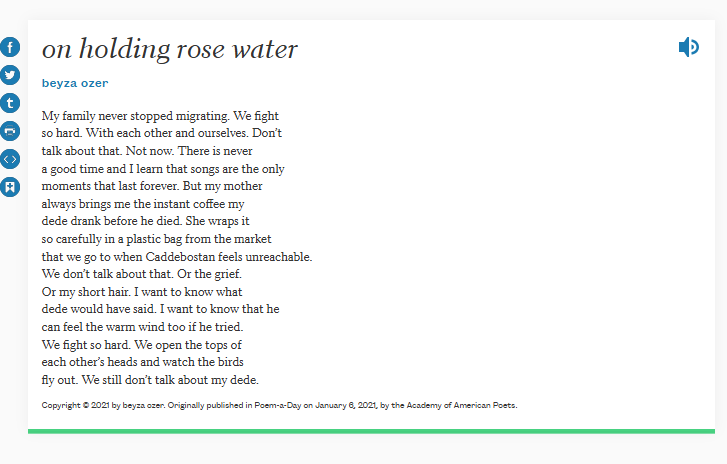
Here is a beautiful poem by beyza ozer, https://poets.org/poem/holding-rose-water.

For the first prompt, write about what is left unsaid in families, interspersed with familial rituals, comfort foods and specific memories of lost loved ones and/or homes. 

For the second prompt, mix your own family's migration with those of migratory birds and other species. Do you ever return home?  Can you? Where is your home now? Is it a place or a time or both?  

For the third, use the lines "There is never / a good time" as your title or as a refrain. Indicate that these are quoted through italics and attribution. 

The next prompt is to write a poem from this word list: "holding," "fight," "stopped," "now," "forever," "time,"  "instant," "wraps" "unreachable," "grief" and "talk."

For the last prompt, use the line "We fight so hard. We open the tops of" as a ghostline. Remember to erase the line after you've finished drafting the poem and credit the poet for the inspiration. 

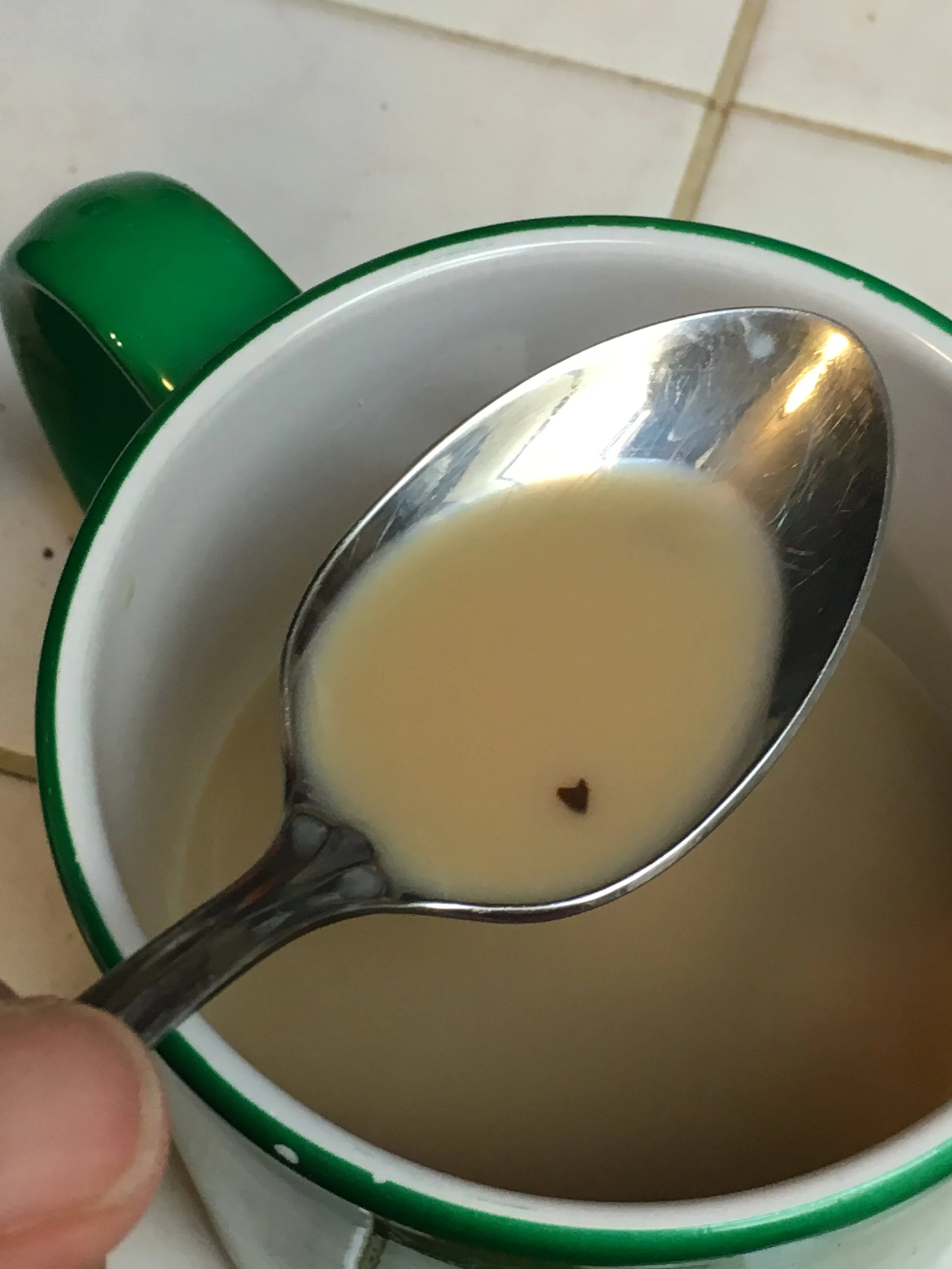
Bonus prompt: write what a heart-shaped coffee ground means to you.

Good luck writing. May tomorrow be a more peaceful day for everyone.

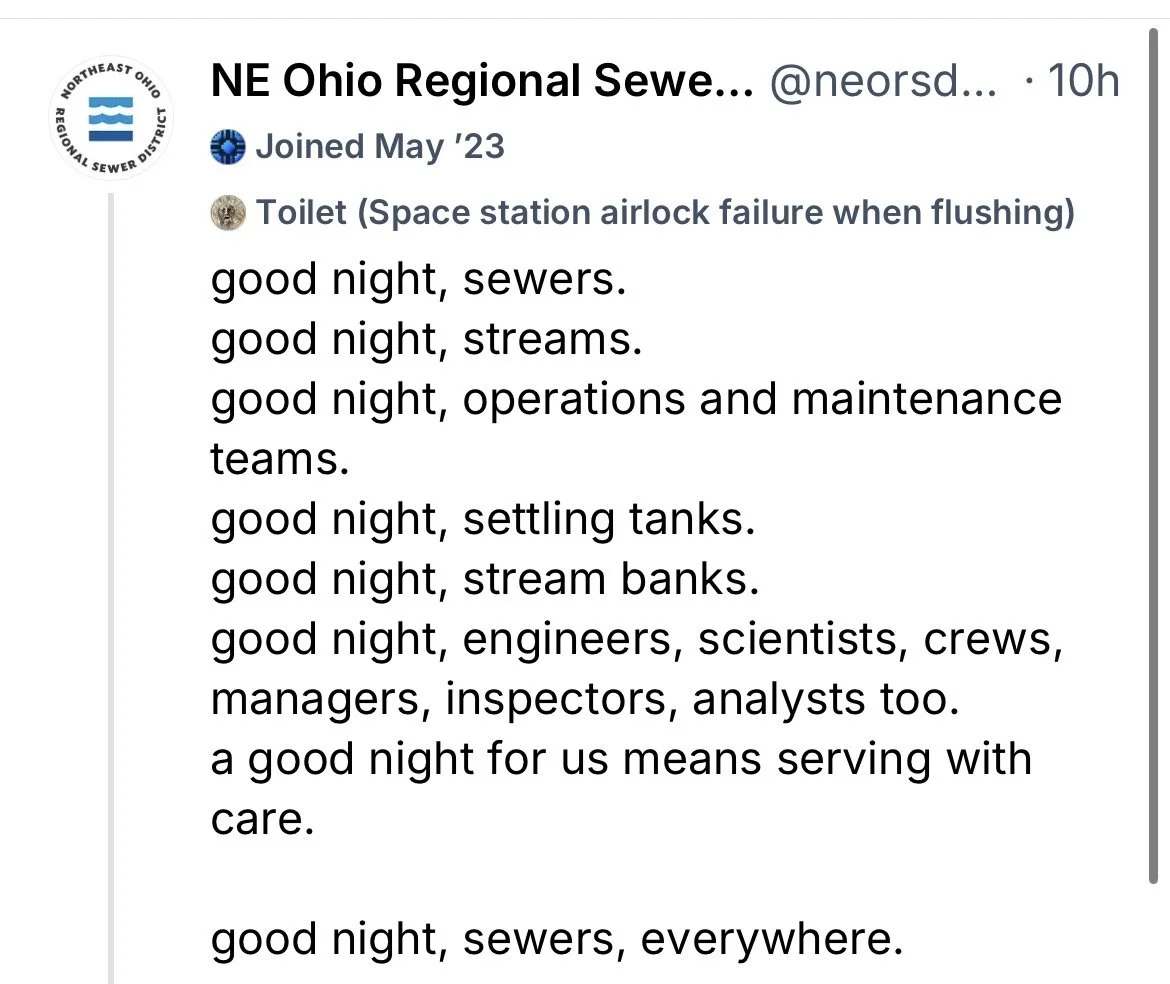
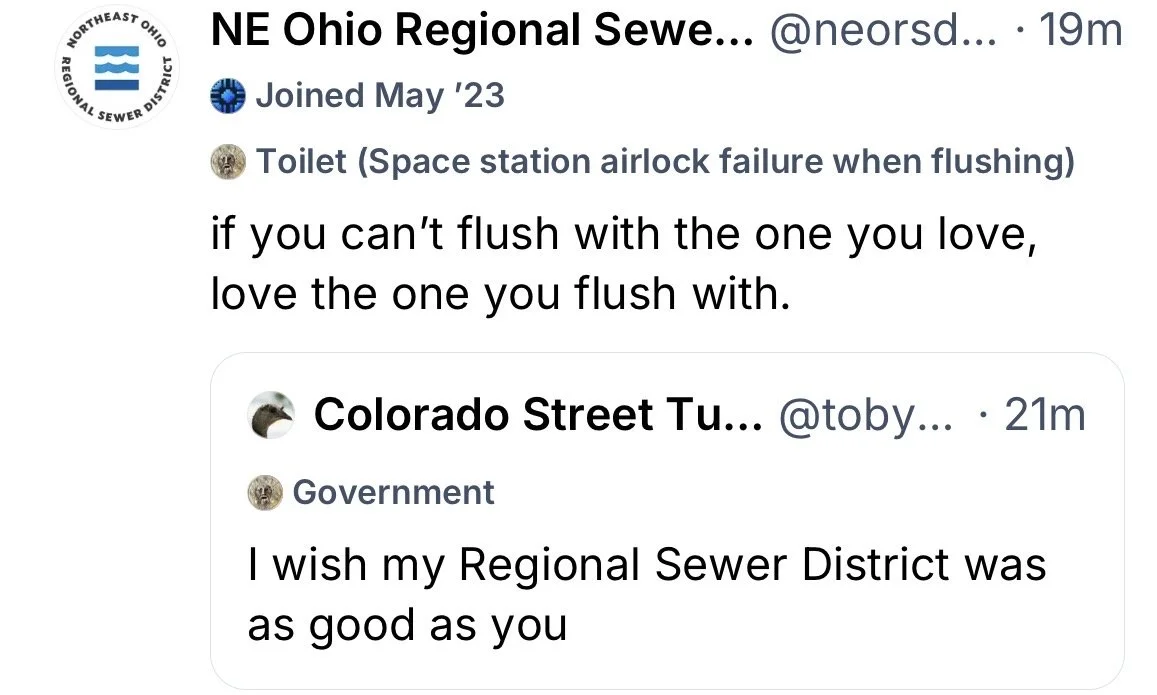
Love Your Work—Prompts Inspired by the NE Ohio Regional Sewer District social media account

UPDATE: I thought this posted last night. I don’t know what happened.

It’s Monday, and you spend more waking hours at work than you do home, so let’s try to love our jobs as much as the NE Ohio Regional Sewer District social media account worker seems to.

For the first prompt, take lines from a famous poem book (Goodnight Moon here) and adapt it to your own job.

The second prompt is to write your appreciation for indoor plumbing, sanitation services or any other convenience that is so easy to take for granted until you go tent camping or lose electricity for more than a day.

The third prompt is to write a nature poem using the following list of words: “night,” “streams,” “settling,” “banks,” “scientists,” “crews,” “serving” and “care.” Substitute any of the other professionals for scientists, or add them all in here. Beavers are great engineers.

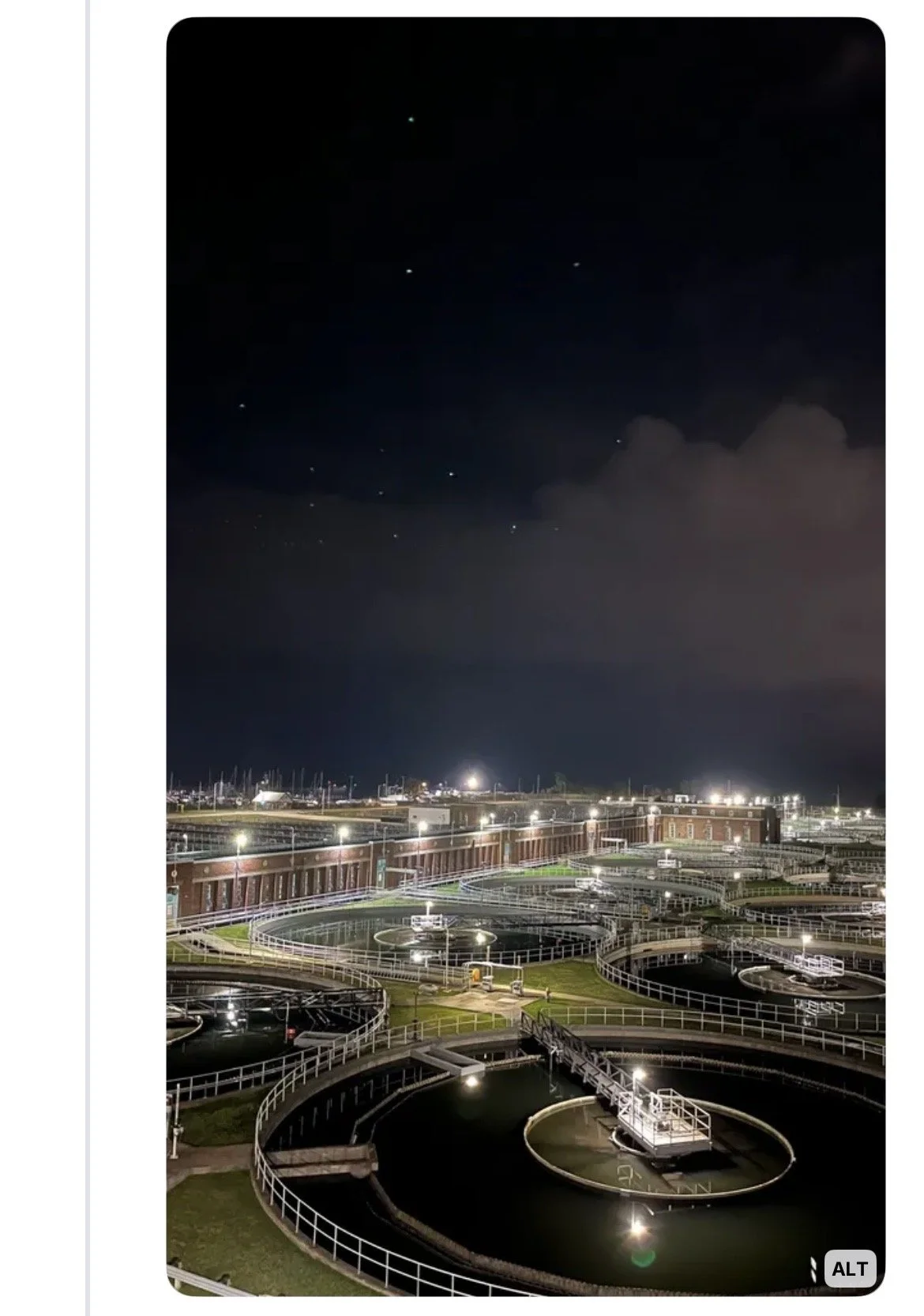
The next prompt is to write whatever this photo inspires.

Additional prompts inspired by the NE Ohio Regional Sewer District account: write a poem about love, envy and settling.

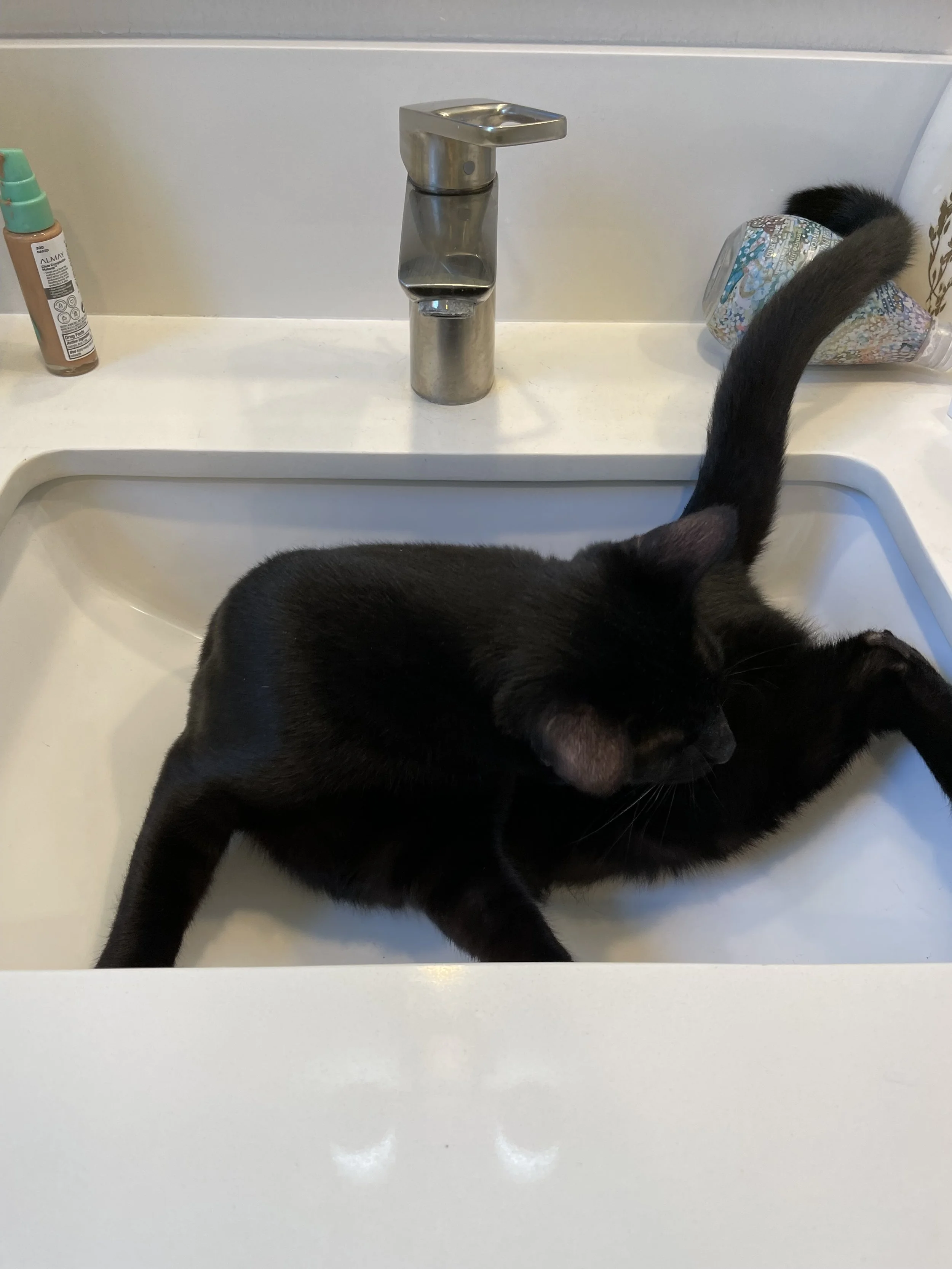
Bonus prompt: write about this kitty discovering a sink.

Good luck writing this week. Have fun at work!

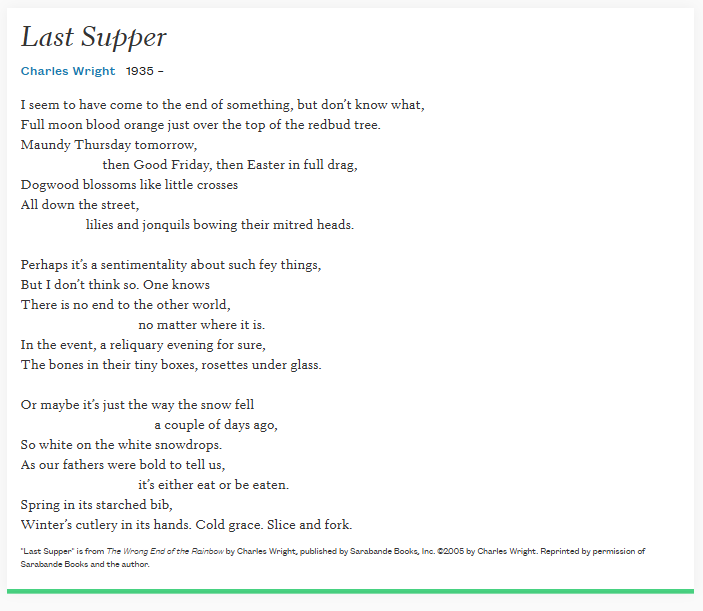
“Easter in full drag”—Prompts Inspired by Charles Wright

Charles Wright has such beautiful descriptions of nature and a depth, again that layering I so admire. Here is a lovely poem I hope you will like too.

For the first prompt, write about seasonal transitions from winter to spring, the occasional back step and false spring, or from spring to fall. Let the description convey the mood and deeper rumination.

The second prompt is to write a poem that moves from long descriptions of nature or the surroundings to personification of nature or humanity, using short, cutting phrases for impact.

The third prompt is to use the line “There is no end to the other world“ as your title or as your first line, remembering to attribute Wright for the line, and describe this other world.

The next prompt is to use “As our fathers were bold to tell us,” as a ghostline, remembering to erase the line after the poem is written and to credit Wright for the inspiration.

The last prompt is to write a poem using the following list of words: “blood,” “redbud,” “crosses,” “bowing,” “fey,” “bones,”“rosettes,” “bib,” “cutlery” and “slice.”

As always, you can use these prompts for essays or fiction; I am simply focusing on poetry for this month.

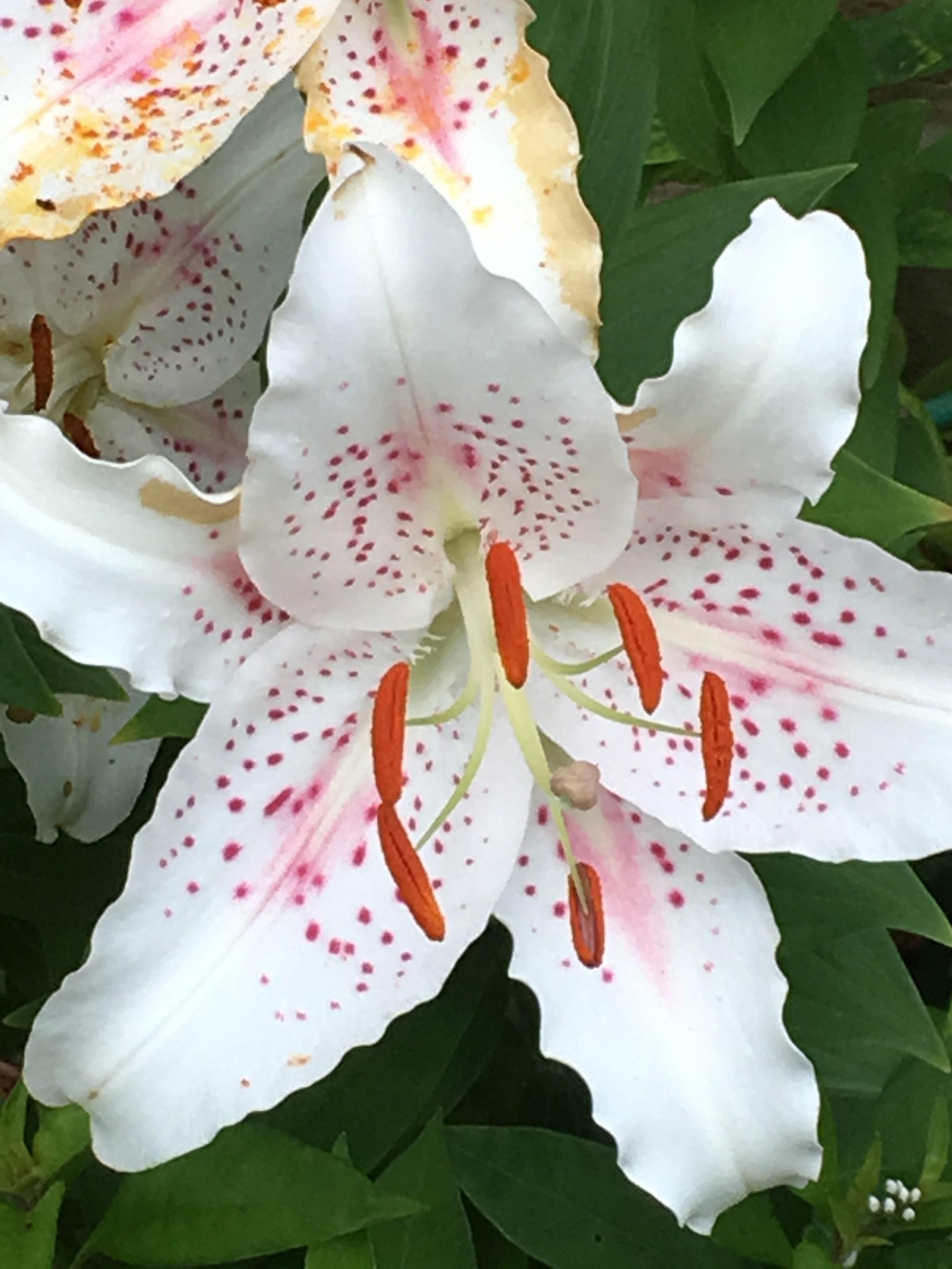
Bonus prompt: write about how beautiful lilies are and how pure and pristine their symbolism in contrast to their toxicity. Or write whatever this photo inspires.

Happy Easter if you celebrate the holiday. Good luck writing!

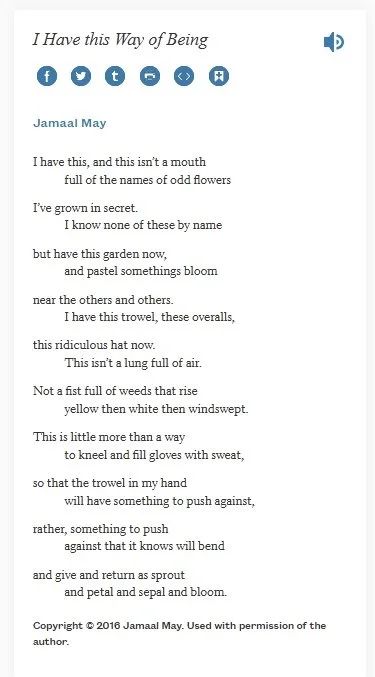
So we have “something to push against”—Prompts Inspired by Jamaal May

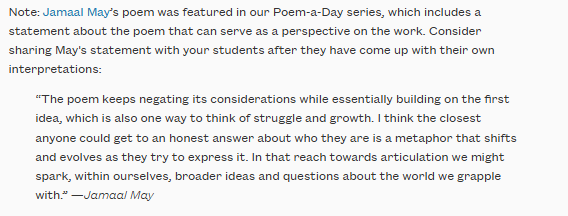
I have loved Jamaal May’s writing ever since Hum came out, and “I Have this Way of Being” is another beautiful poem. I find how it builds power through its initial—and deliberate—generality particularly interesting. I enjoy poems that have something to say, a deeper layer that rewards digging (yes, pun intended here). If you want to hear him read his poem, click on the link: https://poets.org/lesson-plan/teach-poem-i-have-way-being-jamaal-may.

For the first prompt, write about a task (perhaps the task of writing or of learning a skill) and the underlying reason you do it even if you have to struggle for the words. 

The second prompt is to describe something without knowing the exact terms as the poet did with the names of the flower: you could describe trying to fix a leaky faucet or assemble a cabinet without knowing the names for the various parts and fasteners.

The third prompt is to write a poem using the following list of words: "mouth," "odd," "pastel," "lung," "fist," "weeds," "windswept," "kneel,"  "push"  and "petal."

For the last prompt, build to a penultimate line of "will have something to push against," indicating through italics and within the title (or statement below it) the quoted text and source. 

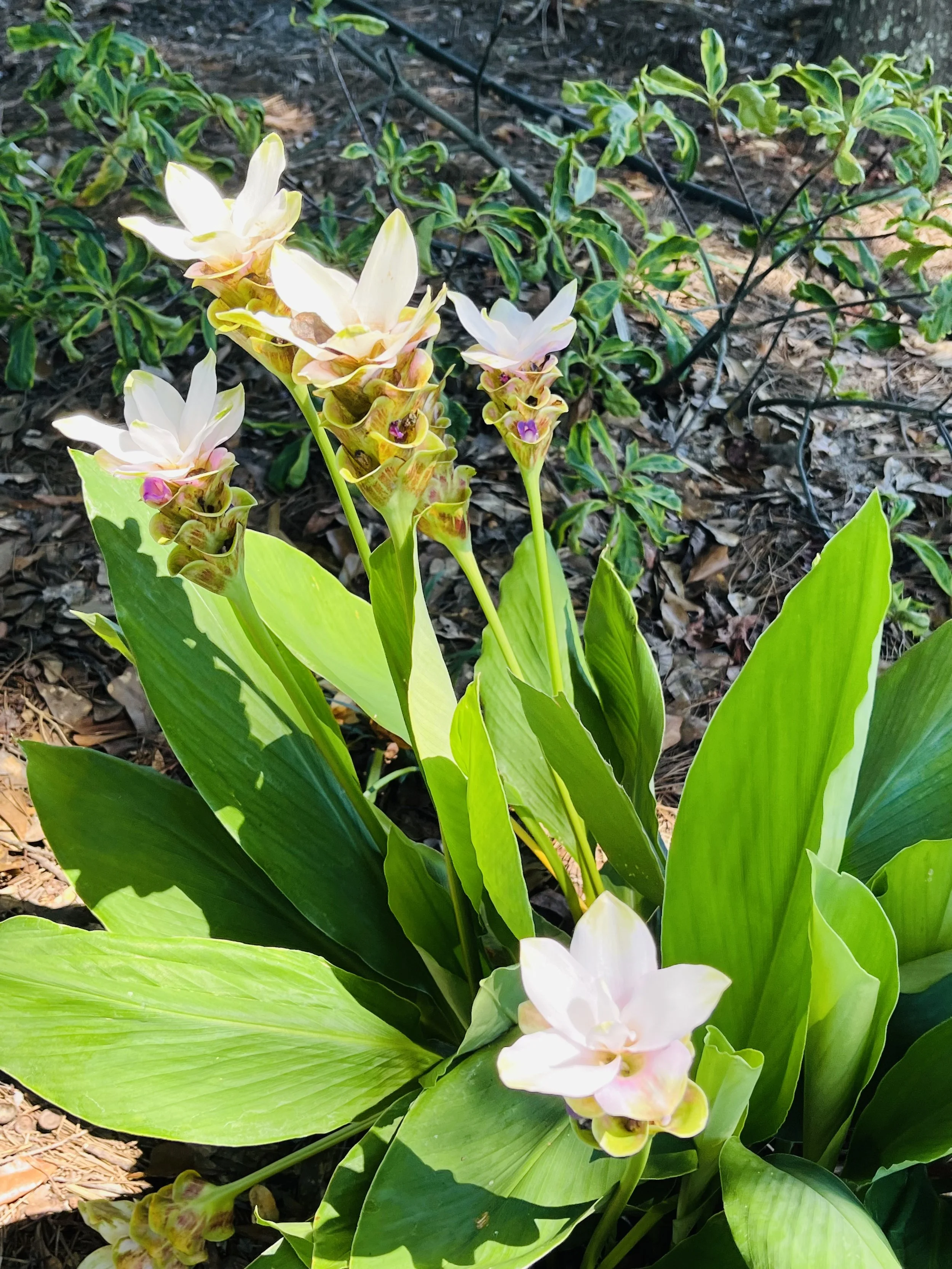
Bonus prompt: write a poem about growing and reaching toward light or whatever this photo inspires.

Good luck writing!

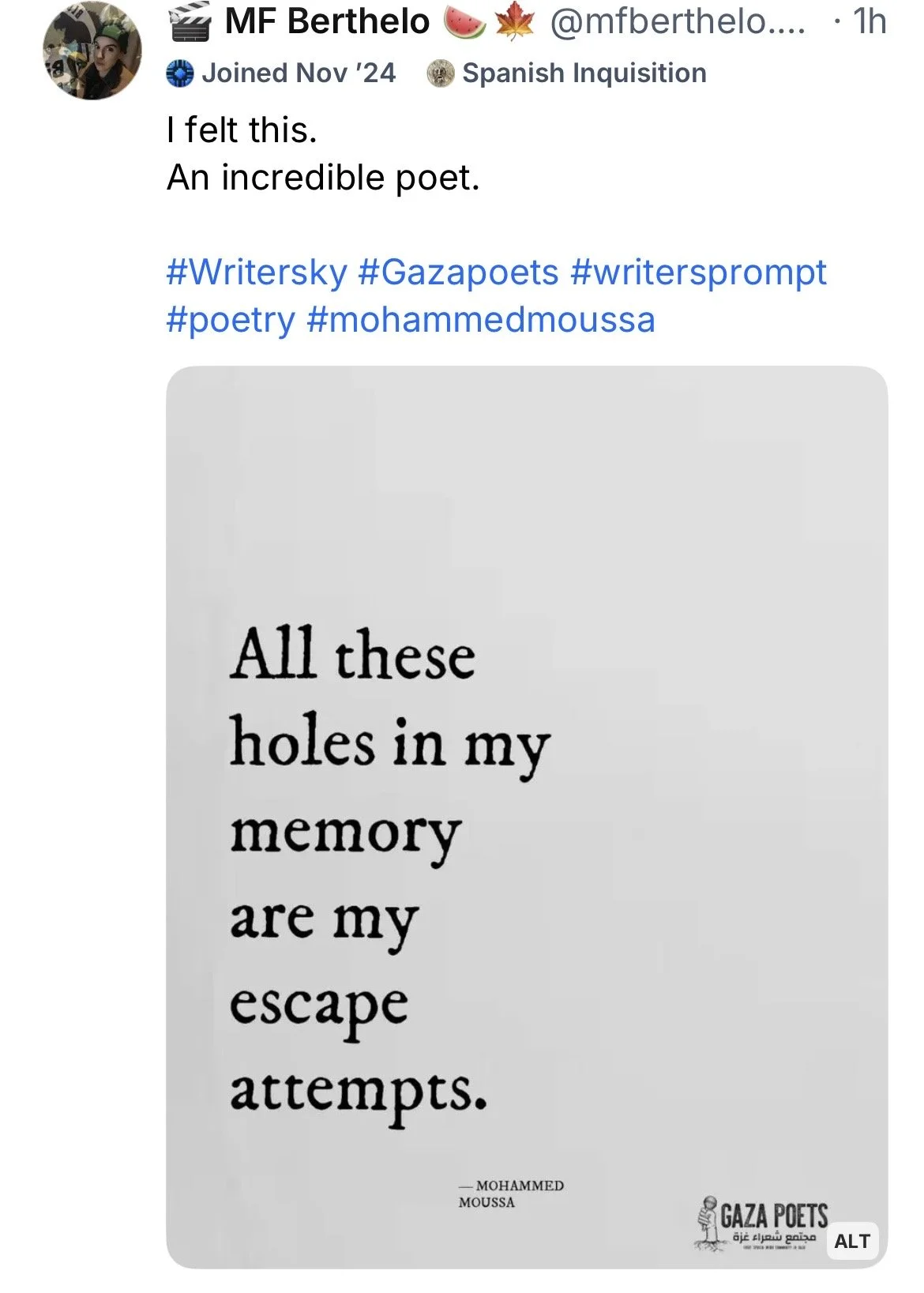
Escape artist—Prompts Inspired by Mohammed Moussa

This post is a little more like my usual ones. Again I admire those poets who can use just a few words to mean so much. It is a beautiful poem, and the events surrounding the poet make it even more harrowing.

For the first prompt, write about your own methods of escapism, of forgetting, not of what but of how.

The second is to write a poem in conversation with this one. What would you say to the poet (or narrator) if you could speak face to face?

The last prompt is to write a poem in which all that was lost and destroyed is rebuilt, focusing on the time and care it takes to place a brick or sweep a street clean.

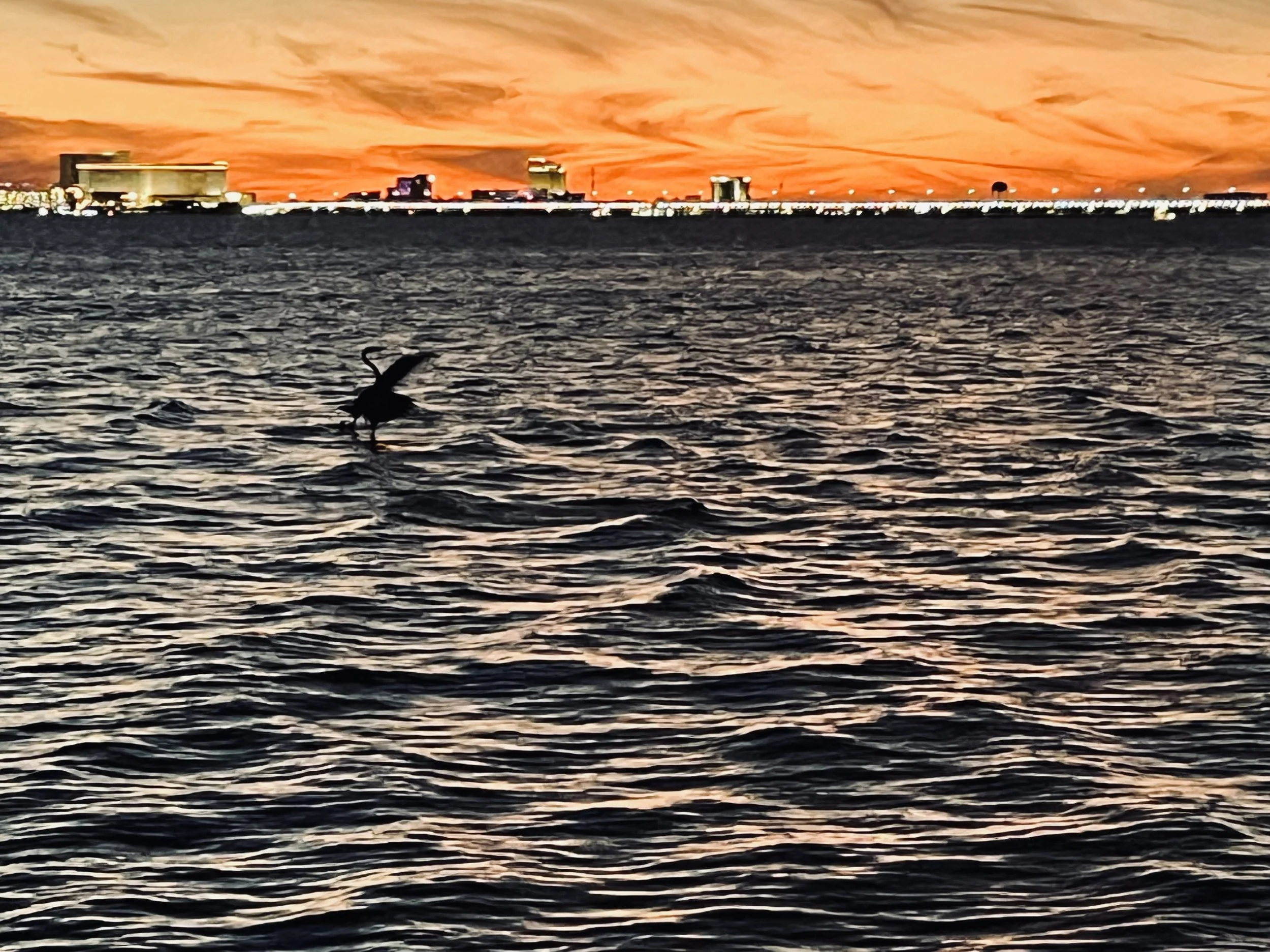
Write whatever this photo of a heron in the Gulf inspires.

Good luck.

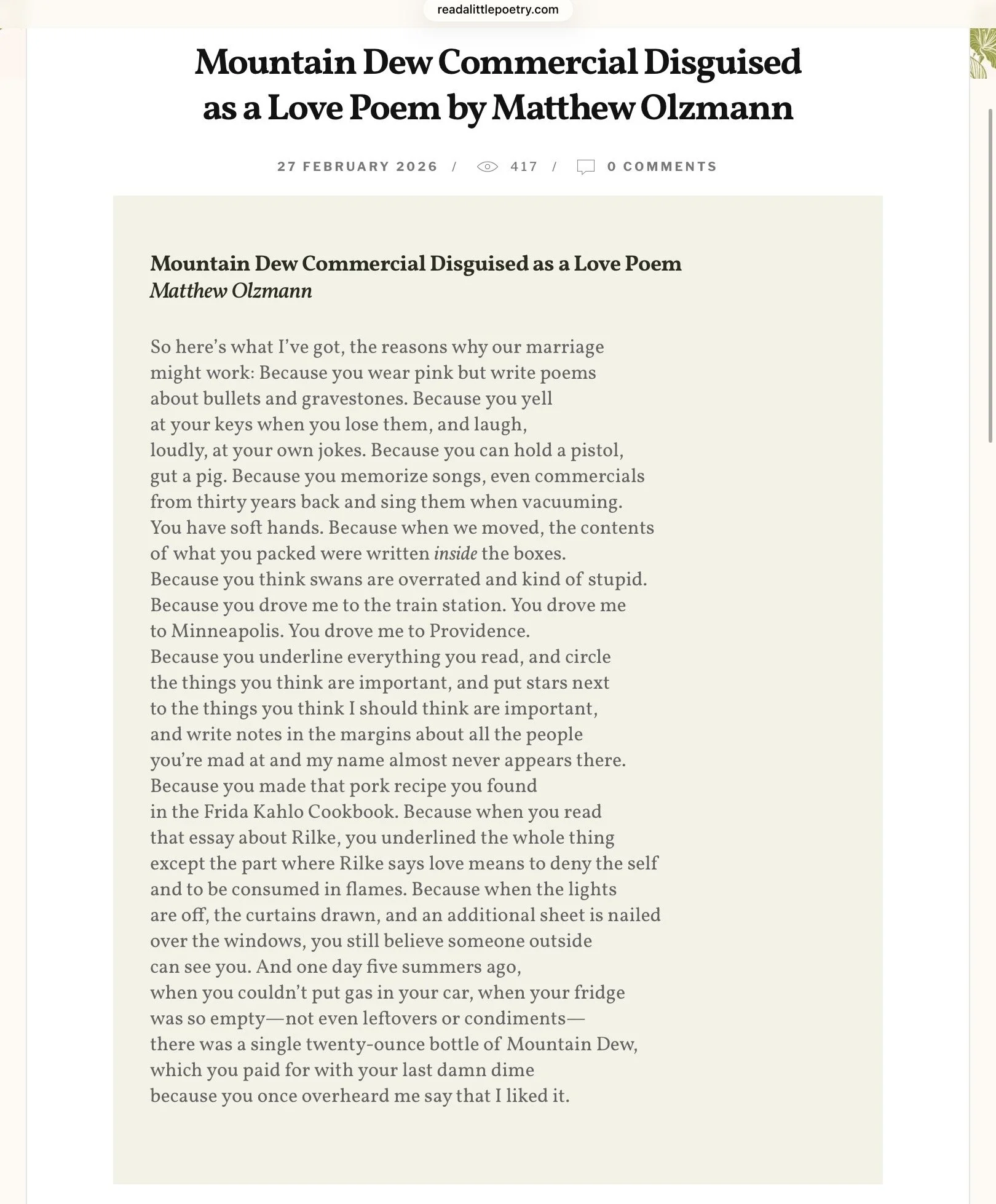
Mountain Dew and Love

So I meant to post this last night but forgot! Not a great start to 30/30!

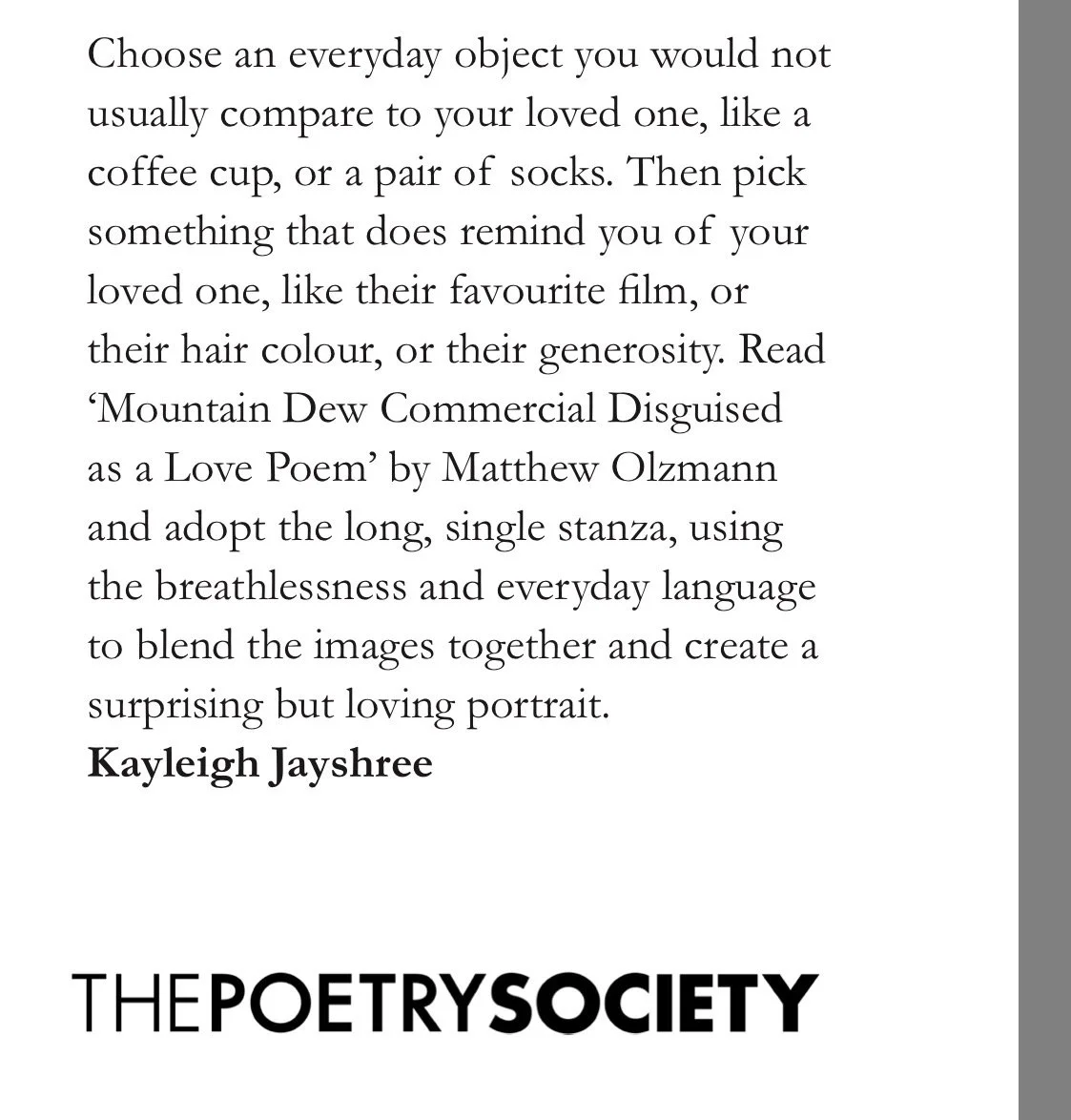
Here is another borrowed prompt, this one from Kayleigh Jayshree for the Poetry Society of the UK. Check out the other great prompts: https://poetrysociety.org.uk/wp-content/uploads/2024/05/Resource-3-love-poems-1.pdf.

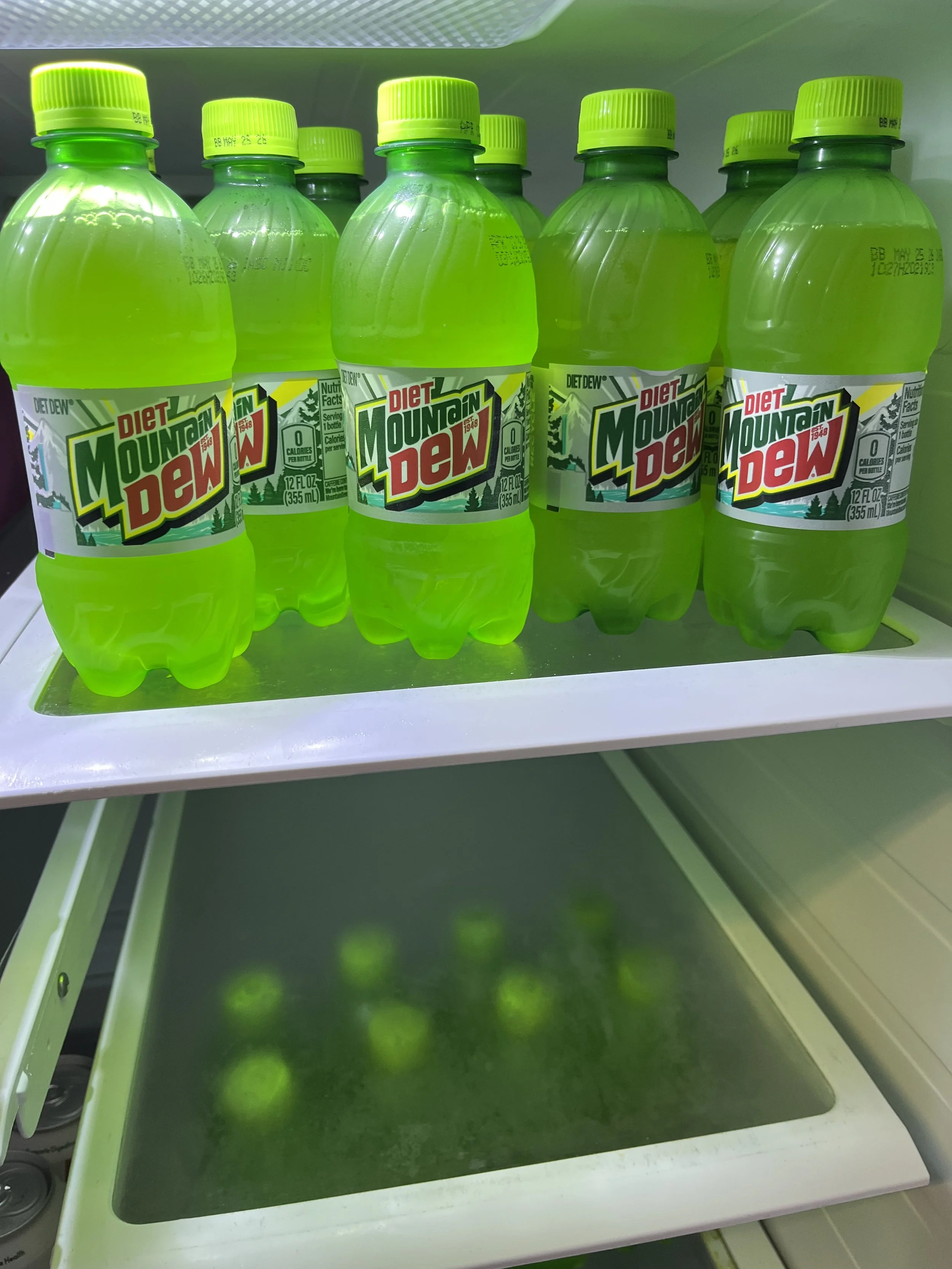
The photo below may explain one reason why this poem resonates so strongly for me, especially considering that my husband recently went grocery shopping for my soda.

Good luck writing! Have fun!

Malapropisms of Maladies

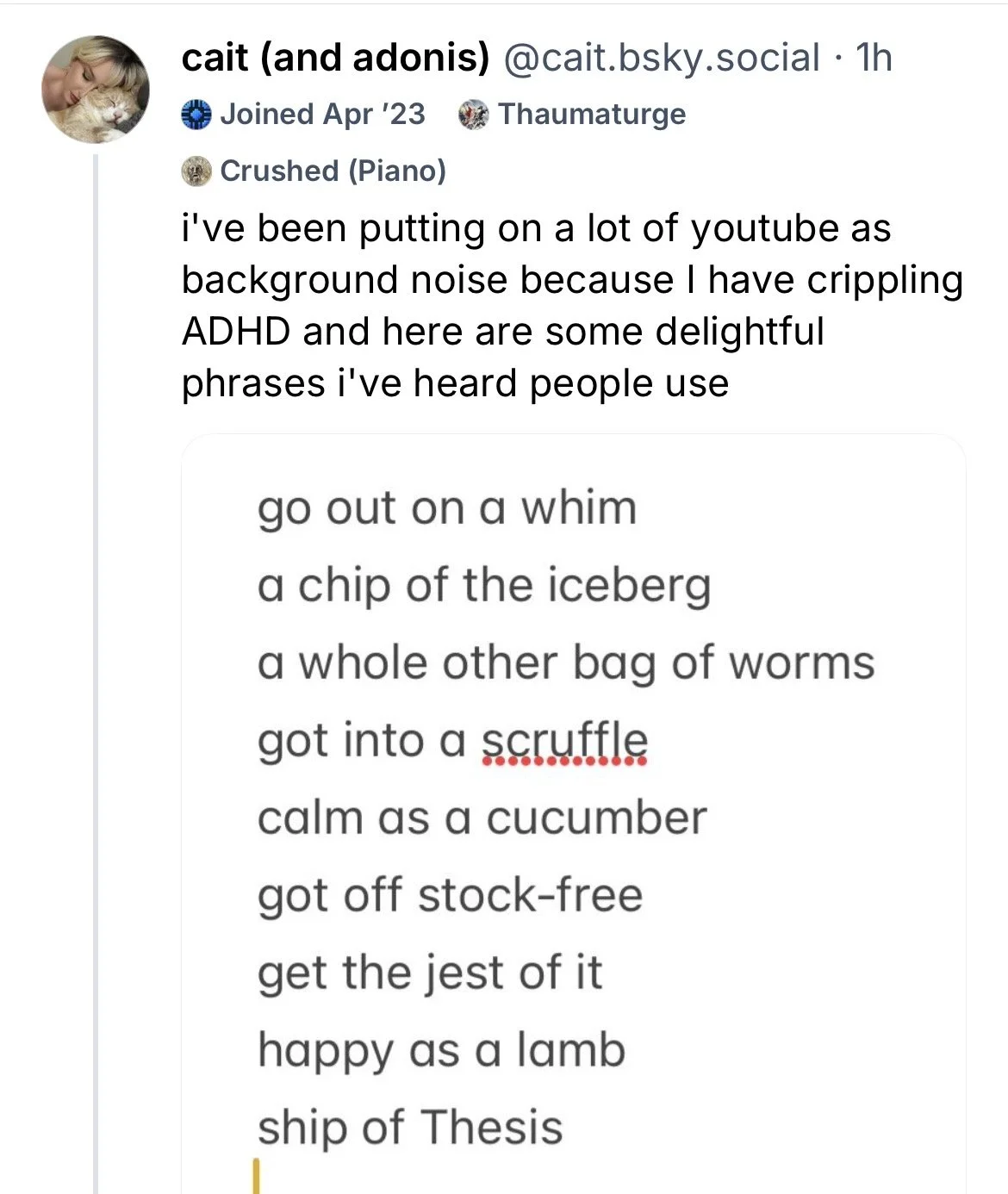
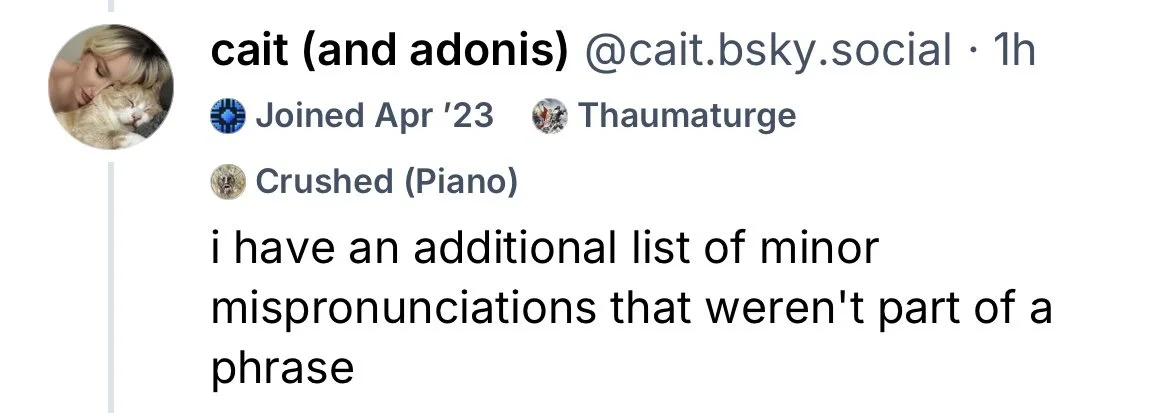
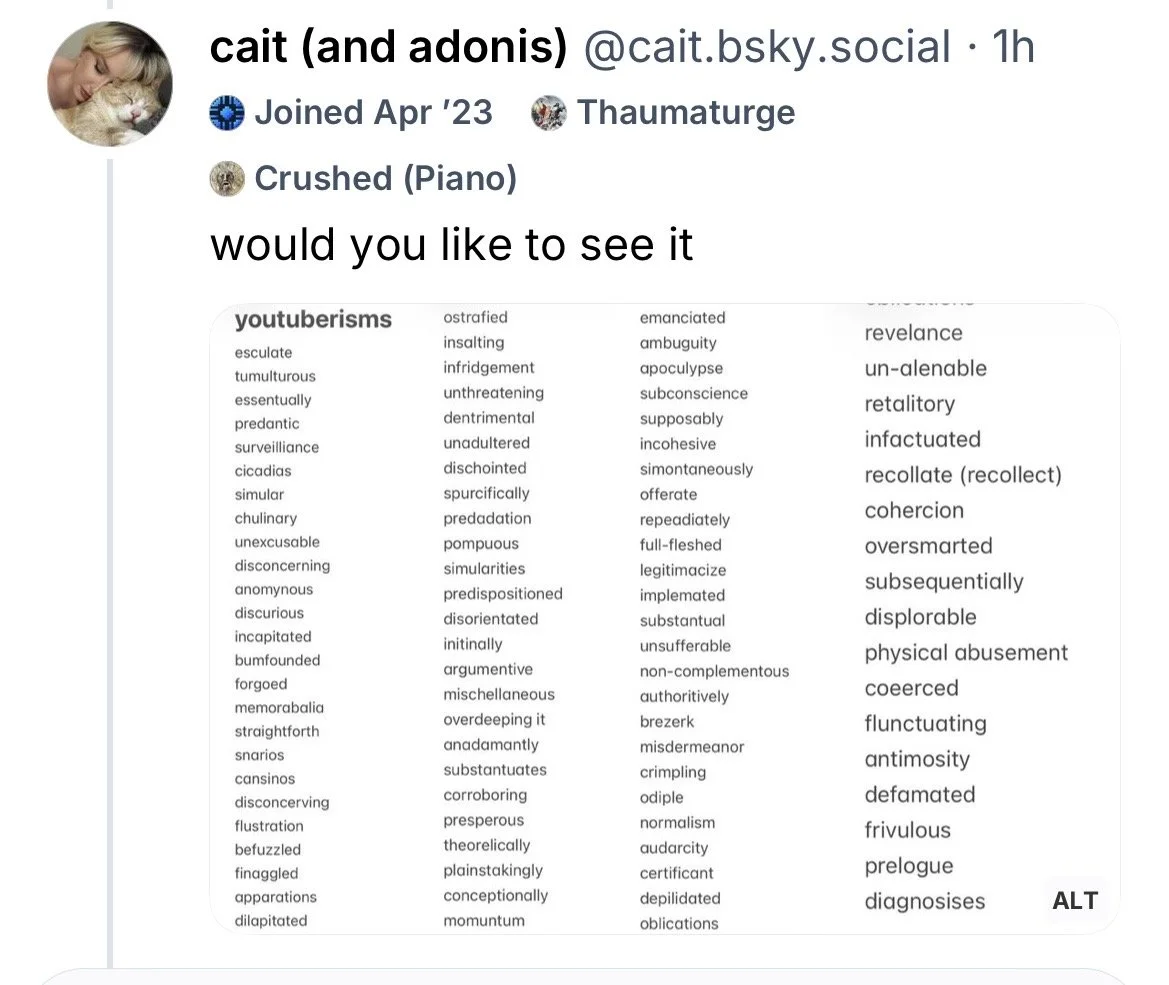
Let’s try something a little different tonight. Rather than building prompts from a particular poem, let’s play with missed-phrasings. Cait, mother of perfect kitty Adonis, shared a list of malapropisms (using words that don’t fit the context or in a common phrase, often similar sounding to the correct word).

Your first prompt is to read over these two lists and write whatever comes to mind.

The second is to create your own malapropism or misspelled/mispronounced word, use it as the title and build a poem around it.

The third is to combine as many of them as you can in one poem. Go all out. It is your first day of the challenge, and you should start out strong.

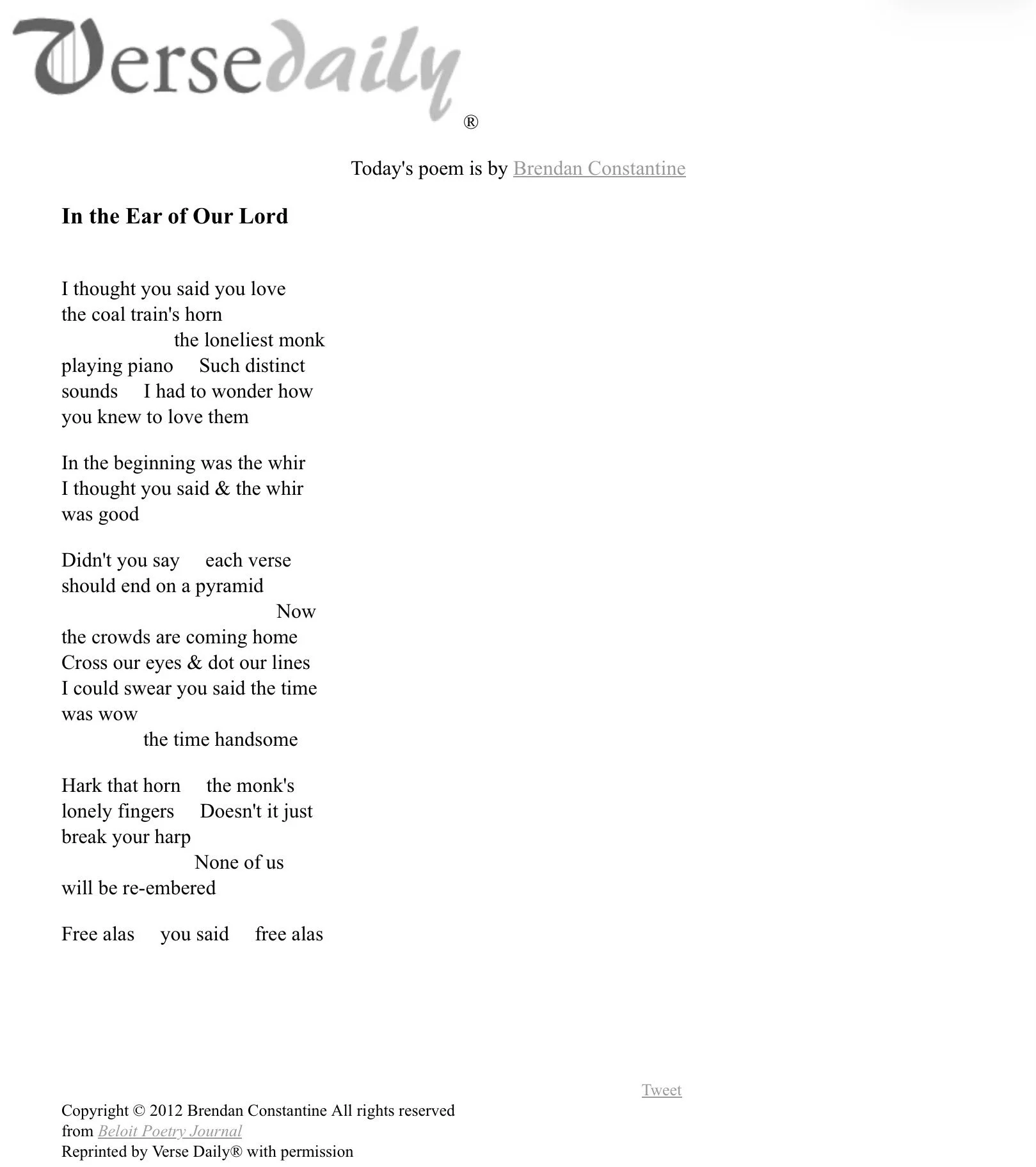
Here is a fabulous poem by Brendan Constantine: https://www.versedaily.org/2013/earofourlord.shtml

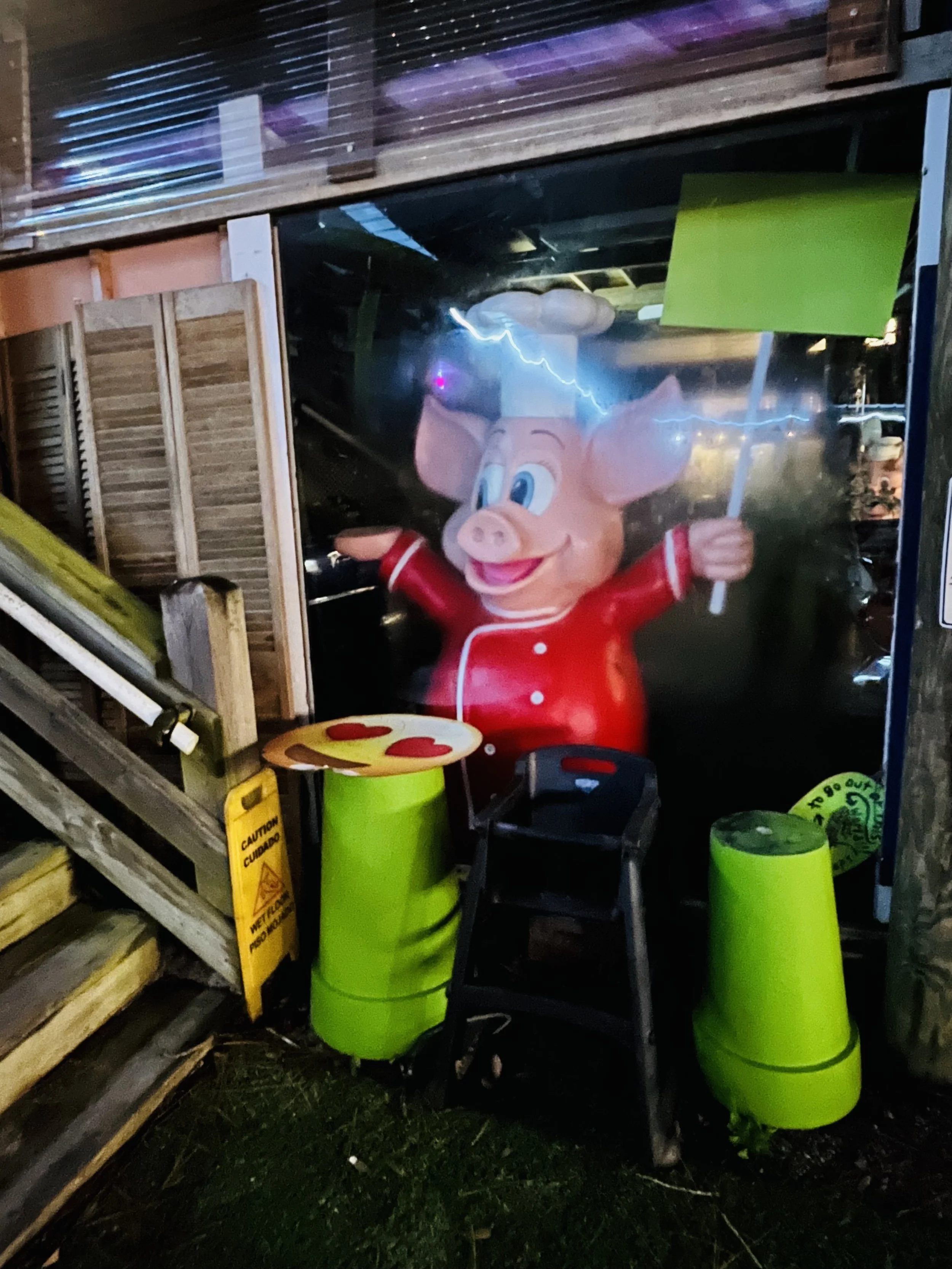
Bonus prompt: why is this pig statue so happy at a bbq joint?

Good luck! Have fun!
NaPoWriMo Starts Wednesday

Once again April is knocking on the door and asking you for poems for its 30 poems/30 days challenge, celebrating National Poetry Month. I will try to post a poetry/writing prompt every day this month along with trying to write a poem a day. Most of the prompts will be shorter than usual, and I will frequently borrow others’ prompts and provide links to their websites and books.

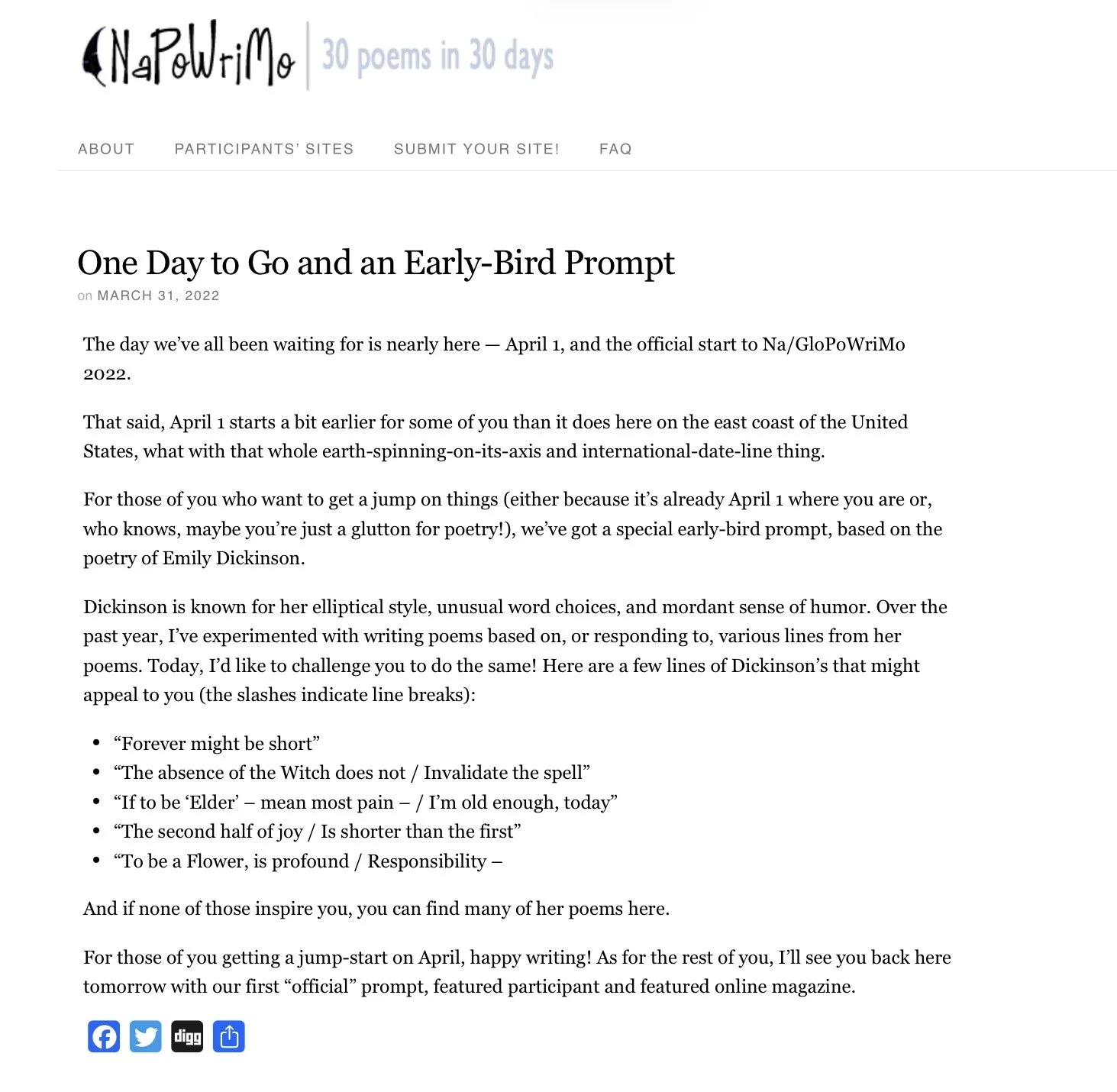
Let the borrowing begin with posting NaPoWriMo’s early bird prompt from 2022, https://www.napowrimo.net/2022/03/. Maureen Thorson began NaPoWriMo back in 2003 and got help to create the website, https://www.napowrimo.net. It is a great resource for anyone wanting to participate in the challenge or looking for writing prompts throughout the year. Please do check out the official site: https://www.napowrimo.net. There be an early bird prompt posted tomorrow. Also, if you want to share your daily poems, you can submit your website/blog’s link (the site’s FAQ explains how).

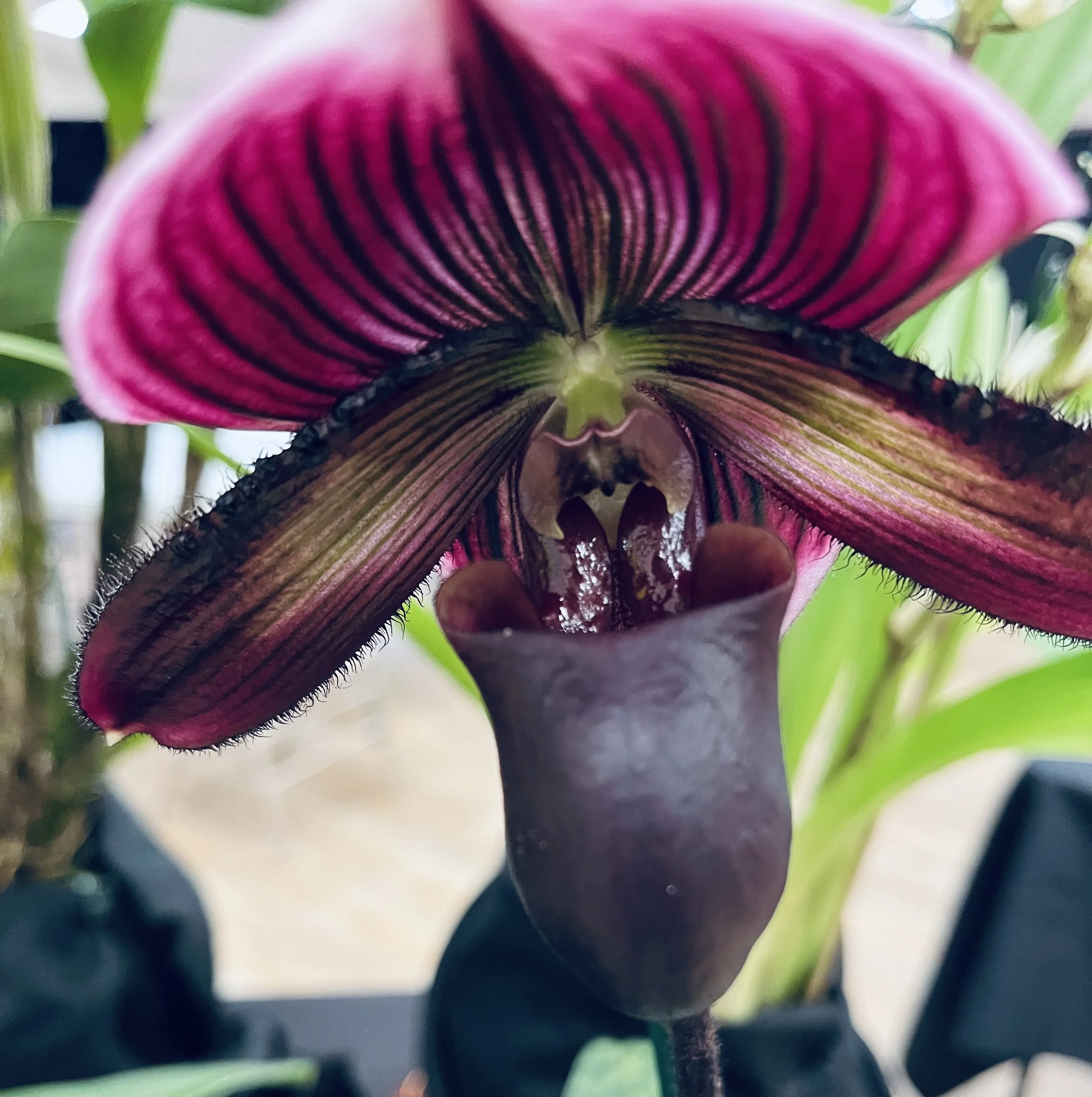
Bonus prompt: write whatever this orchid inspires (perhaps fear).

Good luck writing!

“Assiduous”—Prompts Inspired by Rae Armantrout

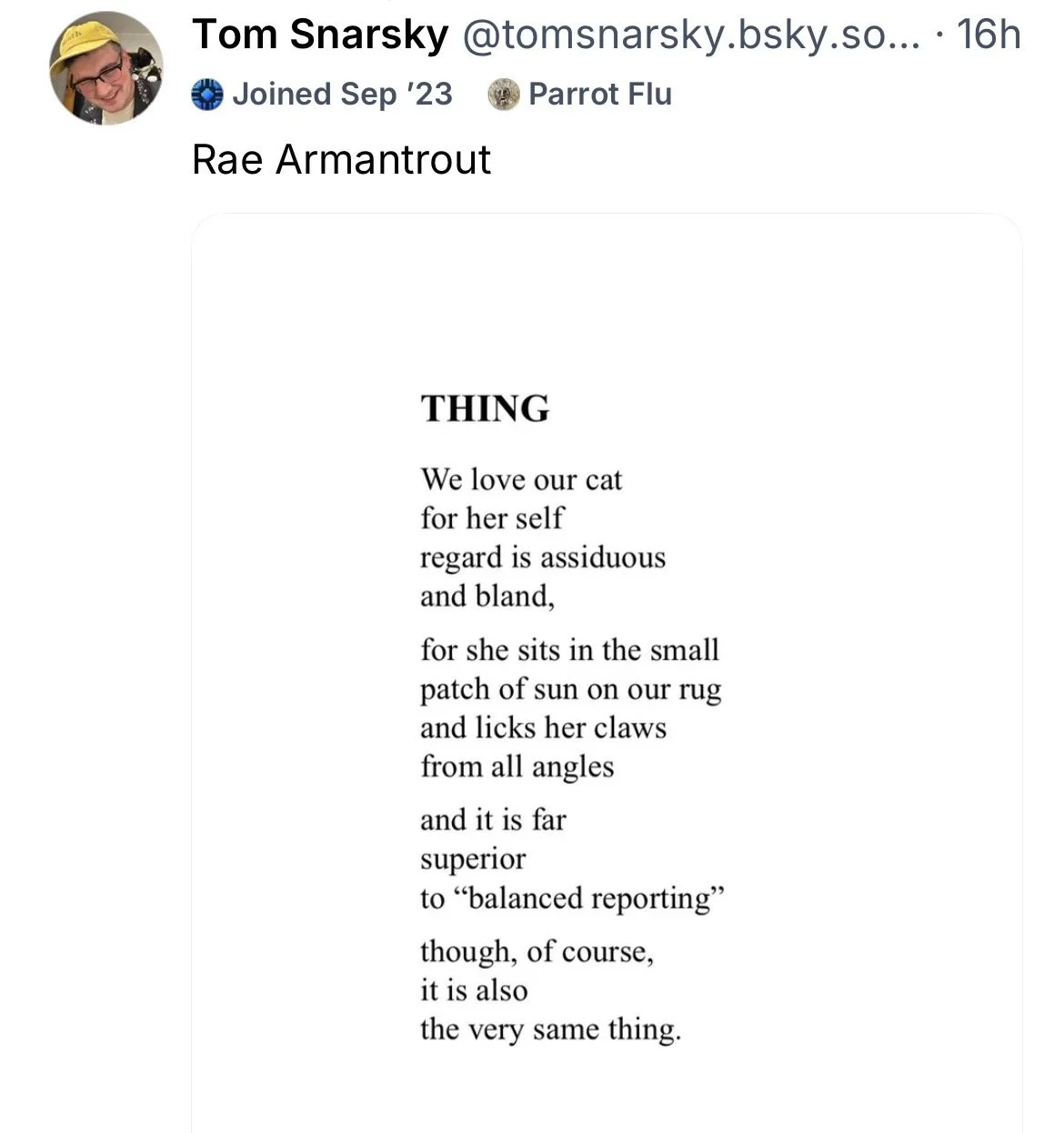
I do admire poets who can say so much in a few lines. Rae Armantrout has great short poems, and poet Tom Snarsky is a wonderful poet to follow: for his poems and for his #smallpoemsunday feed. Tonight I tried to be less wordy than usual in appreciation but failed.

For the first prompt, describe a pet’s behavior and connect it to a human trait in a poem, essay or story.

I particularly enjoy the surprise created by the break between the poem’s second and third lines. The second prompt is to take an old poem that feels unfinished and play with its line breaks, trying to create unexpected turns.

I find the poem’s snarky tone delicious. For the next prompt, write a poem or story narrated with a similarly sarcastic voice. Let your target be a politician, media personalty, even a family member or coworker—anyone is fair game as long as you don’t share it with them or people they know. A snide poem may even prevent an unfortunate outburst.

Notice how the level of detail changes among the stanzas: the first introducing the cat and offering a twist, the middle providing a clear description and the last two making the intended connection with rather abstract language. For me, the language and word choice works. I love how “assiduous” suggests both diligence and fawning especially in combination with “self regard.” For the last prompt, write a poem or story using the following list of words: “self,” “assiduous,” “bland,” “patch,” “claws,” “angles,” “superior,” “balanced” and “same.”

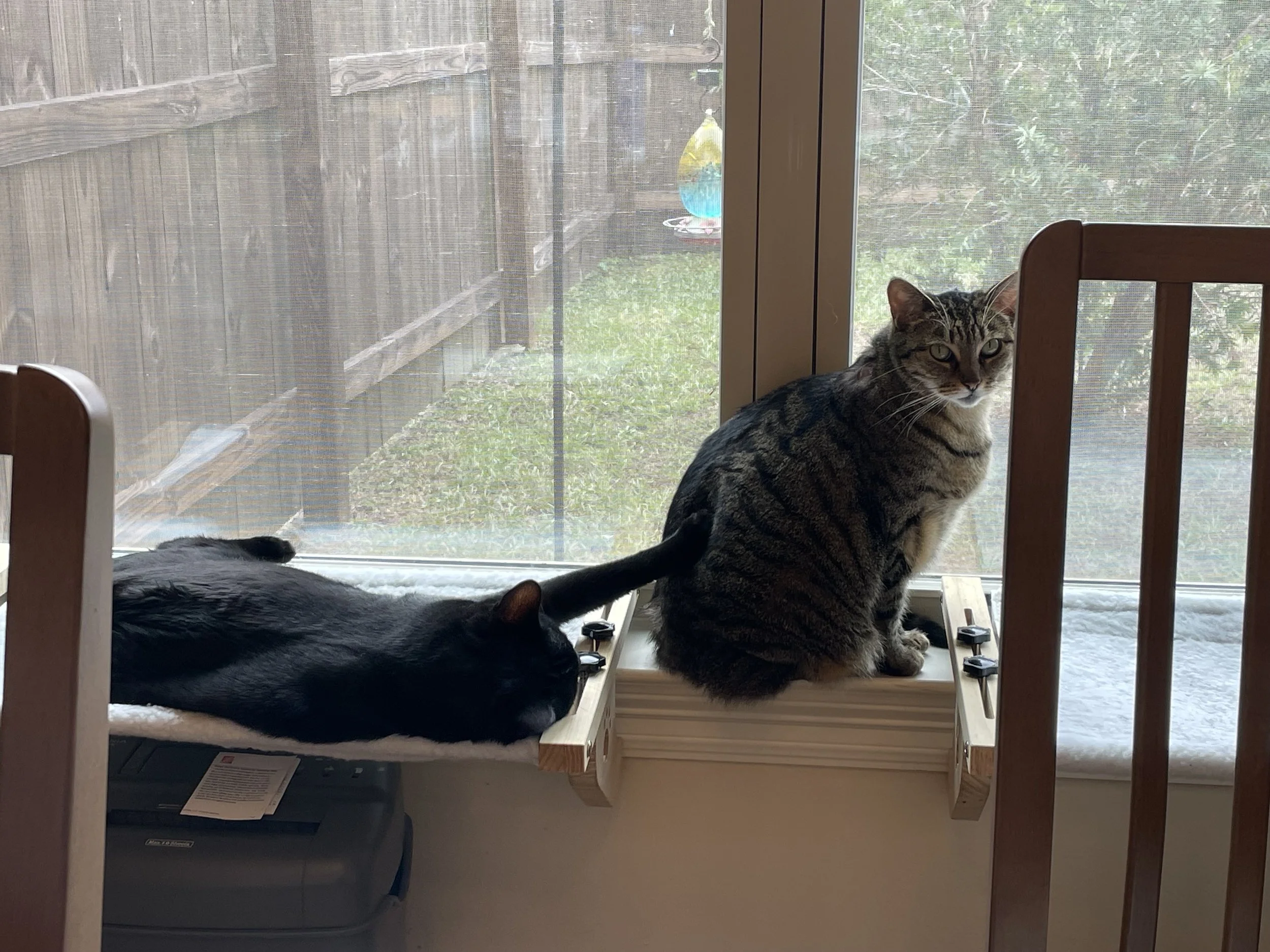
Bonus prompt: write whatever this photo of the younger cat annoying the older one inspires. Or use it as a metaphor for sibling rivalry, dating, office politics or other pesky human interaction.

Good luck!
Dillydallying in Yellow—Prompts Inspired by Charles Simic

As you may have noticed, I’ve switched to posting on Monday rather than Sunday nights. I hope this change improves my consistency since Sundays are less predictable.

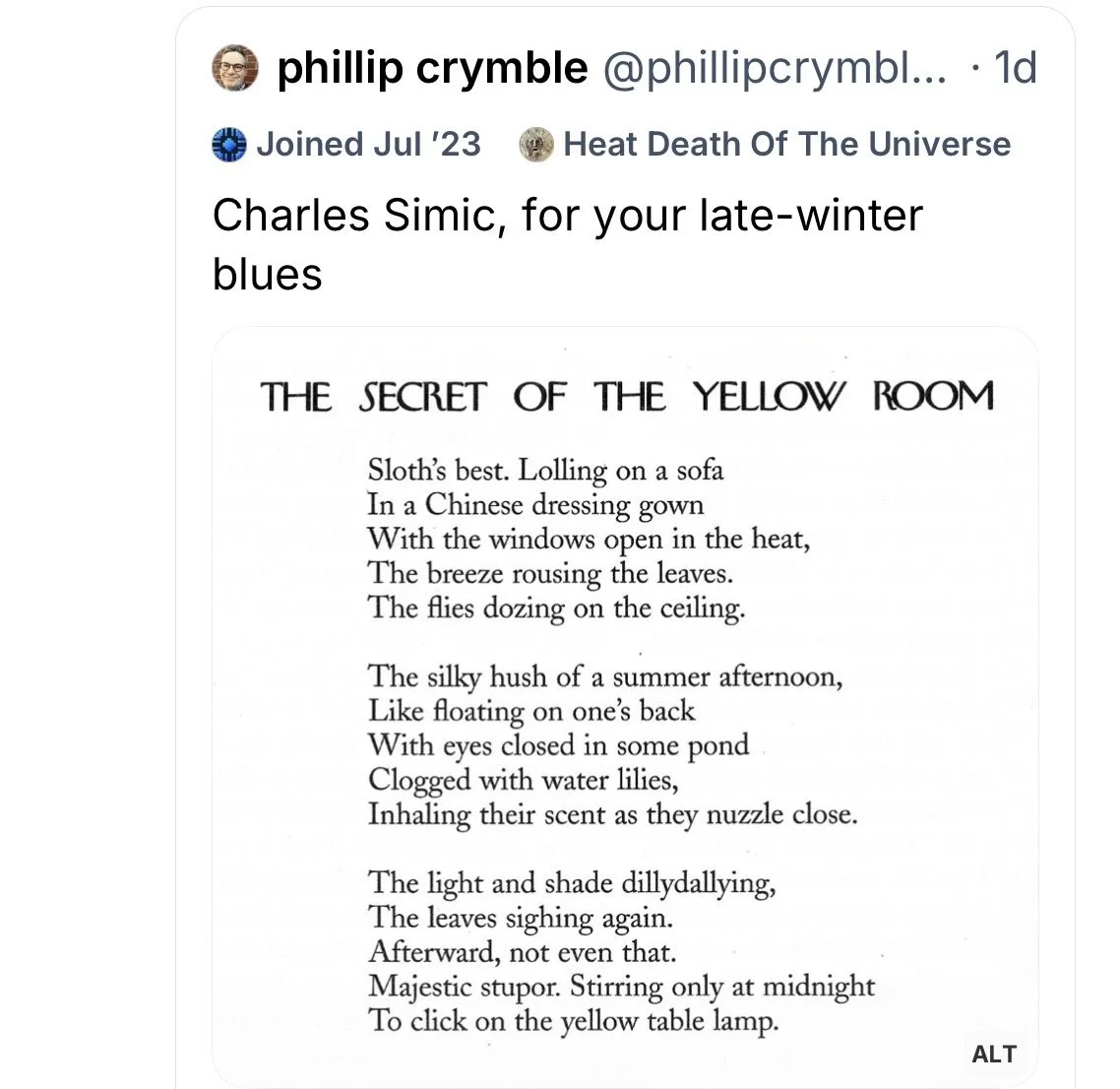
I don’t believe I have posted a poem by Charles Simic, a poet I need to read more of. I hope you like this one as much as I did. I also need to post poetry by Phillip Crymble soon, whose work and social media posts I enjoy.

I enjoy how the poem lazes throughout—its sleepy repetition of “l’s,” “s’s” and “z’s”—until the end with its abrupt “click” sound for turning on the lamp. For the first prompt, use the last line, “To click on the yellow table lamp,” as a ghostline. After using it as the starting point for a poem or story, erase the line and credit the poet in your title or with an “after” statement.

For the second prompt, begin by naming one of the seven deadly sins (or other vice) and then provide a setting for it in a poem or story or a description from a remembered place and time for an essay.

The third prompt is to borrow the title, “The Secret of the Yellow Room,” and mash the use of personification with tropes of the YA mystery genre (Nancy Drew, the Hardy Boys or more modern detectives). Be sure to credit the poet for the title.

The next is to write a poem or story using the following list of words from the poem: “lolling,” “dressing,” “breeze,” “dozing,” “silky,” “lilies,” “nuzzle,” “dillydallying,” “stupor” and “lamp.” I love the word “dillydallying”—its sound matching its meaning. The whole poem is a treat to read aloud.

Bonus prompt: Write whatever this photo of a bathroom with cat walkways and stairs inspires you to write. I have no idea where my daughter found these photos.

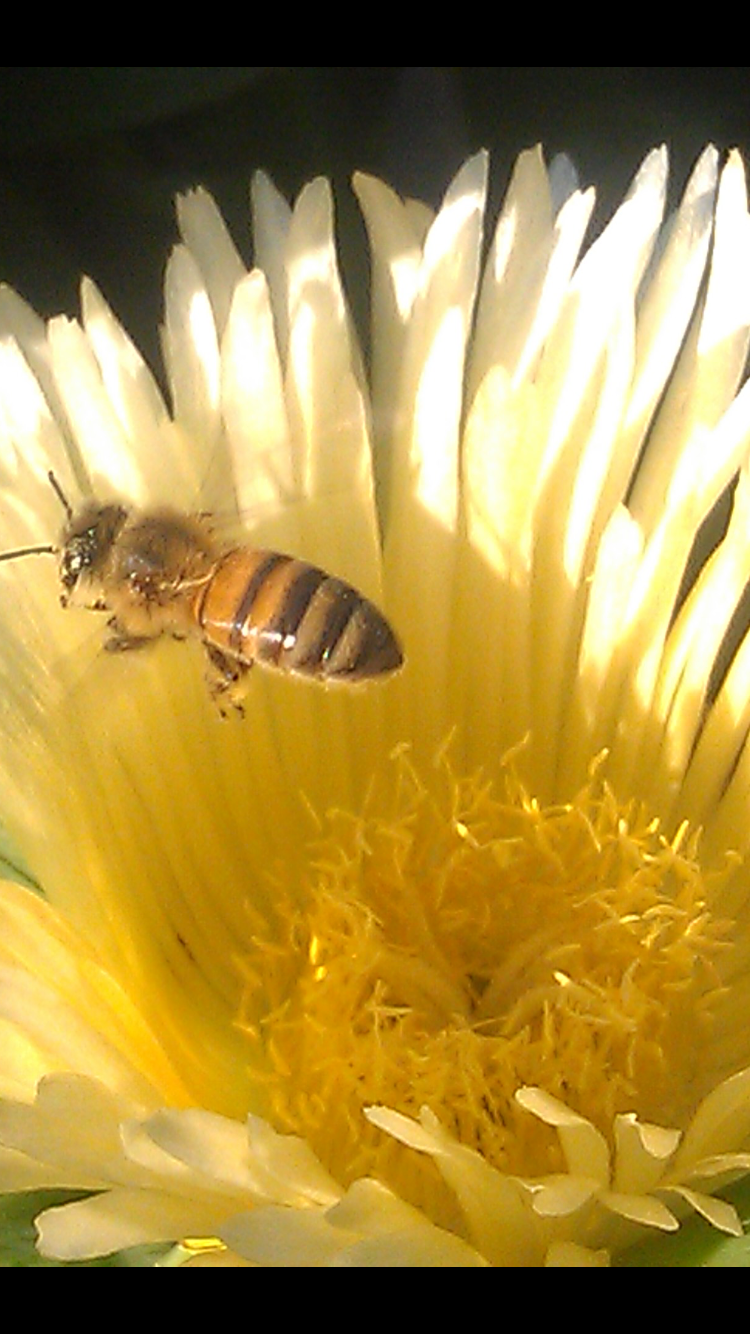
Additional bonus prompt: write a lullaby for this bee.

Good luck writing. Have fun.